
What Is a Quality Management System (QMS)?
A quality management system, or QMS, is the way an organisation defines, controls, monitors and improves the processes used to deliver consistent products and services. It brings together responsibilities, procedures, risks, records, checks and corrective actions so the organisation can meet customer, regulatory and business requirements.
A QMS should not simply describe how a business intends to operate. It should help people understand what is expected, provide evidence that important activities have been completed and enable the organisation to identify and correct problems.
What does QMS stand for?
QMS stands for Quality Management System.
The term describes the connected policies, processes, responsibilities, controls and records an organisation uses to manage quality. Although a QMS is commonly associated with ISO 9001, an organisation can operate a quality management system without being certified to the standard.
What is the purpose of a quality management system?
The purpose of a QMS is to help an organisation consistently deliver products or services that meet defined requirements.
These requirements may come from customers, legislation, regulations, contracts, recognised standards or the organisation itself. The QMS provides a structured way to understand those requirements and translate them into controlled business processes.
An effective quality management system should help an organisation:
-
Produce more consistent products and services.
-
Define responsibilities and accountability.
-
Understand and manage operational risks.
-
Control documents and business information.
-
Monitor performance and customer satisfaction.
-
Identify problems before they become more serious.
-
Investigate nonconformities and prevent recurrence.
-
Retain evidence that requirements have been met.
-
Continually improve how the organisation operates.
The value of a QMS therefore extends beyond certification. It can provide the operational structure needed to support growth, improve efficiency and reduce dependence on individual knowledge.
What are the main elements of a QMS?
The exact structure will depend on the organisation, but most effective quality management systems contain the following elements.
Leadership and responsibility
Senior management must establish the organisation’s direction and ensure that responsibilities are understood. Quality cannot be managed by one quality manager working separately from the rest of the business.
Process owners and employees need to understand what they are responsible for, what authority they have and when an issue must be escalated.
Quality policy and objectives
The quality policy communicates the organisation’s overall commitment and direction. Quality objectives turn that commitment into measurable priorities.
Objectives should be relevant to the organisation and capable of being monitored. They might relate to customer satisfaction, delivery performance, product defects, complaints, audit findings or the completion of corrective actions.
Process definition
A QMS should define how important activities are expected to operate.
This does not mean creating unnecessary procedures for every task. The level of control should reflect the risk, complexity and importance of the activity. Critical processes usually require clearer responsibilities, controls and evidence than routine low-risk work.
Risk and opportunity management
Organisations need to understand what could prevent their processes from achieving the intended result.
Risks may relate to people, suppliers, equipment, information, technology, capacity or external events. Opportunities may include better ways of working, new technology, improved supplier arrangements or changes that increase customer value.
Identifying a risk is not enough. Controls must be established, communicated and reviewed to confirm that they remain effective.
Documented information
Documents help communicate what should happen. Records provide evidence of what has happened.
A QMS may include policies, procedures, process maps, work instructions, specifications, forms, audit reports, inspection results and training records. This information must be controlled so that people can find the correct version when they need it.
Competence and communication
People must have the knowledge and competence required to perform their roles effectively.
The organisation should identify essential competence requirements, provide appropriate training or support and retain evidence where necessary. Changes to processes, responsibilities and controls must also be communicated to the people affected.
Operational controls
Operational controls are the practical measures used to make sure processes are completed correctly.
These might include approvals, inspections, checklists, defined acceptance criteria, equipment maintenance, supplier evaluations or software validation. The controls used should be proportionate to the potential impact of failure.
Monitoring and measurement
An organisation needs reliable information about whether its processes are achieving the intended results.
Performance may be monitored through key performance indicators, customer feedback, complaints, inspections, audit results, product data and the completion of actions.
Collecting data only creates value when the organisation uses it to make decisions.
Internal audits and management review
Internal audits provide an objective assessment of whether processes are operating as intended and whether the management system remains effective.
Management review considers the wider performance of the QMS. It gives senior management an opportunity to review results, risks, resources, changes, improvement priorities and the continuing suitability of the system.
Nonconformity and corrective action
When something goes wrong, the immediate issue may need to be corrected. The organisation must then decide whether further investigation is required to prevent the same problem from happening again.
Corrective action should address the underlying cause of a problem rather than simply closing the record. Its effectiveness should also be checked after implementation.
Continual improvement
A QMS should develop as the organisation, its customers and its operating environment change.
Improvement may arise from audits, incidents, employee suggestions, customer feedback, performance trends, technological developments or changes in risk. Continual improvement does not necessarily mean constant major change. Small, evidence-based improvements can create significant long-term benefits.
How does a quality management system work?
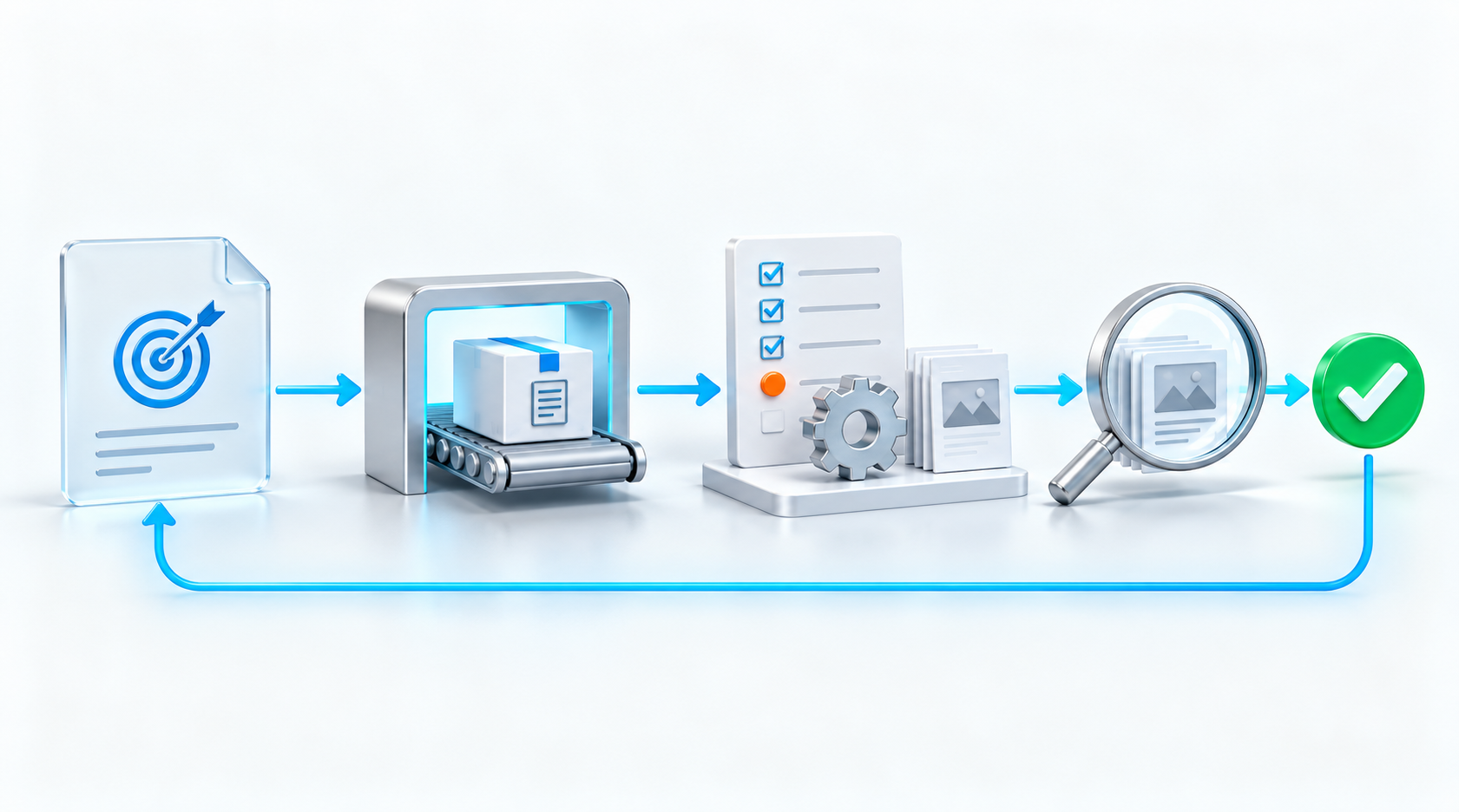
Many quality management systems use the Plan-Do-Check-Act cycle.
Plan
Define the intended result, requirements, responsibilities, resources, risks and controls.
Do
Carry out the process, communicate the requirements and retain appropriate evidence.
Check
Monitor results, review performance, conduct audits and identify where the intended outcome has not been achieved.
Act
Correct problems, address their causes and improve the process or its controls.
This cycle prevents the QMS from becoming a static collection of policies. It connects what the organisation says should happen with what happens operationally.
At Zebsoft, we also consider this through the principles of Define, Communicate and Assure:
-
Define what needs to happen and who is responsible.
-
Communicate it clearly to the people who need to know.
-
Assure that it is happening and achieving the intended result.
If something cannot be communicated or assured, the organisation may need to reconsider how it has been defined.
Is a QMS the same as ISO 9001?
No. A QMS is the management system an organisation operates. ISO 9001 provides internationally recognised requirements against which that system can be assessed.
An organisation can have a QMS without being ISO 9001 certified. Certification provides independent confirmation that the organisation’s system has been assessed against the requirements of the standard.
ISO 9001 does not prescribe a single way to run a business. Its requirements must be interpreted in the context of the organisation, including its size, activities, customers, risks and regulatory obligations.
Does a QMS have to be documented?
A QMS requires appropriate documented information, but the management system is not simply a collection of documents.
Historically, quality systems were often associated with large manuals, paper procedures and rows of lever-arch files. Documentation remains important, but it should support the effective operation and control of the business.
An organisation should document information where it is needed to:
-
Communicate an important requirement.
-
Ensure a process is completed consistently.
-
Control significant risks.
-
Provide evidence that an activity took place.
-
Meet a customer, legal or regulatory requirement.
-
Retain organisational knowledge.
Unnecessary documentation can make a QMS harder to use. The aim should be effective control rather than creating paperwork for its own sake.
An example of a QMS in practice
Consider how a business manages a customer complaint.
The complaint is first recorded and assigned to an appropriate person. The organisation assesses its seriousness and determines whether immediate action is required.
The issue is then investigated to establish what happened and why. If the investigation identifies a wider process failure, a corrective action is assigned to address the cause.
Once the action has been implemented, its effectiveness is checked. Relevant risks, procedures, training requirements or operational controls can then be updated.
This creates a connected process:
-
The complaint is received.
-
The issue is recorded and assessed.
-
The cause is investigated.
-
Corrective action is assigned.
-
The action is completed.
-
Effectiveness is checked.
-
Related processes and risks are updated.
The QMS does not merely store the complaint. It helps the organisation learn from it and reduce the likelihood of recurrence.
What are the benefits of a QMS?
More consistent products and services
Defined processes and appropriate controls reduce variation and help people achieve consistent results.
Fewer repeated problems
Structured investigation and corrective action help the organisation address underlying causes rather than repeatedly correcting the same symptoms.
Clearer responsibilities
Process ownership and defined accountability make it easier to understand who should act, approve or make a decision.
Better management information
Connected performance data gives management a clearer view of emerging risks, recurring problems and improvement priorities.
Stronger customer confidence
An effective QMS demonstrates that the organisation has established controls for meeting customer requirements and responding when problems occur.
Improved regulatory and contractual evidence
Controlled records make it easier to demonstrate that required activities, inspections, approvals and reviews have been completed.
Greater operational resilience
A QMS reduces dependence on information held by individual employees. Important knowledge and controls remain available when people, systems or circumstances change.
Support for sustainable growth
Processes that work within a small business may become unreliable as the organisation grows. A QMS provides the structure needed to maintain control across more people, locations, customers and suppliers.
What is QMS software?
QMS software is the technology used to support the operation of a quality management system. It is not the QMS itself.
A business can purchase software without establishing an effective management system. Equally, a business can operate a QMS using paper records, spreadsheets and shared folders. The question is whether those methods continue to provide sufficient control, visibility and assurance.
QMS software can connect areas such as:
-
Document control.
-
Risk management.
-
Audit management.
-
Incidents and nonconformities.
-
Corrective and preventive actions.
-
Supplier assurance.
-
Training and competence.
-
Tasks and approvals.
-
Performance monitoring.
-
Management review.
Bringing these areas together makes it easier to understand how one event affects the wider management system. An audit finding, for example, may result in a corrective action, a document change, additional training and an updated risk assessment.
When has a business outgrown spreadsheets and folders?
Spreadsheets and shared folders can work adequately when an organisation is small and its processes are relatively simple. Problems often develop as the business grows or becomes more regulated.
Warning signs include:
-
Employees cannot easily identify the current document.
-
Important actions become lost in email.
-
Information is duplicated across different spreadsheets.
-
Audit evidence has to be assembled retrospectively.
-
Different locations follow different versions of a process.
-
Certificate and review dates are missed.
-
Management cannot see the current compliance position.
-
Problems repeatedly return after being marked as closed.
-
Supplier information is incomplete or out of date.
-
Essential knowledge depends on particular individuals.
-
Reporting requires extensive manual preparation.
These are not simply document-management problems. They indicate that the organisation is losing operational visibility and assurance.
An integrated QMS platform can provide a controlled connection between what the organisation has defined and the evidence that it is happening.
How Zebsoft supports quality management
The Zebsoft Assurance Platform connects the static and dynamic elements of a quality management system.
Policies, processes, responsibilities, risks and controls define how the organisation intends to operate. Audits, checks, incidents, actions and performance results provide the dynamic evidence needed to assure that it is happening.
This helps organisations move beyond storing documents and managing isolated registers. Management gains a connected view of requirements, responsibilities, operational activity and improvement.
Zebsoft can support an existing QMS, an ISO 9001 implementation or the transition from spreadsheets, shared folders and legacy quality management software.
ZAP it. Know it. Fix it.
Frequently asked questions
What does QMS stand for?
QMS stands for Quality Management System. It describes the processes, responsibilities, controls and records an organisation uses to consistently meet defined quality requirements.
What is the main purpose of a QMS?
The main purpose of a QMS is to help an organisation consistently deliver products and services that meet customer, regulatory and business requirements while supporting continual improvement.
Is ISO 9001 a QMS?
ISO 9001 is not the QMS itself. It is an international standard that defines requirements for a quality management system. Organisations can use it to develop their QMS and may choose to obtain independent certification.
Does a small business need a QMS?
Every business has ways of managing quality, even if they are informal. A structured QMS becomes more valuable when the business grows, takes on more employees, faces regulatory requirements or finds that existing processes are no longer reliable.
What documents are required for a QMS?
The documents required depend on the organisation and its activities. They may include policies, procedures, process descriptions, objectives, specifications and work instructions. Records are also needed to provide evidence of audits, inspections, reviews, training and corrective actions.
What is the difference between a QMS and QMS software?
The QMS is the organisation’s complete system for managing quality. QMS software is the technology used to support, connect and provide evidence of its processes. Software can make the system easier to control, but it cannot replace effective leadership, responsibilities and working practices.
Can a QMS be used without ISO 9001 certification?
Yes. An organisation can establish and operate a QMS without seeking certification. ISO 9001 certification is valuable where independent recognition is required by customers, regulators or the organisation’s market.
How often should a QMS be reviewed?
The QMS should be monitored continually and formally reviewed at planned intervals. It should also be reconsidered when significant changes occur, such as new services, acquisitions, regulatory changes, new technology or recurring operational problems.