
SYSTEM INFORMATION
Solutions by Role: Role-Based Compliance Software Explained
Different Responsibilities. One Connected Assurance System.
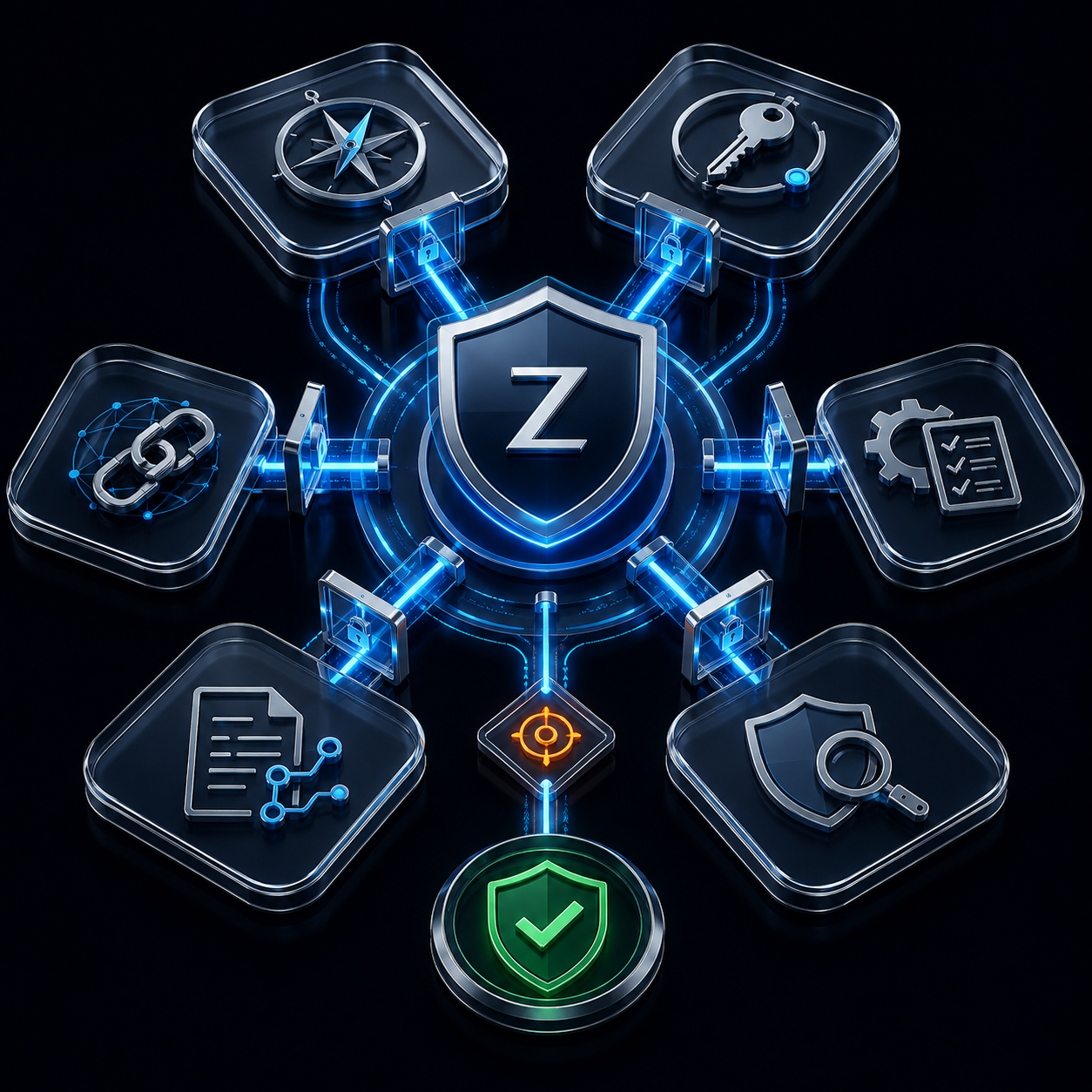
Role-based compliance software should reflect how responsibility actually works. Zebsoft connects organisational roles, controlled access, workflow activity, evidence and oversight without dividing the organisation into separate systems.
THE SHORT ANSWER
Roles Are Different Views of the Same Organisational Reality
Quality, safety, information security, operations and senior management require different information and perform different work. They should not need disconnected applications or duplicated records. Zebsoft gives each person an appropriate route into shared risks, controls, workflows, actions and evidence.
This matters because an individual can hold several responsibilities at once. A site manager might be a process owner, approve local changes, review incidents and receive executive reporting. Zebsoft does not need to create four versions of that person or four copies of the information. The user can participate in each approved capacity while the record retains which responsibility, authority and workflow stage applied to the action.
The same principle works in the opposite direction. One organisational responsibility may involve several people: a control owner, operational performers, a specialist reviewer and an independent verifier. Role-based design keeps their contributions connected while preventing activity completion from being confused with ownership, approval or assurance.
THE STRUCTURAL MODEL
Role Does Not Mean a Separate Module
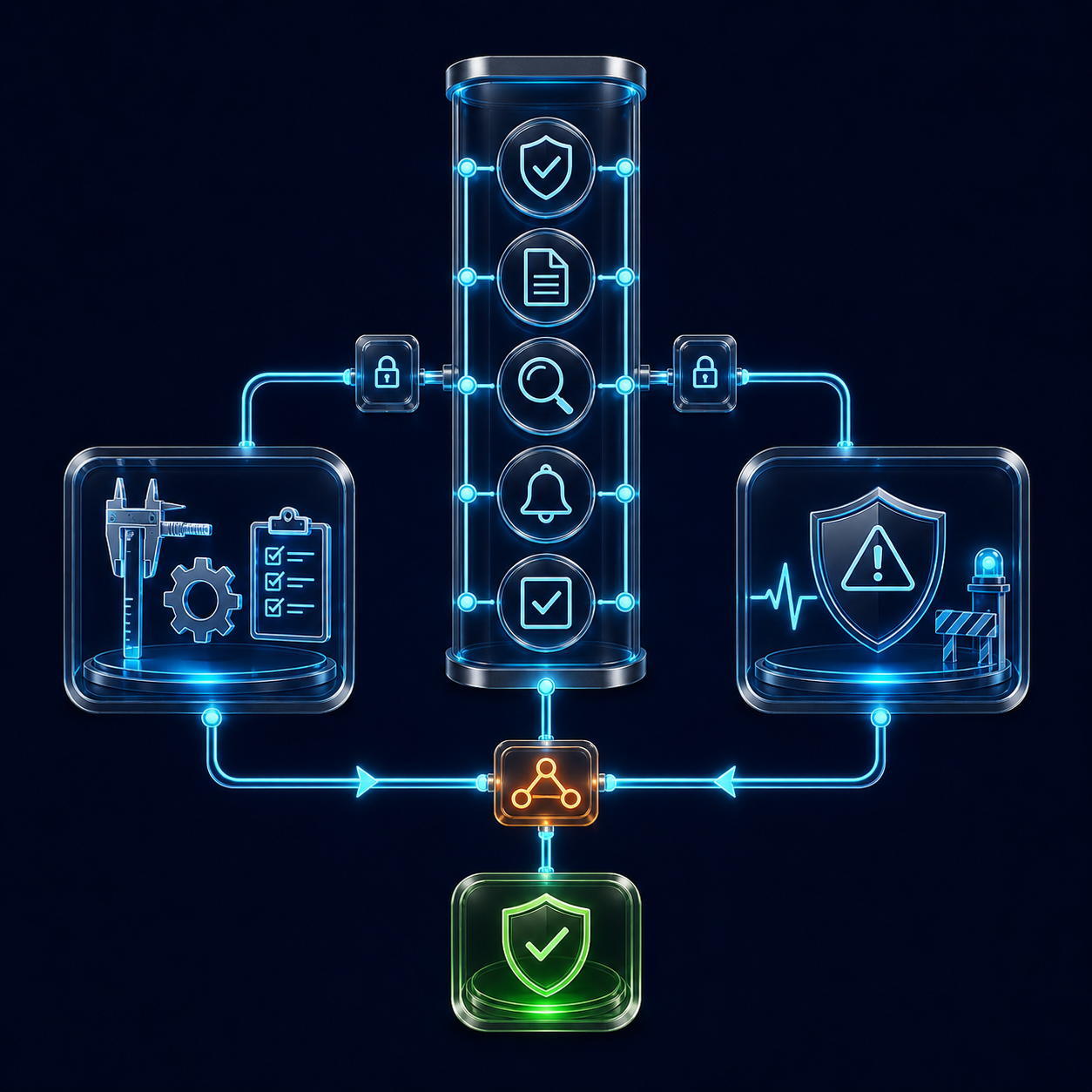
A Quality Manager and a Health and Safety Manager may both use risk, audit, documents, incidents and actions. Their context, judgement and evidence requirements differ, but the shared capabilities remain connected.
The result is one system with role-appropriate participation—not a collection of role-specific silos.
KEEP THE TERMS DISTINCT
Role, User Type, Permission, Ownership and Workflow
These concepts work together, but they are not interchangeable. Keeping them distinct prevents access settings from being mistaken for accountability.
| System concept | What it controls | Typical example | What it does not mean |
|---|---|---|---|
| Organisational role | The person’s real responsibility and accountability. | Health and Safety Manager or Process Owner | It is not automatically a system-access level. |
| User type | The broad way a person participates in the platform. | Administrator, contributor, viewer or portal participant | It does not decide every record the person may see. |
| Permission and scope | Which functions, sites, records or actions are available. | May review documents for one site but not administer users | Visibility does not itself create ownership or authority. |
| Record ownership | Who remains responsible for a risk, control, process, document or action. | Control owner responsible for continued operation | Ownership is not the same as completing every task. |
| Workflow responsibility | What the person must do at a particular stage. | Assess, approve, implement, verify or acknowledge | A completed stage does not transfer wider accountability. |
THE OPERATING MODEL
Every Role Contributes to Define, Communicate, Operate and Assure
People do not all interact with the complete cycle in the same way. The system connects their contributions so a requirement can move from definition to evidence-backed assurance.
Defined responsibility → relevant communication → assigned workflow → genuine evidence → competent review → exception, action or assurance
SPECIALIST AND DOMAIN RESPONSIBILITY
Different Subjects Require Different Competent Judgement
Shared workflows and evidence reduce duplication. They do not merge the scope, expertise or accountability of quality, safety, information security and operations.
OWNERSHIP ACROSS THE SYSTEM
The Named Owner Retains the Organisational Thread
Ownership provides continuity beyond individual tasks. A process, risk, control, document, asset or supplier may have one accountable owner while many people contribute through connected workflows.
A task can be assigned to another person. The record owner can still see whether the required activity occurred, what evidence was provided and whether further action is needed.
INDEPENDENT REVIEW AND CHALLENGE
Auditors, Reviewers and Approvers Need Evidence With Context
Assurance roles should be able to examine what was expected, what occurred, which evidence supports it and who reached the decision—without changing the operational record they are reviewing.
SENIOR MANAGEMENT AND DIRECTORS
Oversight Without Day-to-Day Administration
Senior leaders remain accountable for governance outcomes even where management and operation are delegated. Their role is to understand the organisational position, challenge priorities and make decisions using traceable information.
Executive access should be designed around oversight and decision, not unrestricted technical administration. The person can see the basis for the reported position without being expected to operate every underlying workflow.
SYSTEM ADMINISTRATION
Administration Supports Governance—it Does Not Own Every Decision
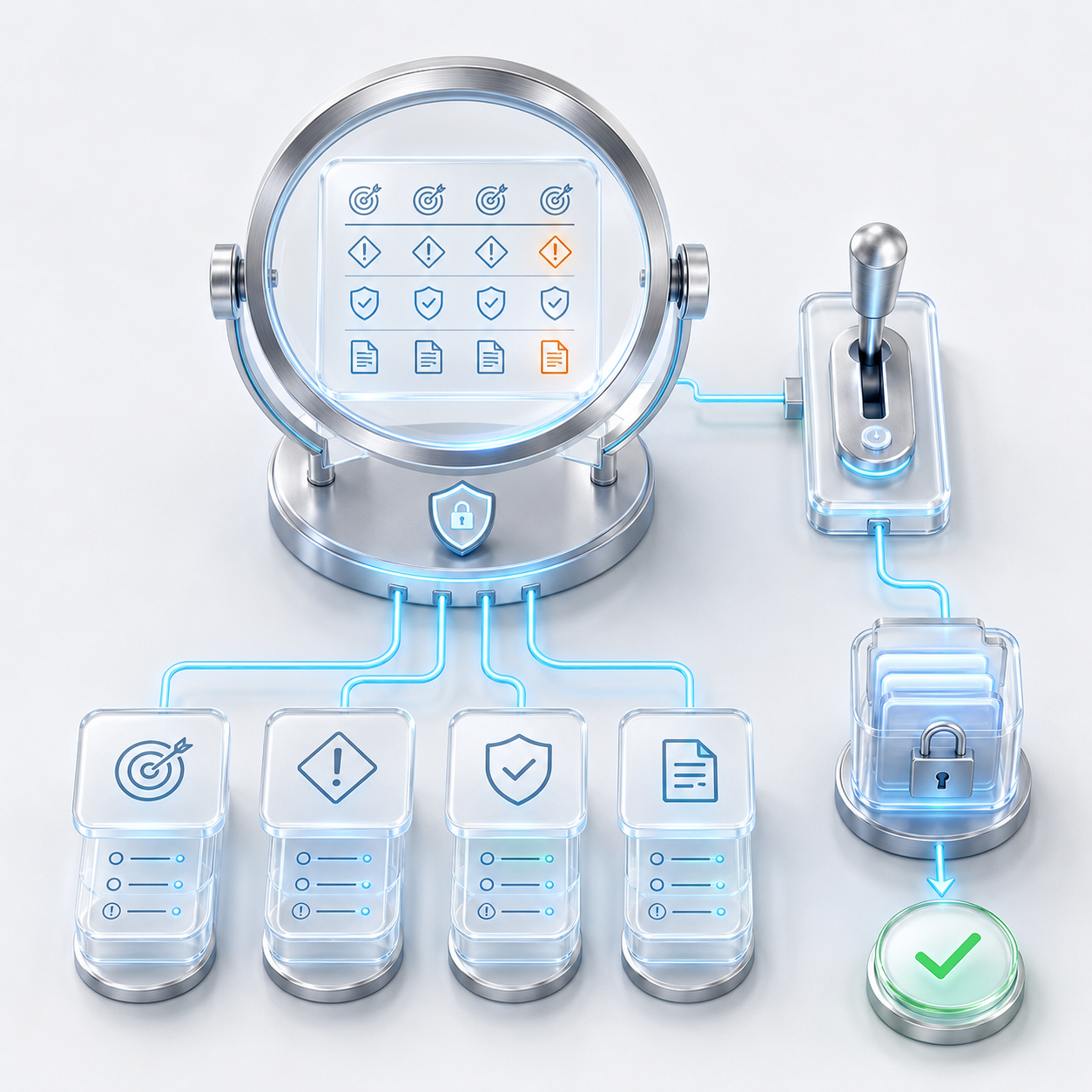
Administrators configure access, structure and workflows so the approved operating model can function. They should not become the default owner, approver or assurer merely because they can configure the system.
CONTROLLED EXTERNAL PARTICIPATION
Bring External Roles Into the Workflow Without Opening the Entire System
Suppliers, contractors, customers, consultants and external auditors often need to receive information, complete activity or provide evidence. Their participation should remain proportionate and bounded.
Where portals are configured, the external participant sees the relevant communication and workflow rather than the complete internal assurance environment.
HOW THE ROLES CONNECT
One Operational Issue Can Involve Several Responsibilities
An employee reports that a revised machine setting has created an unexpected defect and a possible safety concern. The value of role-based design is visible in what happens next.
ROLE-APPROPRIATE VISIBILITY
Give People What They Need to Act—Without Unnecessary Access
Access design should consider the user’s purpose, subject, location, confidentiality, authority and workflow responsibility. More access is not the same as better governance.
CONFIGURE FROM RESPONSIBILITY
Map the Organisation Before Assigning Access
A useful role model starts with how work and accountability operate, not a list of software permissions. Configuration can then translate that model into appropriate access and workflows.
Review the model when responsibilities, organisational structure, employment, contracts or system use change. Access should not remain simply because it was appropriate in the past.
RESPONSIBLE AI. ACCOUNTABLE ROLES.
AI Can Assist a User—it Cannot Hold Their Authority
Where enabled, AI can help authorised users interrogate and summarise approved information relevant to their access. It has no organisational role, ownership, professional competence or decision authority.
AI must not invent controls, evidence, approvals or decisions on behalf of a role.
PRACTICAL QUESTIONS
Solutions by Role FAQs
Role design should reflect real responsibility and authority. Zebsoft provides the connected structure through which those roles can participate and remain visible.
What does role-based compliance software mean?
Role-based compliance software presents relevant information, activity and authority according to each person’s responsibilities and approved access. In Zebsoft, roles participate in one connected system rather than receiving separate copies of the same records.
Is an organisational role the same as a Zebsoft user type?
No. An organisational role describes real responsibility, such as Quality Manager or Asset Owner. A user type describes a broad form of system participation. Permissions, scope, ownership and workflow assignments add the detail needed for controlled access and action.
Can one person hold several responsibilities?
Yes. A person may manage quality, own a process and approve certain changes. The configuration should retain each responsibility clearly so the person sees the appropriate work without obscuring which authority they are exercising.
Can responsibility be delegated?
Work can be assigned or delegated within approved rules, but organisational accountability does not disappear. Zebsoft can retain the owner, delegated activity, decision history and overdue or escalated position.
Do senior managers need full administrative access?
Not usually. Senior leaders may need oversight, management-review information and routes to supporting evidence without being able to configure the complete system or alter operational records.
How do employees and external parties participate?
Employees, suppliers, contractors, customers, advisers or auditors can use controlled internal access or an appropriate portal where configured. They receive only the information and activity needed for their participation.
Does a dashboard prove that a role has met its responsibilities?
No. A dashboard summarises status. Responsible users must be able to examine the underlying workflow, evidence, exceptions and human decisions before reaching an assurance conclusion.
Can AI make decisions for a role?
No. AI may help authorised users interrogate or summarise approved information where enabled. It must not invent evidence, exercise authority, approve, verify or replace the competent person accountable for the decision.
EXPLORE THE SYSTEM FROM THE RIGHT ANGLE
Move From Role to Platform, Domain or Capability
This page explains how people participate. Use the platform page for the overall proposition, Domains Explained for operational subjects and Modules for the reusable capabilities roles use across Zebsoft.