MIGRATE TO ZEBSOFT
Compliance System Migration Without Losing Operational Control
Migrate With Confidence. Operate With Assurance.
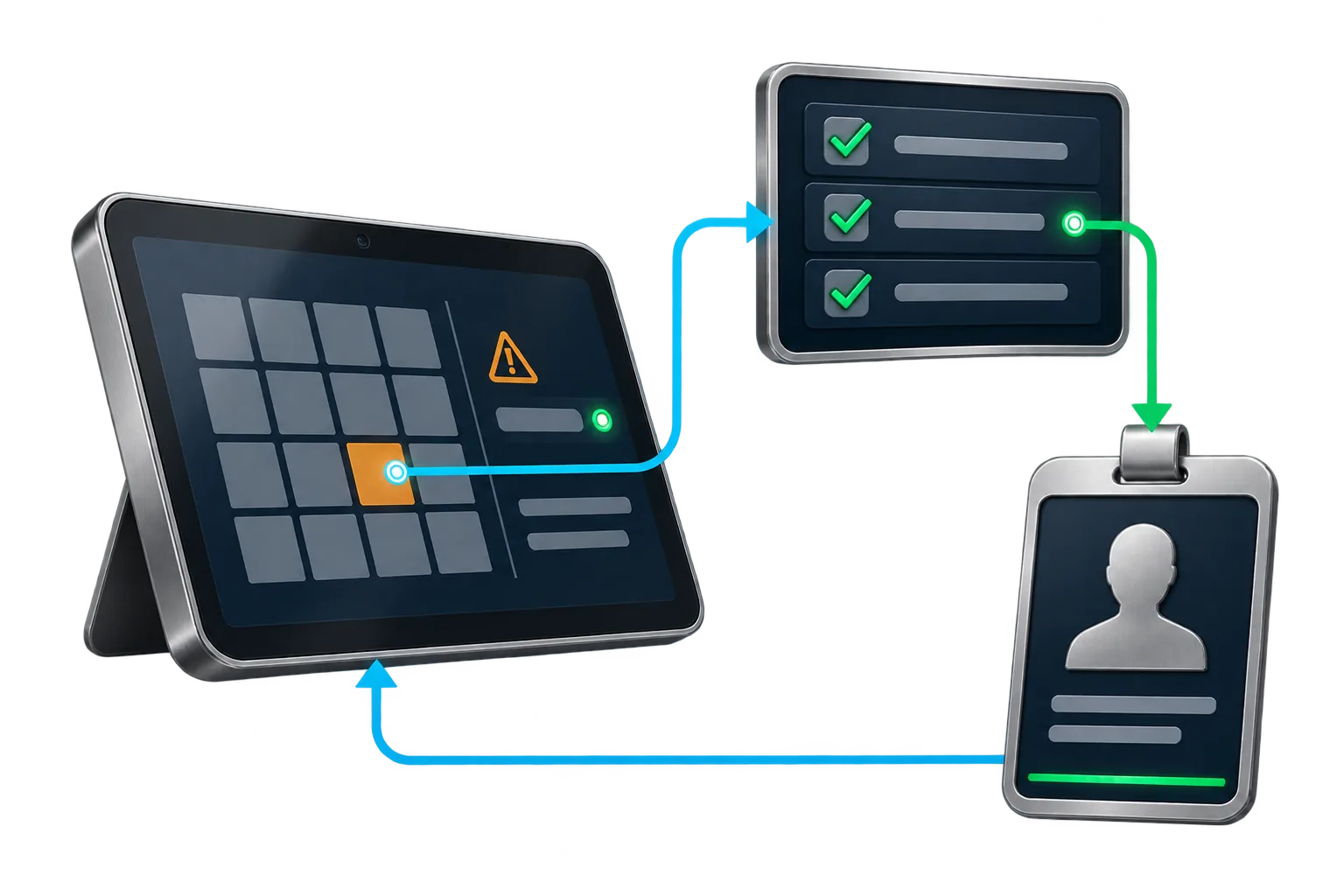
ZAP stands for ZEBSOFT Assurance Platform. Configurable ZAP workflows enhance the ZEBSOFT system by guiding checks, collecting evidence and routing decisions and follow-up.
Move from spreadsheets, SharePoint, a legacy QMS or another compliance platform into one connected assurance environment. ZEBSOFT helps protect continuity while requirements, responsibilities, workflows, records and evidence are mapped into a structure people can operate.
Compliance system migration is treated as a governed operational change—not a bulk file transfer or an IT installation exercise.
- Understand dependencies before transition begins
- Decide what should migrate, improve or remain archived
- Validate new workflows before relying on them
WHY ORGANISATIONS MOVE
The Existing System Stores Information but Control Is Becoming Hard to Prove
Migration rarely begins because one system is simply wrong. It begins when the organisation can no longer see current ownership, workflow status, exceptions and evidence across the tools it depends on.
Fragmented activity
Documents, audits, risks, actions and approvals are held in different platforms, folders and email chains.
Spreadsheet dependency
Local spreadsheets become unofficial control systems because the main platform does not support the work people need to perform.
Reconstructed evidence
Audit preparation depends on chasing records and assembling a retrospective story instead of retrieving connected operational proof.
Weak visibility
Leaders receive reports, but cannot easily interrogate the live work, ownership, exceptions and overdue actions behind them.
DISCOVERY BEFORE CONFIGURATION
Understand the Operating Environment Before Anything Moves
A safe compliance system migration begins with the organisation as it really operates. That includes approved processes, informal dependencies, local workarounds, data quality, permissions, reporting expectations and the people relied on to keep control functioning.
ZEBSOFT discovery separates genuine operational needs from historic system habits. This creates a transition scope that can be explained, owned and verified.
Governance and ownership
Standards, obligations, control owners, approval authority, escalation routes and management responsibilities.
Workflows and dependencies
Triggers, stages, decisions, notifications, handovers, evidence, integrations and person-dependent activity.
Data and evidence
Active records, historical value, duplicates, naming, metadata, document status, retention and source reliability.
People and access
Users, roles, sites, functions, external parties, restricted information, training and change readiness.
Reporting and visibility
Dashboards, assurance outputs, audit needs, management review information and unresolved blind spots.
Transition risk
Business-critical continuity, validation criteria, rollback needs, phased deployment and decision authority.
THIS IS HOW WE SOLVE THE PROBLEM
A Controlled Route From Existing System to Live Assurance
Each phase produces a defined output, an accountable decision and evidence that the next phase is ready to begin. The route can be adjusted to the organisation’s risk, scale, data and continuity needs.
01 — DISCOVER
Map the current reality
Review systems, processes, users, data, obligations, dependencies, failure points and the outcomes the new environment must support.
02 — DEFINE
Design the operating foundation
Agree structure, ownership, permissions, workflow stages, required evidence, escalation, reporting and acceptance criteria before configuration.
03 — TRANSITION
Move in controlled stages
Configure the agreed environment, prepare data, separate archives, migrate approved scope and record checks, exceptions and decisions.
04 — VALIDATE
Test the work—not just the data
Responsible users operate representative workflows, review permissions, confirm notifications, inspect migrated evidence and resolve material failures before reliance.
05 — ASSURE
Go live with visible control
Activate the agreed scope, monitor adoption and exceptions, retain validation evidence and improve the system using real operating information.
CONTROLLED TRANSITION FLOW
Existing environment → discovery and scope → approved architecture → staged migration → operational validation → human acceptance → live assurance
The transition remains traceable from the original requirement and source record to the configured workflow, migrated evidence, test result, accepted exception and authorised go-live decision.
MIGRATE VALUE—NOT CLUTTER
Not Everything in the Old System Belongs in the New One
Migration is an opportunity to establish a controlled line between active operational information and history retained for legitimate business, legal or assurance reasons.
Typically migrated
- Current controlled documents and approved templates
- Open audits, findings, actions and investigations
- Active risks, controls, suppliers, assets and obligations
- Relevant training, competence and authorisation records
- Users, roles, sites, workflow rules and reporting needs
The approved migration scope depends on value, quality, retention requirements and how the information will be used after transition.
Often archived or retired
- Obsolete revisions and superseded working copies
- Duplicated, incomplete or unowned records
- Inactive workflows and historic system structures
- Unmanaged folders and information with no defined purpose
- History better retained in a controlled read-only archive
Archiving is an authorised retention decision. ZEBSOFT does not automatically decide what may be destroyed, retained or relied upon.
STATIC STRUCTURE
Preserve what defines control
Policies, procedures, standards, obligations, risks, roles, authorities, document structures and approved controls define what should happen.
During migration, these elements are reviewed for current status, ownership and relationship to the work they govern.
DYNAMIC ASSURANCE
Make operation visible
Workflows, tasks, audits, inspections, approvals, records, notifications and exceptions show what is happening now.
ZEBSOFT connects this operating evidence back to the requirement, owner and control so migrated governance becomes usable.
DEFINE. COMMUNICATE. OPERATE. ASSURE.
Migration Establishes the System. DCOA Keeps It Working.
The new environment must make requirements usable, communicate what matters, support controlled work and produce evidence that competent people can verify.
Define
Confirm requirements, controls, roles, authority, workflow logic and the evidence needed to demonstrate the intended outcome.
Communicate
Deliver relevant information, instructions, tasks and changes to the right people without recreating uncontrolled distribution.
Operate
Use connected workflows, records, approvals and evidence routes so governance becomes part of daily work rather than a parallel system.
Assure
Review current performance, adverse results, exceptions and completed evidence so competent people can verify effectiveness and act.
DIFFERENT STARTING POINTS
A Migration Route Shaped Around the Environment You Are Leaving
The transition approach changes with the source. A spreadsheet estate, a SharePoint structure, an on-premise QMS and a highly configured enterprise platform present different access, data and continuity risks.
Spreadsheets and shared drives
The priority is identifying authoritative records, duplicates, hidden formulas, local owners, uncontrolled copies and manual reporting dependencies.
The migration can replace isolated registers with connected records and workflows while retaining only useful history.
SharePoint-based compliance
The review distinguishes document storage from operational control. Lists, libraries, permissions, Power Automate flows, links and local workarounds must be understood together.
ZEBSOFT can become the assurance layer while approved Microsoft services remain connected where appropriate.
Legacy or enterprise platforms
Configured fields, relationships, audit history, exports, database access, integrations, licences and supplier exit arrangements affect what is possible.
A proof-of-concept migration may be used where source access or mapping quality must be demonstrated before full commitment.
RAPID START—CONTROLLED MATURITY
Fast Configuration Does Not Mean Pretending Migration Is Instant
A defined starting environment may be configured quickly when scope, structure, users and decisions are ready. Some contained deployments can begin within days. That is different from claiming that a complex organisation, its history and its working practices can be safely transformed in the same period.
Timescale depends on source access, data quality, configuration, integrations, validation, internal availability, training and the authority to make decisions. ZEBSOFT separates rapid technical enablement from the controlled work needed for dependable adoption.
Getting started with ZEBSOFT: choose the first business benefit and build user adoption →
A proportionate rollout can include:
- Foundation configuration and priority users
- One module, site or workflow as a controlled pilot
- Representative data and evidence mapping
- User acceptance and operational validation
- Phased expansion after lessons are resolved
LEADERSHIP AND HUMAN RESPONSIBILITY
Migration Is an Organisational Decision—not Merely an IT Project
Technology can move records and automate defined routes. It cannot decide which obligations apply, whether historic evidence remains reliable, who is competent to approve a control, or whether the new operating arrangement is acceptable.
Leadership must establish authority, resources and expected behaviour. Process owners must validate the work they depend on. Users must understand the change. Assurance must continue after go-live so local spreadsheets and workarounds do not quietly reappear.
AI may help interrogate approved migration information and identify possible gaps or inconsistencies. It must not invent records, approve a migration, determine legal retention or replace accountable human judgement.
Sponsor
Sets direction, authority, priority, resources and the conditions for go-live.
Process owners
Confirm requirements, test representative work and accept or reject material results.
Transition team
Controls actions, evidence, issues, communication, training, readiness and change decisions.
PRACTICAL QUESTIONS
Compliance System Migration FAQs
Every migration depends on source access, data quality, scope, operational risk and the organisation’s decisions. These answers describe the controlled starting position.
Can ZEBSOFT migrate data from another compliance platform?
Yes, where suitable source data and access are available. The scope is agreed after reviewing formats, relationships, history, quality, permissions and the operational purpose of the information.
Can we migrate from spreadsheets and SharePoint?
Yes. Registers, document libraries, lists and selected history can be mapped, but duplicates, uncontrolled copies, missing ownership and manual dependencies should be resolved rather than reproduced.
Do we need to migrate all historical records?
No. Organisations may choose a new start, controlled archive, partial history or wider migration. Competent people must decide what should remain accessible and what retention requirements apply.
Can the existing system remain available during transition?
Often yes. A parallel or phased route may protect continuity while configuration, migration and validation are completed. This depends on existing licences, supplier terms and technical access.
How is migrated information checked?
Checks can include counts, field mapping, relationships, permissions, samples, exception reports and representative workflow tests. The agreed acceptance route should reflect the consequence of error.
Can ZEBSOFT copy our old processes exactly?
Where justified, existing logic can inform configuration. Discovery should first establish whether the old process is still appropriate, communicable and capable of producing useful assurance.
How long does compliance system migration take?
It varies. A contained starting environment may be available quickly; complex multi-site migration can require phased work. Scope, source access, data quality, integration, validation and internal availability determine the plan.
Does ZEBSOFT guarantee that no data will be lost?
No responsible supplier should make an absolute guarantee without an agreed scope and verified source. ZEBSOFT uses controlled mapping, migration checks, exceptions and human acceptance to reduce and manage transition risk.
START WITH YOUR CURRENT REALITY
Complete the Operational Transition Assessment
The assessment helps identify your existing platform, standards, sites, responsibilities, data condition, migration priorities, integrations, resources and preferred rollout.
It does not create a contractual scope or automated conclusion. ZEBSOFT reviews the information with you before proposing a migration route.
Useful information to have ready
- Current platform and contract position
- Approximate users, sites and external parties
- Standards and regulatory frameworks
- Data areas and required history
- Priority workflows and operational risks
- Target timescale and available internal resource
CONTROL THE TRANSITION
Migration Does Not Need to Be Destructive
Move forward with a defined scope, controlled decisions, visible evidence and a platform designed to connect governance to operational work.