
MULTI-CLIENT COMPLIANCE DELIVERY
GRC Software for Consultants
Operate Your Methodology Across Client-Specific Workspaces
Zebsoft gives compliance consultants and advisory firms a governed platform for delivering management systems, GRC services and continuing assurance across multiple clients. Your consultancy retains oversight of its approved methodology, templates, workflows and service commitments while each client accesses only its authorised records, responsibilities and evidence.
This is more than a template library or shared document portal. It connects consultancy knowledge to client-specific operation, communication, evidence and human assurance.
THE CONSULTANCY DELIVERY PROBLEM
Expertise Does Not Scale Through Copied Files
Consultants often begin with a strong method but deliver it through disconnected client folders, copied templates, spreadsheets and email reminders. As the client base grows, the same work is repeated, versions diverge and it becomes difficult to see which client has accepted a change, completed an action or supplied the required evidence.
Single-organisation compliance tools create another problem: consultants must enter and administer each client system separately, losing the portfolio visibility needed to manage retained services efficiently.
ONE DELIVERY PLATFORM
Central Consultancy Oversight—Separated Client Context
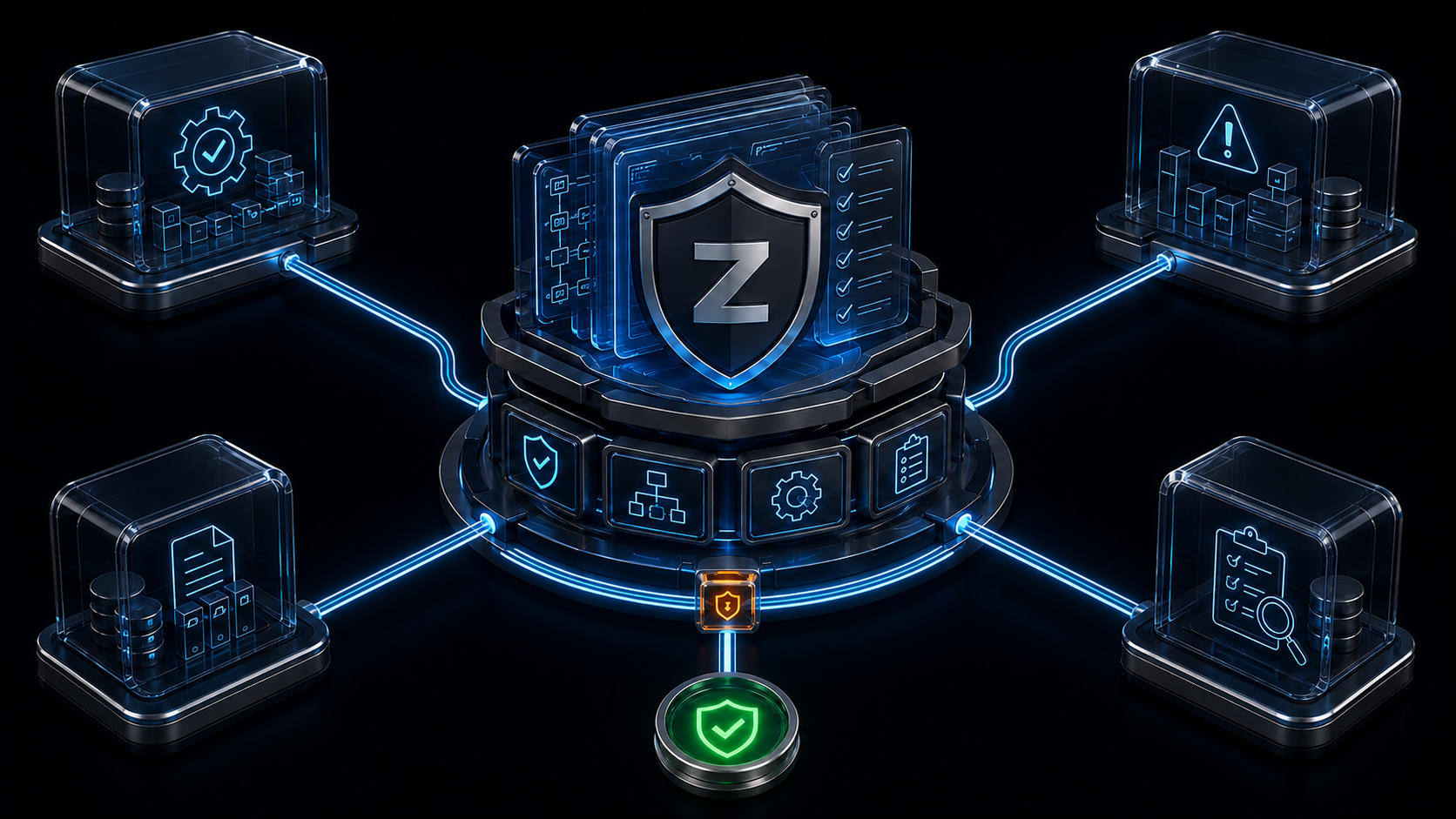
The platform gives the consultancy a governed portfolio view while preserving the approved boundaries of each client engagement. Centralisation means consistent control and visibility; it does not mean clients can see one another or that generic content is imposed without review.
THE CLIENT DELIVERY LIFECYCLE
From Initial Scope to Continuing Assurance
A consultancy platform should support the engagement as a continuing governed service—not stop when the first document pack is issued.
DEFINE—COMMUNICATE—OPERATE—ASSURE
Turn Consultancy Advice Into Client Operation
The value of advisory work is realised only when the client understands what has been defined, performs the required activity and can demonstrate the result. Zebsoft connects the consultancy method to that operating route.
GOVERNED REUSE
Master Templates Without Generic Client Systems
Reusable content reduces repeated drafting, but a master template is not automatically suitable for every client. Zebsoft allows the consultancy to maintain approved source material and apply it through a controlled client-specific review.
The deployed document or register can be adapted for the client’s identity, scope, terminology, responsibilities, risks and obligations. Later master changes can initiate a review of affected client content rather than silently overwriting an approved local position.
CLIENT-SPECIFIC WORKSPACES
Give Each Client a Clear, Authorised Operating View
Client users should experience a coherent management system built around their organisation—not a confusing view of the consultancy’s wider portfolio. Their workspace presents the documents, risks, audits, responsibilities, actions and evidence relevant to their authorised scope.
The consultancy retains the oversight required to deliver the engagement. Client data, permissions and records remain separated according to the agreed configuration. Branding, white-labelling and commercial presentation should be agreed explicitly rather than assumed.
CONNECTED DELIVERY WORKFLOWS
Standardise the Method—Configure the Route
The consultancy can apply consistent governance while allowing workflow depth, authority and evidence to reflect each engagement.
THIS IS HOW WE SOLVE THE PROBLEM
Connect the Method to the Client Outcome
The consultancy retains the controlled method, but the client’s competent people remain responsible for the organisational decisions and evidence within their scope.
ROLE-SPECIFIC VISIBILITY
Give Each Participant the View Their Responsibility Requires
A multi-client model depends on deliberate visibility. Central oversight must not become unrestricted access, and simple client participation must not require administrative complexity.
CLEAR RESPONSIBILITY
Consultant Control Does Not Replace Client Accountability
The consultancy can define methods, advise, configure, monitor, review and provide assurance support. The client remains responsible for its organisation, legal and regulatory obligations, risks, resources, operational decisions and claims of conformity.
The service design should record where responsibility sits, who may approve information, who accepts risk, who verifies evidence and what the consultancy is authorised to do on the client’s behalf.
COMMERCIAL SCALE WITH CONTROL
Reduce Repetition Without Diluting the Service
Repeatable configuration, templates and workflows can reduce avoidable administration and give consultants more time for analysis, judgement and client support. The commercial outcome still depends on service design, pricing, utilisation, onboarding effort, configuration and client behaviour; software cannot guarantee profitability.
CONTROLLED TRANSITION
Move Existing Clients Without Recreating Every Engagement
Current templates, client folders, registers, audit records and active actions can be assessed and mapped into a phased delivery model. Migration should prioritise the information needed for continuing service, accountability and assurance—not transfer every duplicate or obsolete file.
RESPONSIBLE AI
Interrogate the Portfolio—Keep Advice and Decisions Human
AI can help authorised users interrogate approved information, summarise current records and identify patterns or missing fields within the data available to them. It must not invent client evidence, standards requirements, legal interpretations, audit conclusions or consultancy advice.
Consultants and authorised client people remain responsible for professional judgement, applicability, risk acceptance, approvals, representations and assurance conclusions.
CONSULTANT OR RESELLER?
Two Different Commercial Relationships
This page is for consultancies using Zebsoft to deliver and govern their own client services. A reseller relationship is different: the partner identifies and develops a software opportunity under an agreed commercial model while Zebsoft retains the platform proposition, technical scope and delivery authority.
The relationship should be agreed before either party presents the platform or service to a customer.
PRACTICAL QUESTIONS
GRC Software for Consultants FAQs
The final delivery model depends on client count, users, required separation, enabled capabilities, workflow complexity and the agreed service and subscription scope.
What is GRC software for consultants?
It is a governed platform that helps consultants apply approved methods, templates and workflows across client-specific compliance environments while retaining portfolio oversight and client separation.
Can each client have its own workspace?
Yes, where configured. Each client can operate within its authorised context, records, users and workflows while the consultancy retains the access required for the agreed service.
Can master templates be reused?
Yes. Approved source templates can be applied to relevant client environments, adapted for client context and changed through controlled review rather than unmanaged copying.
Can clients see one another’s information?
Client users should not have cross-client visibility. Access and separation must be configured and tested for the agreed delivery model.
Is this a white-label platform?
Branding and commercial presentation depend on the agreed configuration and contract. They should not be assumed from the multi-client delivery model.
Does Zebsoft protect our intellectual property?
The platform can help control approved methods, templates, permissions and deployment history. Legal ownership and permitted use depend on your contracts and professional advice.
Will the platform make consultancy delivery profitable?
It can reduce repeated administration and improve delivery visibility, but profitability depends on pricing, utilisation, configuration, onboarding effort and the consultancy’s operating model.
Does AI provide compliance advice to clients?
No. AI may help authorised users interrogate approved information. Qualified consultants and authorised client people remain responsible for advice, interpretation, decisions and assurance.
BUILD A REPEATABLE DELIVERY MODEL
Scale the Method Without Losing the Client Context
Start with one representative client engagement. Map the consultancy method, client-specific responsibilities, recurring workflows, evidence and reporting route. That will show how portfolio control can increase without turning every client into a generic copy.