
The certification machine keeps churning. New standards, new requirements, more audits and another renewal date in the diary. But what is happening to the people doing the auditing—and to the value the client receives?
I have had many conversations in which a three-year “burn time” comes up. It is a recurring reference to the point where enthusiasm for the work begins to give way to fatigue, repetition or disengagement.
I am describing conversations, not presenting an industry-wide statistic. The concern they raise is worth examining: what happens when an auditor stops investigating and starts getting through the programme?
Experience needs to be accompanied by interest
Auditors arrive with different backgrounds, at different stages of their careers and with very different levels of operational experience. Those differences influence what they recognise, the questions they ask and the explanations they are prepared to accept.
Experience can help an auditor spot something that a less experienced person might miss. It can also become a source of assumptions if every business starts to look like the last one. Equally, enthusiasm needs enough knowledge behind it to distinguish a plausible explanation from a convincing one.
For the client, the important question is whether the auditor is interested in understanding what the business actually does.
A document can be controlled and still describe a weak process
Finding a procedure, a training record and a completed checklist may establish that those records exist. There are further questions to answer before drawing a conclusion about the work itself.
Does the procedure reflect the conditions in which people operate? Did the training prepare them for the decisions they need to make? Does the completed checklist contain evidence that supports its conclusion?
A beautifully maintained document can describe an impractical process. A signed record can sit alongside an unresolved concern. A task can be marked complete while the problem it was intended to solve remains.
Recognising that takes understanding. It also takes a willingness to ask another question when the first answer sounds acceptable.
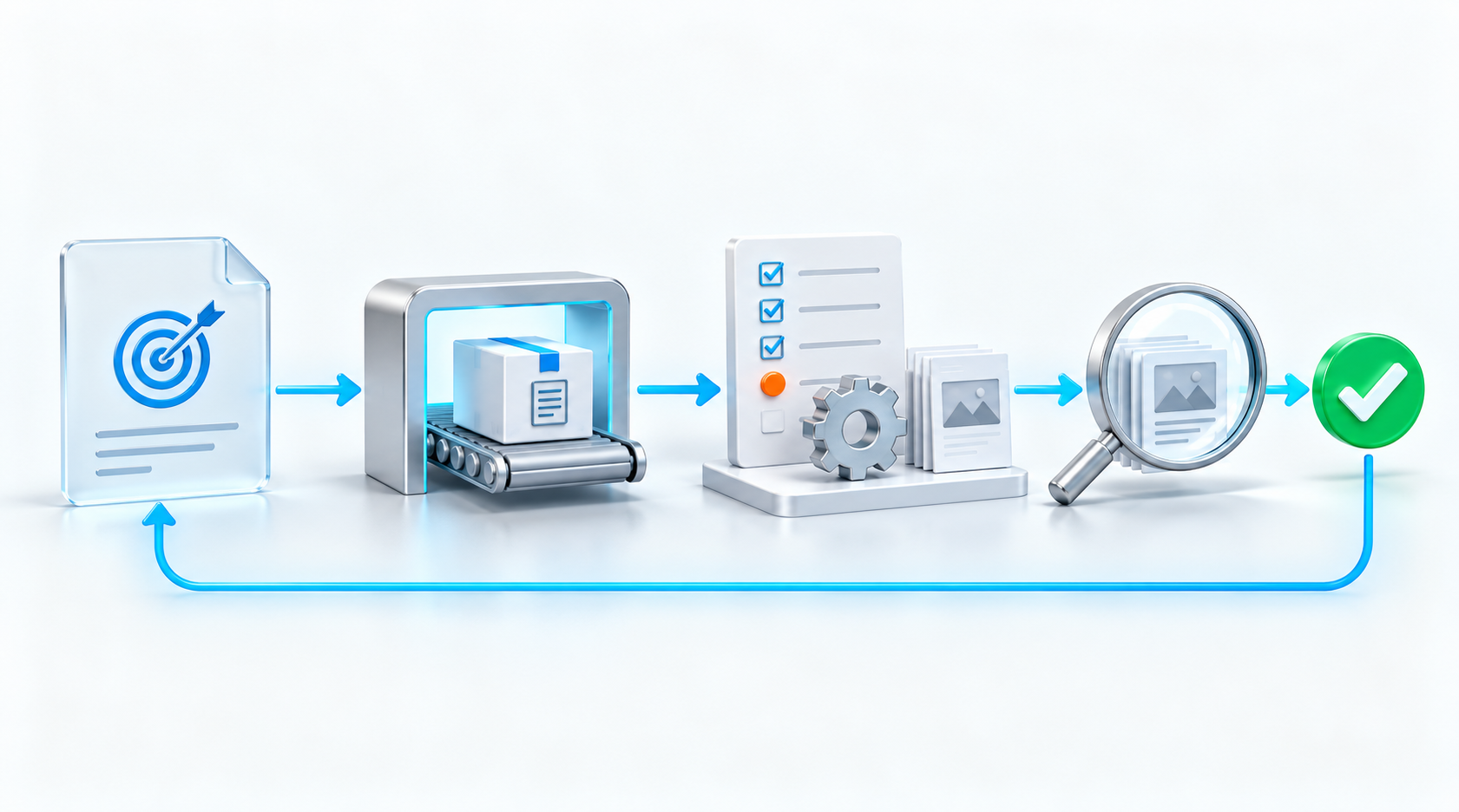
Follow one real piece of work
Consider an illustrative project in which a business promises a customer a particular outcome. Rather than stopping at the existence of an approved process, follow the promise into delivery.
- What did the customer require, and how was that understood?
- Which assumptions influenced the quotation or technical decision?
- Who checked whether the business could deliver what it promised?
- Did the relevant information reach the people doing the work?
- What happened when a requirement changed or a problem emerged?
- What evidence supports the conclusion that the intended outcome was achieved?
The answers connect the management system to the activity it exists to support. They also reveal where a perfectly orderly set of records may leave an important gap.
What is the audit programme encouraging?
We should ask what gives auditors the time, competence and motivation to follow that trail. If the practical expectation is to complete the programme, produce the report and move on, we should examine what encourages deeper scrutiny within that arrangement.
This deserves attention from certification providers, auditors and clients. An individual auditor cannot resolve every weakness in the way work is planned, supported or valued.
Clients have a part to play too. Do we want someone to challenge how our business operates, or do we mainly want the certificate renewed with minimum disruption? A probing question is less welcome when everyone has already decided that a quiet audit is a successful audit.
More standards do not answer the question
As I write this, three emails from ISO about new standards have arrived in my inbox. To me, they are a reminder that the machine is alive and well.
The emails do not establish that any particular audit is poor. They prompt a question about priorities: as the body of standards develops, what is being done to sustain the understanding and professional curiosity needed to apply meaningful scrutiny?
Another requirement only becomes useful to a business when people understand its relevance, translate it into suitable activity and examine whether that activity works.
Make the evidence easier to interrogate
Zebsoft can help bring documents, risks, audit findings, tasks and supporting evidence into a connected working environment. That gives reviewers a clearer route through the records and the actions that follow.
The judgement remains with the people doing the review. A connected system is useful when it helps someone trace a decision, investigate an exception or test a conclusion. Its value is diminished if it merely makes the boxes quicker to tick.
Tick-box auditing becomes comfortable when neither side wants a difficult conversation. The certificate may survive that arrangement. The weakness nobody properly examined survives it too.