

PRACTICAL WORKFLOW GUIDE · UNITED STATES

SOP Revision and Multi-site Change Control for US Teams

Approving a revised SOP is only one part of controlling a change. US quality and operations teams also need to understand which processes are affected, who needs the current information and how implementation will be verified across locations. This guide follows a single revision from proposed change to reviewable operating evidence.
United States software and assurance overview

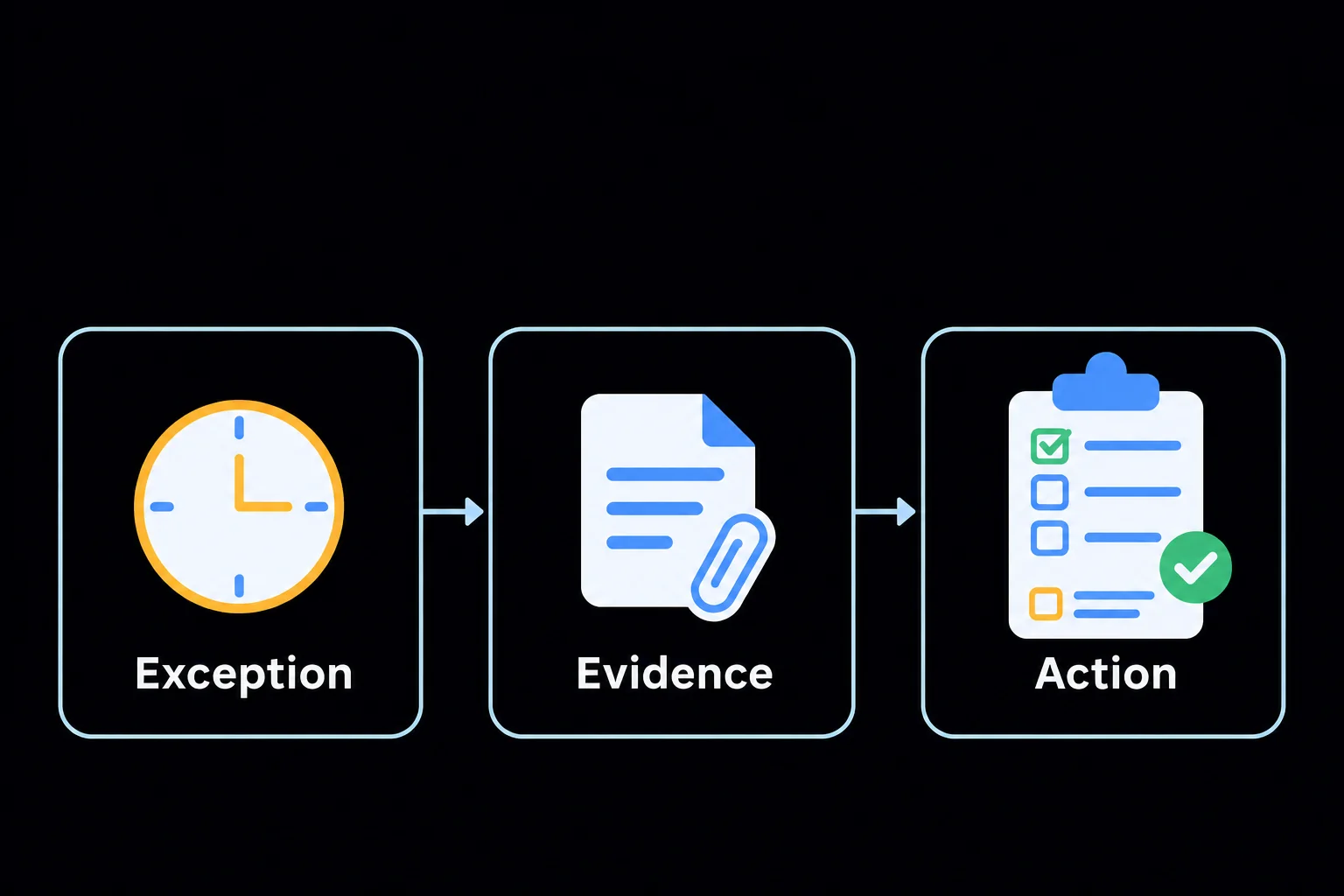
An exception remains connected to its supporting evidence and a responsible follow-up action.

An Illustrative Operating Scenario

Illustrative scenario: an engineering business updates an inspection procedure used at several facilities. The change affects the approved instruction, required readers and related training. One site is ready to adopt it while another has unresolved questions. The example shows an accountable change route; it does not claim a validated deployment, regulatory approval or a customer outcome.

Control the Revision and Its Operational Effect

1. Record the proposed change and reason

Identify the current document, the suggested amendment and why it is needed. Retain the source of the request and the process it affects. A reviewer should be able to distinguish a wording correction from a change that affects how work is performed or how results are assessed.

2. Review impact before approval

Ask the responsible reviewers to consider affected roles, sites, risks and related information. Identify whether competence or communication activity needs to accompany the revision. Record unanswered questions and assign follow-up rather than treating a completed document edit as evidence that all operating effects have been considered.

3. Approve the controlled revision

Use the agreed approval route to record the authorized decision and preserve revision history. Make the applicable version and implementation arrangements clear to the affected teams. A shared draft or review discussion should remain distinguishable from the approved information used to perform the process.

4. Communicate to the required readers

Assign the current instruction to the relevant people and review reading confirmations. Keep document communication separate from competence assessment: acknowledging an instruction does not establish that a person can perform every activity it describes. Identify any additional training or authorization requirements through the appropriate review.

5. Verify adoption across facilities

Review whether each affected facility has implemented the agreed revision and associated actions. Examine the source evidence and unresolved exceptions, not only the overall status. A site with outstanding questions needs an explicit responsible decision about its operating arrangements and next review point.

6. Review results and retain the history

Use subsequent checks, findings or process evidence to assess whether the change worked as intended. Retain links between the revision, review discussion, implementation actions and later exceptions. If another change is needed, preserve the earlier decisions so the next reviewer can understand how the process developed.

Make Each Decision Explicit

Agree these review points with the responsible people for the intended workflow. Records support their judgement; they do not replace it.

Ready for approval

The proposed amendment and operating impact have been reviewed by the assigned people. Required implementation and communication actions are understood, and unresolved questions have owners. Approval should concern a defined revision and scope.

Approved but implementation incomplete

The document has an authorized revision, while one or more facilities still have assigned implementation activity. Keep that difference visible so management does not infer site readiness solely from the approval status of the document.

Implemented and reviewed

The responsible team has examined evidence of adoption and any required follow-up. Retain the sites, roles and checks covered by that decision. Later findings can then be reviewed against the actual revision and implementation history.

A Practical Review Checklist

  • Identify the current SOP and the reason for revision.
  • Review affected facilities, roles, risks and related instructions.
  • Retain approval decisions and earlier revisions.
  • Separate reader acknowledgment from competence evidence.
  • Assign and verify site implementation actions.
  • Link subsequent findings to the applicable revision history.

Connect the Workflow in Zebsoft

These capabilities provide the connected record and review routes to explore during evaluation. Agree the configuration, permissions and verification needed for your intended use.

US document control

Training and competency

Audit and follow-up review

Questions to Resolve During Evaluation

Does reading confirmation prove competence?

No. It records a communication-related event. The organization must define what evidence demonstrates competence for the role and activity. Connect any required assessment, authorization or refresher activity to the relevant person and process.

Does this establish compliance with electronic-record requirements?

No. Suitability depends on intended use, configuration, validation and applicable requirements. Review those needs with responsible specialists during evaluation. This guide describes an operating workflow and does not provide a blanket regulatory determination.

Follow One SOP Change Through a Demonstration

Bring a proposed revision and the facilities or roles it affects. We can examine review, approval, reading records and implementation evidence without losing the responsible decisions behind the change.