
Contingency Planning: A Plan Is Only as Good as Its Last Test
Northwich’s £7 million flood defence exercise provides an excellent example of why contingency plans must be tested, not simply documented.
The Environment Agency’s October 2026 exercise to test Northwich’s flood defence scheme demonstrates an important principle of operational assurance: having a contingency plan does not necessarily mean an organisation is prepared to implement it.
The scheme is designed to protect approximately 400 homes and businesses. The exercise involves deploying temporary flood barriers, operating floodgates and testing pumping arrangements, requiring coordination between the Environment Agency, Cheshire West and Chester Council and United Utilities.
What makes this exercise particularly relevant is that it tests more than individual pieces of equipment. It tests the arrangements, responsibilities and operational coordination needed to deliver an effective response.
Having a Contingency Plan Does Not Mean You Are Prepared
Most organisations maintain contingency arrangements covering emergencies, equipment failure, flooding, cyber incidents, power outages, supplier disruption or interruption to essential services.
However, the existence of a documented procedure provides little assurance that the organisation can actually respond effectively when something goes wrong.
Consider a few straightforward questions:
- Are the people responsible for implementing the plan available and competent?
- Is the necessary equipment operational and accessible?
- Can the required resources be deployed within an acceptable timeframe?
- Do internal departments and external organisations understand their responsibilities?
- Are communication and escalation arrangements effective?
- Has the complete response ever been tested against measurable acceptance criteria?
These are questions that cannot be answered by reviewing a document alone.
A contingency plan describes what an organisation intends to do. Testing establishes whether those arrangements are capable of working.
Testing the Complete Response
The Northwich exercise illustrates why contingency testing should consider the interaction between people, equipment, procedures and supporting organisations.
A flood barrier might be perfectly serviceable, but what happens if the team responsible for installing it cannot arrive within the required response period?
A pumping system might operate correctly, but what happens if the communication authorising its deployment fails?
A documented procedure might be technically accurate, but what happens if the person expected to implement it has never participated in an exercise?
Operational resilience depends on the entire response working together, not simply on individual components passing inspection.
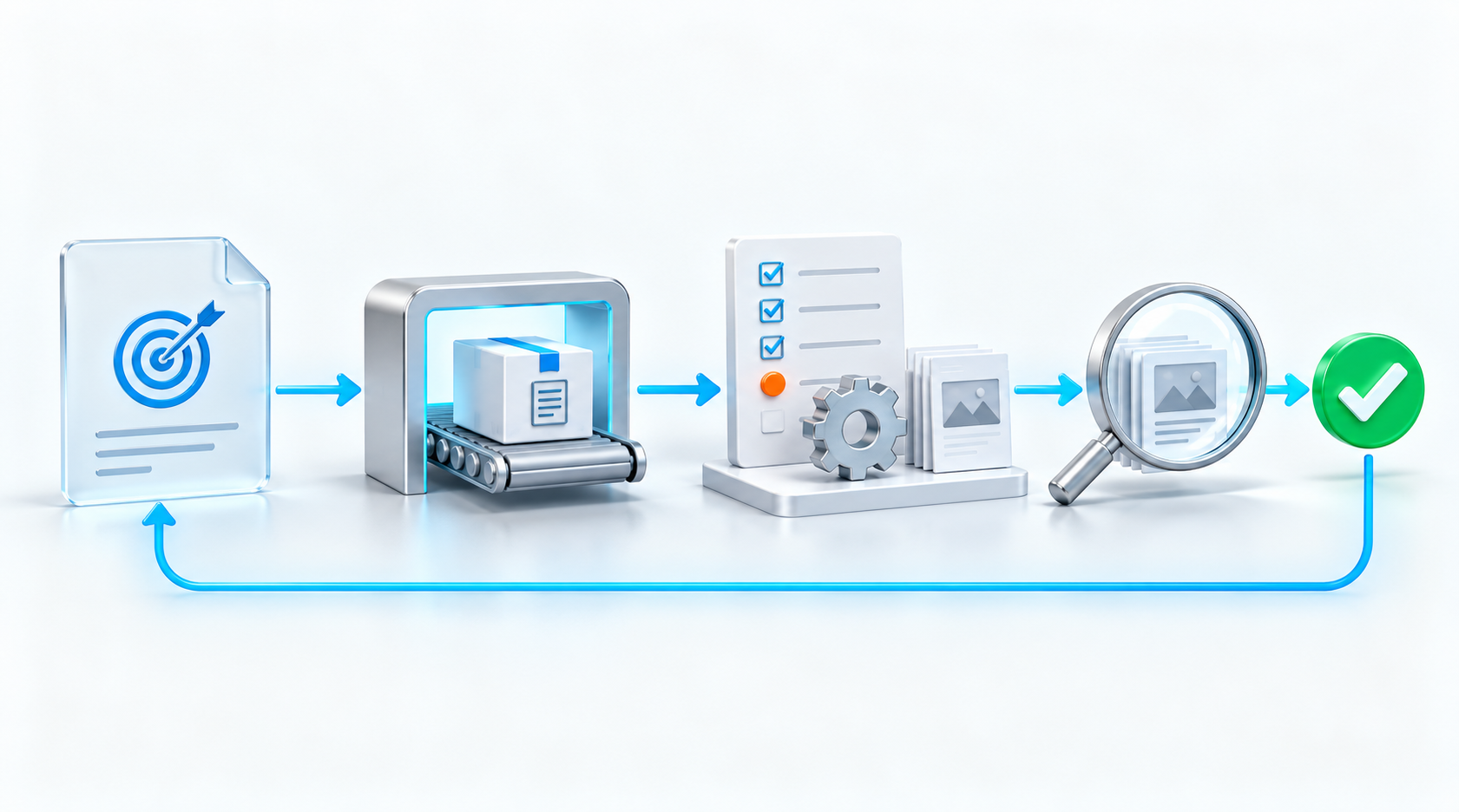
Five Stages of Effective Contingency Planning and Testing
An effective contingency management process should follow a structured and repeatable approach.
1. Define the Risk
Identify the circumstances that could interrupt operations, their potential consequences and the conditions that would trigger a contingency response. Establish the required response and recovery objectives.
2. Establish the Contingency Plan
Define the actions, responsibilities, equipment, resources, communication arrangements and escalation requirements necessary to respond effectively.
3. Plan the Test
Determine what will be tested, when, by whom and under which conditions. Establish measurable acceptance criteria so that performance can be assessed objectively.
4. Execute and Record
Conduct the exercise and capture what actually happened, including response times, equipment performance, decisions, deviations, observations and supporting evidence.
5. Review and Improve
Evaluate the results, identify weaknesses, assign corrective actions and verify their effectiveness. Where necessary, revise the contingency arrangements and repeat testing.
This creates a continuous assurance process rather than an occasional exercise that produces a report which is subsequently filed away.
How Zebsoft Supports Contingency Planning and Testing
The Zebsoft Assurance Platform provides an integrated management framework for planning, conducting, recording and reviewing contingency testing activities.
Rather than managing plans, test schedules, evidence and corrective actions across disconnected documents and spreadsheets, organisations can maintain these activities within a controlled operational assurance environment.
Contingency Planning and Document Control
Contingency procedures can be maintained as controlled documents, with defined ownership, approval, revision history and scheduled review arrangements. This helps ensure that responsible personnel have access to the current approved arrangements.
Risk Management
Operational risks can be identified, assessed and managed alongside the controls and contingency arrangements intended to address them. Changes in operational risk can be considered when reviewing the continued suitability of the contingency plan.
Scheduled Testing and Responsibilities
Testing activities can be planned and allocated to responsible personnel, with scheduled dates, assigned tasks and completion records maintained through the platform.
Structured Testing Using ZAP Workflows
Zebsoft’s ZAP workflows provide a structured method of conducting contingency tests and exercises.
Test requirements can be presented as defined questions and checks, allowing personnel to record results, observations and supporting evidence against established acceptance criteria.
This provides consistency between exercises and creates an auditable record of the activities undertaken and the results obtained.
Incident and Corrective Action Management
Where testing identifies failures, weaknesses or opportunities for improvement, these can be recorded and managed through corrective action processes.
Responsibilities, actions and completion requirements can be assigned, monitored and reviewed to establish whether the necessary improvements have been implemented.
Management Review and Operational Assurance
Test results, outstanding actions, recurring weaknesses and supporting evidence can be brought together to inform management review and demonstrate the continued effectiveness of contingency arrangements.
The value is not simply in storing the contingency plan. It is in maintaining the relationship between the identified risk, the planned response, the test undertaken, the results obtained and the actions required.
The Difference Between Compliance and Confidence
International management system standards recognise the importance of emergency preparedness, response arrangements and evaluating their effectiveness.
ISO 14001 and ISO 45001 specifically address testing emergency response arrangements where practicable, while ISO 22301 provides a more extensive framework for business continuity management.
However, meeting a documented requirement should never become the sole objective.
The commercial and operational consequences of an ineffective contingency response can be far greater than the cost of conducting an exercise.
A failed response can result in injury, environmental damage, business interruption, loss of customer confidence and substantial financial consequences.
Testing provides the opportunity to identify weaknesses under controlled conditions, before those weaknesses contribute to a real incident.
Define. Communicate. Assure.
The Northwich exercise illustrates three fundamental principles of effective operational governance.
Define: Establish what must happen, who is responsible and what successful performance looks like.
Communicate: Ensure everyone involved understands the arrangements, responsibilities and operational triggers.
Assure: Test the arrangements, record the evidence, address weaknesses and confirm that the controls work.
This is the principle behind Zebsoft’s approach to operational assurance.
A contingency plan is a statement of intent. A successfully tested contingency plan, supported by evidence, provides a basis for confidence.
From Documented Intentions to Demonstrable Assurance
Whether managing flood defences, manufacturing operations, infrastructure, facilities, critical equipment or essential services, the fundamental requirement remains the same.
Organisations need to establish not only that contingency arrangements exist, but that those arrangements have been tested, evaluated and improved.
Zebsoft helps organisations manage this process through controlled planning, structured testing, evidence capture, corrective actions and management oversight.
We enforce operational controls, not just record inspections.
Explore the Zebsoft Assurance Platform or book a demonstration to see how contingency planning and testing can be managed within one integrated system.
Reference: Environment Agency, October 2026. Getting winter ready: Northwich defences put to the test.