MIGRATE TO ZEBSOFT

Compliance System Migration for US Teams

Migrate With Confidence. Operate With Assurance.

Move your US operations from spreadsheets, SharePoint, a legacy QMS or another compliance platform to ZEBSOFT. Map requirements, owners, workflows and evidence into an agreed structure, with migration checks and acceptance decisions for each facility or business unit.

Compliance system migration is treated as a governed operational change—not a bulk file transfer or an IT installation exercise.
  • Understand dependencies before transition begins
  • Decide what should migrate, improve or remain archived
  • Validate new workflows before relying on them
Compliance system migration to Zebsoft operational assurance software

WHY ORGANIZATIONS MOVE

The Existing System Stores Information but Control Is Becoming Hard to Prove

Migration rarely begins because one system is simply wrong. It begins when the organization can no longer see current ownership, workflow status, exceptions and evidence across the tools it depends on.

Fragmented activity

Documents, audits, risks, actions and approvals are held in different platforms, folders and email chains.

Spreadsheet dependency

Local spreadsheets become unofficial control systems because the main platform does not support the work people need to perform.

Reconstructed evidence

Audit preparation depends on chasing records and assembling a retrospective story instead of retrieving connected operational proof.

Weak visibility

Leaders receive reports, but cannot easily interrogate the live work, ownership, exceptions and overdue actions behind them.

DISCOVERY BEFORE CONFIGURATION

Understand the Operating Environment Before Anything Moves

A safe compliance system migration begins with the organization as it really operates. That includes approved processes, informal dependencies, local workarounds, data quality, permissions, reporting expectations and the people relied on to keep control functioning.

Discovery identifies shared corporate requirements and local facility needs, including shift patterns, time zones, customer commitments and access restrictions. The result is a transition scope with clear ownership and acceptance criteria.

Governance and ownership

Standards, obligations, control owners, approval authority, escalation routes and management responsibilities.

Workflows and dependencies

Triggers, stages, decisions, notifications, handovers, evidence, integrations and person-dependent activity.

Data and evidence

Active records, historical value, duplicates, naming, metadata, document status, retention and source reliability.

People and access

Users, roles, sites, functions, external parties, restricted information, training and change readiness.

Reporting and visibility

Dashboards, assurance outputs, audit needs, management review information and unresolved blind spots.

Transition risk

Business-critical continuity, facility cutover windows, time-zone coordination, acceptance criteria, rollback needs and go-live authority.

THIS IS HOW WE SOLVE THE PROBLEM

A Controlled Route From Existing System to Live Assurance

Each phase produces a defined output, an accountable decision and evidence of readiness. A US rollout can begin with one facility or priority workflow, then expand after users verify the records, permissions and operating process.

01 — DISCOVER

Map the current reality

Review systems, processes, users, data, obligations, dependencies, failure points and the outcomes the new environment must support.

02 — DEFINE

Design the operating foundation

Agree structure, ownership, permissions, workflow stages, required evidence, escalation, reporting and acceptance criteria before configuration.

03 — TRANSITION

Move in controlled stages

Configure the agreed environment, prepare data, separate archives, migrate approved scope and record checks, exceptions and decisions.

04 — VALIDATE

Test the work—not just the data

Users from affected facilities and shifts test representative workflows, permissions and notifications, inspect migrated evidence and resolve material failures before reliance.

05 — ASSURE

Go live with visible control

Activate the agreed scope, monitor adoption and exceptions, retain validation evidence and improve the system using real operating information.

CONTROLLED TRANSITION FLOW

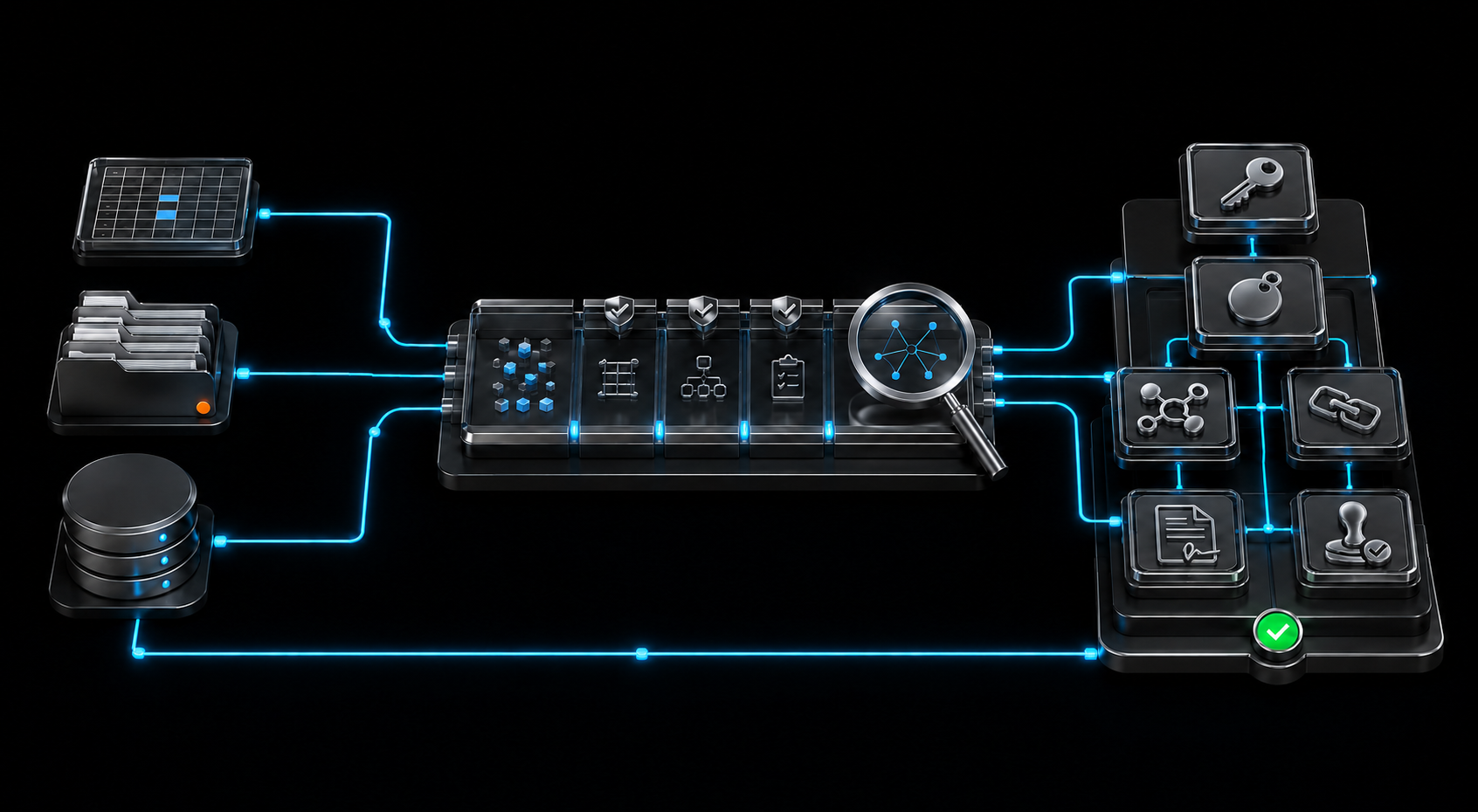
Existing environment → discovery and scope → approved architecture → staged migration → operational validation → human acceptance → live assurance

The transition remains traceable from the original requirement and source record to the configured workflow, migrated evidence, test result, accepted exception and authorized go-live decision.

MIGRATE VALUE—NOT CLUTTER

Not Everything in the Old System Belongs in the New One

Migration is an opportunity to establish a controlled line between active operational information and history retained for legitimate business, legal or assurance reasons.

Typically migrated

  • Current controlled documents and approved templates
  • Open audits, findings, actions and investigations
  • Active risks, controls, suppliers, assets and obligations
  • Relevant training, competence and authorization records
  • Users, roles, sites, workflow rules and reporting needs

The approved migration scope depends on value, quality, retention requirements and how the information will be used after transition.

Often archived or retired

  • Obsolete revisions and superseded working copies
  • Duplicated, incomplete or unowned records
  • Inactive workflows and historic system structures
  • Unmanaged folders and information with no defined purpose
  • History better retained in a controlled read-only archive

Archiving is an authorized retention decision. ZEBSOFT does not automatically decide what may be destroyed, retained or relied upon.

STATIC STRUCTURE

Preserve what defines control

Policies, procedures, standards, obligations, risks, roles, authorities, document structures and approved controls define what should happen.

During migration, these elements are reviewed for current status, ownership and relationship to the work they govern.

DYNAMIC ASSURANCE

Make operation visible

Workflows, tasks, audits, inspections, approvals, records, notifications and exceptions show what is happening now.

ZAP connects this operating evidence back to the requirement, owner and control so migrated governance becomes usable.

DEFINE. COMMUNICATE. OPERATE. ASSURE.

Establish the System and Keep Its Controls Working.

The new environment must make requirements usable, communicate what matters, support controlled work and produce evidence that competent people can verify.

Define

Confirm requirements, controls, roles, authority, workflow logic and the evidence needed to demonstrate the intended outcome.

Communicate

Deliver relevant information, instructions, tasks and changes to the right people without recreating uncontrolled distribution.

Operate

Use connected workflows, records, approvals and evidence routes so governance becomes part of daily work rather than a parallel system.

Assure

Review current performance, adverse results, exceptions and completed evidence so competent people can verify effectiveness and act.

DIFFERENT STARTING POINTS

A Migration Route Shaped Around the Environment You Are Leaving

The transition approach changes with the source. A spreadsheet estate, a SharePoint structure, an on-premises QMS and a highly configured enterprise platform present different access, data and continuity risks.

Spreadsheets and shared drives

The priority is identifying authoritative records, duplicates, hidden formulas, local owners, uncontrolled copies and manual reporting dependencies.

The migration can replace isolated registers with connected records and workflows while retaining only useful history.

SharePoint-based compliance

The review distinguishes document storage from operational control. Lists, libraries, permissions, Power Automate flows, links and local workarounds must be understood together.

ZEBSOFT can become the assurance layer while approved Microsoft services remain connected where appropriate.

Legacy or enterprise platforms

Configured fields, relationships, audit history, exports, database access, integrations, licenses and supplier exit arrangements affect what is possible.

A proof-of-concept migration may be used where source access or mapping quality must be demonstrated before full commitment.

RAPID START—CONTROLLED MATURITY

Fast Configuration Does Not Mean Pretending Migration Is Instant

A defined starting environment can be configured once scope, structure, users and decisions are agreed. For a US business with several facilities, a pilot can establish the migration method before wider rollout. Agree timing against the actual source data, workflows and people available.

Timescale depends on source access, data quality, configuration, integrations, validation, internal availability, training and the authority to make decisions. ZEBSOFT separates rapid technical enablement from the controlled work needed for dependable adoption.

A proportionate rollout can include:

  • Foundation configuration and priority users
  • One US facility, business unit or workflow as a controlled pilot
  • Representative data and evidence mapping
  • User acceptance and operational validation
  • Phased expansion after lessons are resolved

LEADERSHIP AND HUMAN RESPONSIBILITY

Migration Is an Organizational Decision—not Merely an IT Project

Technology can move records and automate defined routes. It cannot decide which obligations apply, whether historic evidence remains reliable, who is competent to approve a control, or whether the new operating arrangement is acceptable.

Leadership must establish authority, resources and expected behavior. Process owners must validate the work they depend on. Users must understand the change. Assurance must continue after go-live so local spreadsheets and workarounds do not quietly reappear.

AI may help interrogate approved migration information and identify possible gaps or inconsistencies. It must not invent records, approve a migration, determine legal retention or replace accountable human judgment.

Sponsor

Sets direction, authority, priority, resources and the conditions for go-live.

Process owners

Confirm requirements, test representative work and accept or reject material results.

Transition team

Controls actions, evidence, issues, communication, training, readiness and change decisions.

PRACTICAL QUESTIONS

Compliance System Migration FAQs for US Teams

Every migration depends on source access, data quality, scope, operational risk and the organization’s decisions. These answers describe the controlled starting position.

Can ZEBSOFT migrate data from another compliance platform?

Yes, where suitable source data and access are available. The scope is agreed after reviewing formats, relationships, history, quality, permissions and the operational purpose of the information.

Can we migrate from spreadsheets and SharePoint?

Yes. Registers, document libraries, lists and selected history can be mapped, but duplicates, uncontrolled copies, missing ownership and manual dependencies should be resolved rather than reproduced.

Do we need to migrate all historical records?

No. Organizations may choose a new start, controlled archive, partial history or wider migration. Competent people must decide what should remain accessible and what retention requirements apply.

Can the existing system remain available during transition?

Often yes. A parallel or phased route may protect continuity while configuration, migration and validation are completed. This depends on existing licenses, supplier terms and technical access.

How is migrated information checked?

Checks can include counts, field mapping, relationships, permissions, samples, exception reports and representative workflow tests. The agreed acceptance route should reflect the consequence of error.

Can ZEBSOFT copy our old processes exactly?

Where justified, existing logic can inform configuration. Discovery should first establish whether the old process is still appropriate, communicable and capable of producing useful assurance.

How long does compliance system migration take?

It varies. A contained starting environment may be available quickly; complex multi-site migration can require phased work. Scope, source access, data quality, integration, validation and internal availability determine the plan.

Does ZEBSOFT guarantee that no data will be lost?

No responsible supplier should make an absolute guarantee without an agreed scope and verified source. ZEBSOFT uses controlled mapping, migration checks, exceptions and human acceptance to reduce and manage transition risk.

START WITH YOUR CURRENT REALITY

Complete the Operational Transition Assessment

The assessment identifies your current platform, US facilities, responsibilities, data condition, required history, integrations and rollout priorities. Include contract renewal dates, operating shifts and any restrictions on data location or access.

Our UK-based team reviews the assessment with you before proposing a migration scope. Agree implementation responsibilities, support arrangements and time-zone coordination during scoping.

Useful information to have ready

  • Current platform and contract position
  • Approximate users, sites and external parties
  • Standards and regulatory frameworks
  • Data areas and required history
  • Priority workflows and operational risks
  • Target timescale and available internal resource

CONTROL THE TRANSITION

Migration Does Not Need to Be Destructive

Bring one current register, document set or workflow to a migration discussion. Define what your US teams need to retain, improve and verify before moving into live operation.

Zebsoft operational assurance after compliance system migration