

PRACTICAL WORKFLOW GUIDE · UAE

Project Handover and Supplier Evidence for UAE Teams

A project handover needs to explain whether the receiving team can operate the service, not simply whether a folder has been delivered. This guide sets out a practical route for UAE project, facilities and technical-service teams to connect requirements, supplier evidence, outstanding items and responsible acceptance decisions.
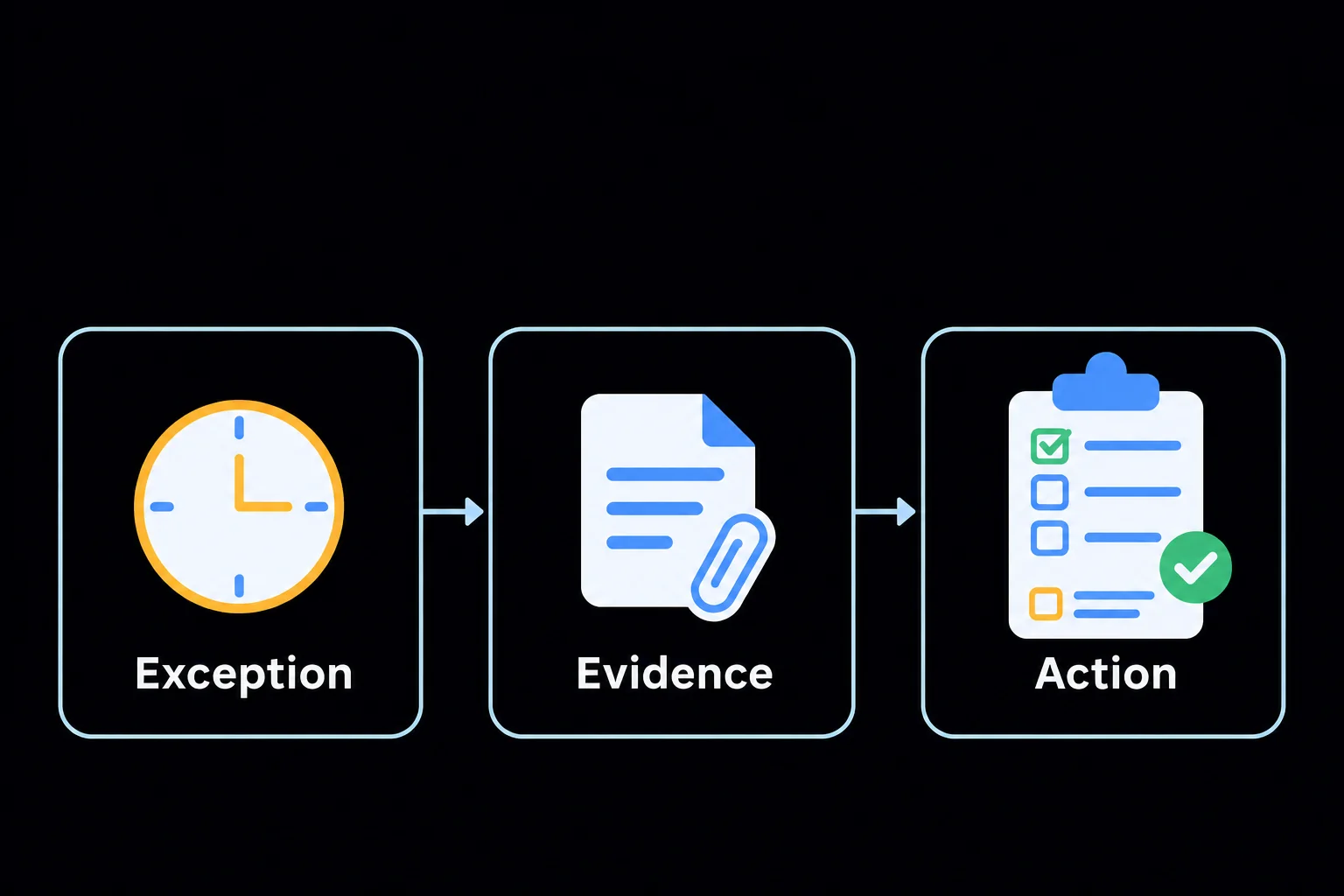
UAE software and assurance overview

An exception remains connected to its supporting evidence and a responsible follow-up action.

An Illustrative Operating Scenario

Illustrative scenario: a project team is handing a building service to an operating team. The handover includes approved procedures, equipment information, supplier records and open actions. Some documents are current, while others need clarification. The receiving manager needs a reviewable position for each item and an explicit decision about any unresolved limitations. This is a worked process example, not a customer case study or a statement of UAE legal requirements.

Build the Handover Around Acceptance Decisions

1. Define the acceptance requirements

Start with the service, equipment or operating process being transferred. Agree what evidence the receiving team needs, who can review it and what constitutes an acceptable result. Identify the relevant contractual and organisational requirements before collecting files. A generic document list is insufficient when different items require different reviewers.

2. Assign evidence ownership

Give each handover requirement a responsible owner and review date. Distinguish the supplier providing information, the project coordinator checking completeness and the person authorised to accept it. Record the source and applicable revision so a later reviewer can establish which information supported the decision.

3. Request and organise supplier records

Use the supplier collaboration route to request the agreed information. Connect documents and responses to the relevant requirement rather than leaving them in a general inbox. A supplier upload is evidence received; it is not evidence reviewed or permission for the service to proceed.

4. Review gaps and operational limitations

Ask the receiving team to assess whether the information is relevant, current and usable. Separate a missing record from a record that exists but does not demonstrate the required condition. Assign clarification and follow-up actions, and route matters outside the reviewer’s authority to the responsible decision-maker.

5. Record acceptance and communication

Retain who accepted the item, what evidence they considered and any limitations they recorded. Communicate approved information to the people who will operate the service. If work proceeds with an unresolved item, the responsible person should document the authorised arrangement and follow-up rather than allow silence to imply acceptance.

6. Verify completion after handover

Review the outstanding actions after the transfer. Confirm whether the receiving team can find current instructions and trace unresolved matters to an owner. A handover is not made complete by changing its status alone; closure needs the agreed evidence and a recorded review of the remaining position.

Make Each Decision Explicit

Agree these review points with the responsible people for the intended workflow. Records support their judgement; they do not replace it.

Ready for review

The requirement, source record, applicable revision and responsible reviewer are identified. Completeness checks establish that the item can be assessed, without treating a coordinator’s check as technical acceptance.

Needs clarification

The information is missing, superseded or does not address the requirement. Keep the gap visible, assign the next action and make any effect on the receiving team’s work explicit for the authorised decision-maker.

Accepted with a traceable decision

The approver records the outcome and supporting evidence. Where an authorised limitation exists, retain its scope, responsible owner and review point. Avoid a broad approval that hides unresolved items behind the overall handover status.

A Practical Review Checklist

  • Name the receiving owner for each operating process.
  • Identify the requirement and the evidence needed to assess it.
  • Retain supplier, source, date and revision information.
  • Separate receipt, review and acceptance responsibilities.
  • Assign gaps and limitations to accountable decision-makers.
  • Confirm current instructions and follow-up after the transfer.

Connect the Workflow in Zebsoft

These capabilities provide the connected record and review routes to explore during evaluation. Agree the configuration, permissions and verification needed for your intended use.

Supplier collaboration and evidence

Document control and revision history

Tasks and follow-up actions

Questions to Resolve During Evaluation

What if a supplier document has not expired but is unsuitable?

Validity dates are only one consideration. The reviewer should also assess relevance to the equipment, service and requirement. Record the reason it is unsuitable and the clarification needed; do not equate a current date with satisfactory evidence.

Can a project manager accept every outstanding item?

Authority should follow the organisation’s agreed responsibilities. Technical, commercial and operating decisions may require different reviewers. Configure and verify that route for the intended process rather than assuming one role can approve every type of exception.

Test One Handover Requirement in Zebsoft

Bring a real requirement, its supplier evidence and an unresolved handover item. Review how ownership, document history, clarification, acceptance and follow-up could stay connected in the configured workflow.