

ZEBSOFT | EDUCATION ESTATES
Education Estates Compliance Software
Keep local estate responsibilities visible to the central team.
Education estates teams maintain safe, usable buildings while protecting continuity of teaching. ZEBSOFT connects local responsibilities, assets, procedures, inspections and contractor evidence. ZAP workflows support recurring assurance activity and follow-up across schools, colleges, campuses or trust locations.
- Retain local ownership with consistent central oversight
- Connect inspections, maintenance evidence and remedial actions
- Review contractor readiness and contingency arrangements
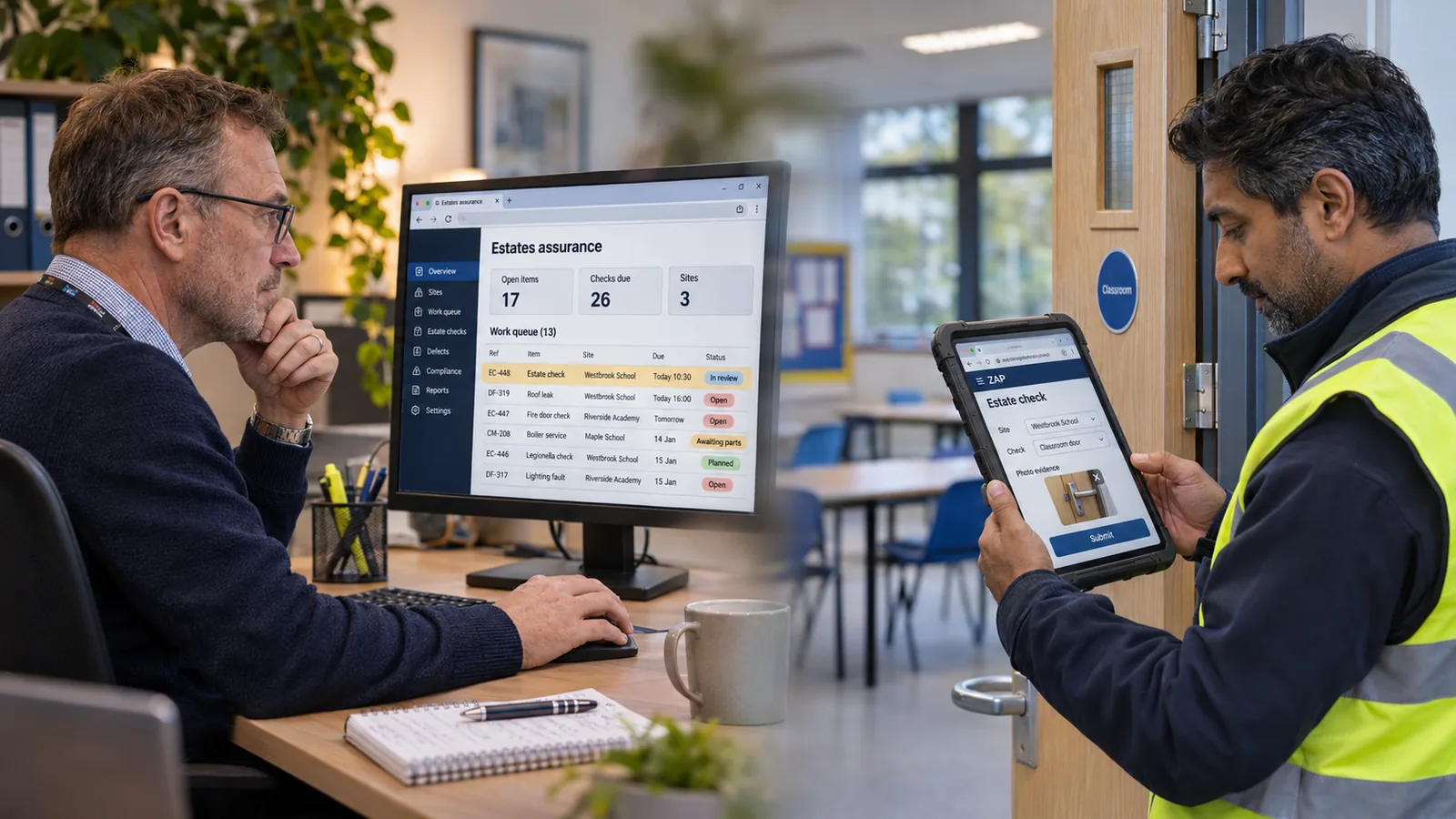
Coordinate maintenance around occupied learning environments
An education estate combines buildings of different ages, local teams and planned projects. Some work can be completed during occupation; other activity must fit around closures and teaching commitments. Central leaders need dependable information while site staff need a manageable route to their own checks, instructions and actions.
Where control can become difficult
Sites maintain different assurance records
A trust or institution must chase local spreadsheets to understand the current position.
Findings become a separate maintenance list
Inspection evidence and outstanding remedial work are difficult to review together.
Responsibility changes between teams and contractors
The evidence needed to show work is controlled is divided between several parties.
Apply ZEBSOFT around your operation
Site and asset responsibilities
Organise buildings, relevant equipment, approved requirements and local owners.
Recurring inspections
Assign checks, reviews and evidence requests with clear frequency and follow-up.
Contractor assurance
Retain relevant competence, approval information, local instructions and review records.
Continuity and improvement
Connect emergency exercises, incidents, audit findings and improvement actions across the estate.
A site inspection identifies work for a holiday period
A local inspection identifies a defect requiring planned intervention. The estates team needs to keep the risk and interim arrangements visible while coordinating the work around occupancy.
1. Record the finding
Connect the inspection evidence to the site, asset and responsible owner.
2. Assess the response
Retain the competent assessment, priorities and any interim arrangements.
3. Plan the assurance activity
Assign contractor-evidence reviews, preparation checks and completion requirements.
4. Retain work evidence
Record the result, outstanding limitations and relevant documents.
5. Verify and review
Confirm acceptance and consider whether other sites need a similar inspection or change.
The management outcome
The estate team can explain why work was prioritised, what arrangements applied and what supports its accepted completion.
Fit around the systems you already use
ZEBSOFT supports estate assurance alongside finance, facilities and maintenance tools. The application should focus on buildings, assets and service responsibilities rather than duplicating pupil or student records.
Start with a useful working process
Select one recurring estate assurance process across representative sites. Agree local ownership, escalation responsibilities and evidence standards before extending the scope.
See the relevant functions in action
Explore the connected capabilities
Practical questions
Can a trust retain local site responsibility?
Yes. Common capabilities can be configured around local owners and participants, with management views appropriate to the agreed structure.
Does it determine every statutory inspection?
No. Competent estate personnel establish the requirements applying to each site and jurisdiction. ZEBSOFT can organise the approved activities and evidence.
Can maintenance contractors participate?
Relevant evidence requests and assigned activities can use appropriate supplier or portal arrangements, subject to the agreed access and implementation scope.
Related operating environments
Relevant official guidance
These references provide context. Applicable requirements depend on the organisation, activity and jurisdiction; competent people must establish what applies.
Book an education-estates demonstration
Bring a recurring inspection or estate finding. Explore local ownership, contractor evidence and central visibility using a practical example.