ZAP ENTERPRISE eQMS
Enterprise eQMS Software for Regulated, Multi-Site Operations
Move Beyond Spreadsheets and SharePoint Without Losing Control
Use quality management as part of daily work—not as a collection of files and registers maintained before an audit. Zebsoft enterprise eQMS software connects controlled information, assessments, evidence, actions, approvals and review in one operational system.
ZAP gives each quality activity an owner, a route and a retained history. Teams can work locally while quality leaders see exceptions, overdue work and assurance activity across departments, sites and regulated operations.
THE OPERATING-SYSTEM GAP
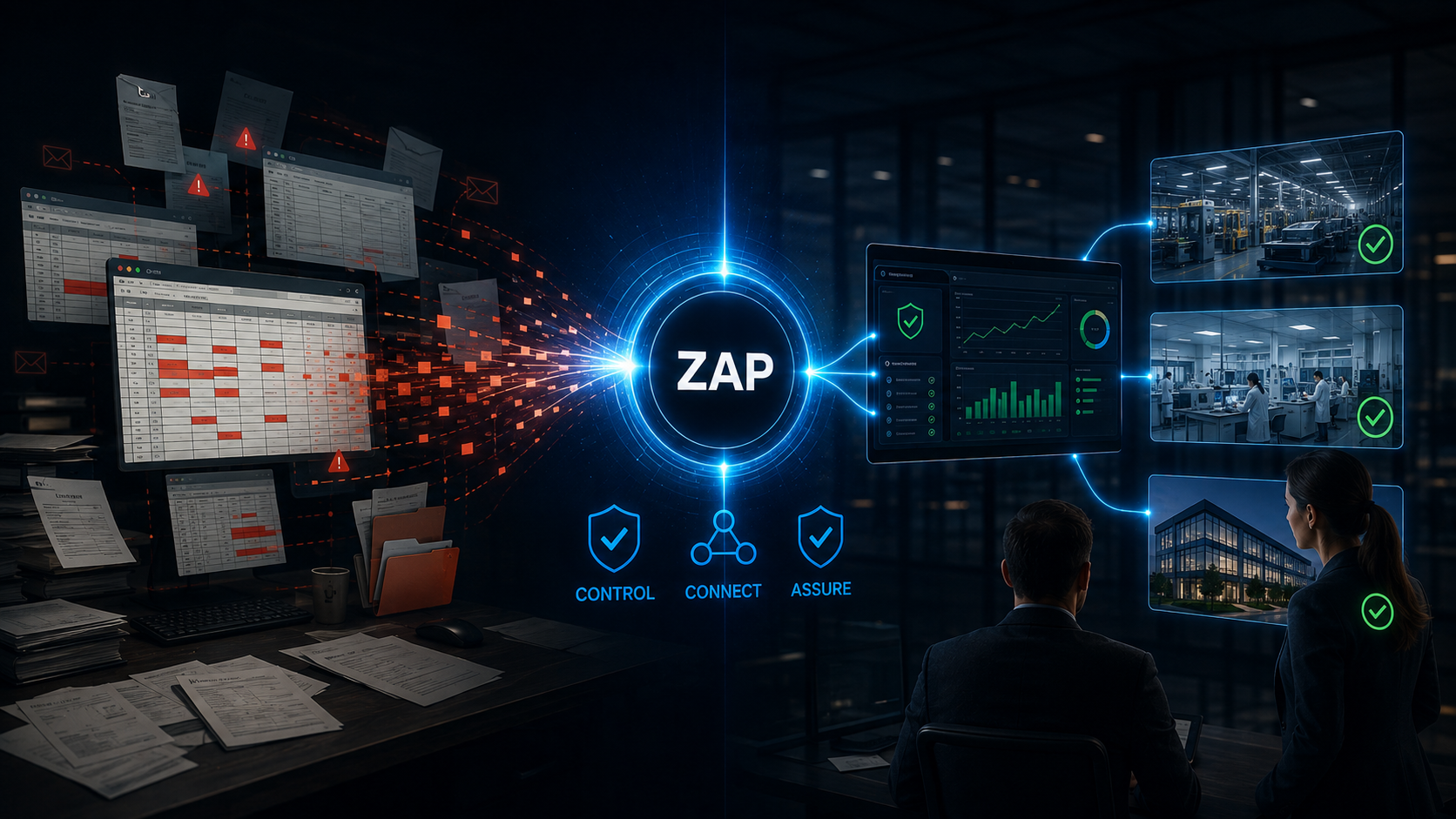
Spreadsheets and SharePoint Can Help—But They Are Not the Whole Quality System
Spreadsheets are useful for calculations and flexible local lists. SharePoint is useful for collaboration, managed files, permissions and version history. Problems arise when either becomes the main mechanism for coordinating quality decisions across people, processes and sites.
Spreadsheets
Good for quick registers, analysis and local tracking. At scale, ownership, status, approvals, linked evidence and change history can depend on manual discipline. Copies multiply, formulas drift and overdue work is easy to miss.
SharePoint
Strong for organising and collaborating on files, with permissions and version history. Operational quality workflows can be built around it, but the organisation must design, integrate, govern and maintain those processes.
A purpose-built eQMS
Connects the record, owner, workflow, evidence, exception, approval and review point. Users work within the quality process while management sees the resulting assurance position.
The practical question is not “Can this file be stored?” It is “Can the organisation prove what was required, who acted, what changed, what remains open and whether the action worked?”
HOW PEOPLE USE AN eQMS
A Daily Quality Operating Cycle
Enterprise eQMS software should make the quality process easier to follow during normal work. A user records what happened, the system applies the configured route, accountable people act and the organisation retains evidence of the outcome.
1. Record
Create the controlled record, observation, request, change or issue at the point of work.
2. Assign
Route the next action to the responsible role with a due date and required response.
3. Review
Apply criteria, approvals and checks appropriate to the record and its risk.
4. Act
Complete the investigation, correction, assessment, training or other required activity.
5. Verify
Confirm that evidence is sufficient and, where applicable, that the action was effective.
6. Retain
Keep the linked history and surface exceptions, trends and review information.
THE ZAP ASSURANCE MODEL
Questions → Logic → Evidence → Actions → Traceability
ZAP translates a policy, standard or control into a repeatable operating route. The configuration determines which questions are asked, what information is mandatory, what happens next and who must make the decision.
01
Questions
Capture the information needed for the task, decision or assessment.
02
Logic
Use configured conditions to show relevant requirements and route exceptions.
03
Evidence
Attach the document, answer, observation, approval or other supporting record.
04
Actions
Assign accountable follow-up with ownership, timing and status.
05
Traceability
Retain the relationship between requirement, response, action and outcome.
The platform can enforce configured steps and make omissions visible. It does not replace professional judgement, process ownership or the organisation’s responsibility for its quality decisions.
ONE CONNECTED QUALITY RECORD
From Nonconformance to Verified CAPA
A typical spreadsheet process creates several separate artefacts: an issue log, an investigation document, an action tracker, approval emails and an effectiveness-check reminder. The relationship between them must be maintained manually.
In ZAP, the organisation can configure one governed route:
This pattern can also support audit findings, risk treatment, change control, training gaps and supplier corrective actions.
ISSUE
↓ Investigation
CAUSE
↓ CAPA
ACTION
↓ Approval
DECISION
↓ Effectiveness review
VERIFIED OUTCOME
CONNECTED eQMS CAPABILITIES
Manage the Quality Lifecycle Without Rebuilding the Same Controls in Every File
The enterprise eQMS software proposition remains broader than document storage. ZAP connects recurring quality activities so evidence, actions and ownership can move between them.
Document control
Manage policies, procedures and controlled information with defined review and approval activity.
Audit and CAPA
Plan assessments, retain findings and connect corrective work to verification and closure.
Risk and change
Assess proposed changes, relate risks and retain the controlled decision route.
Training and competency
Assign relevant learning or competence activity and retain role-related evidence.
Supplier assurance
Evaluate suppliers, request evidence and route exceptions or re-evaluation activity.
Action management
Give actions accountable owners, dates, escalation routes and closure evidence.
Compliance assessments
Run repeatable checks against configured requirements, policies or standards.
Management reporting
Bring open work, exceptions, trends and assurance status into review-ready views and exports.
ONE SYSTEM, DIFFERENT WORK VIEWS
Give Each Role the Information It Needs
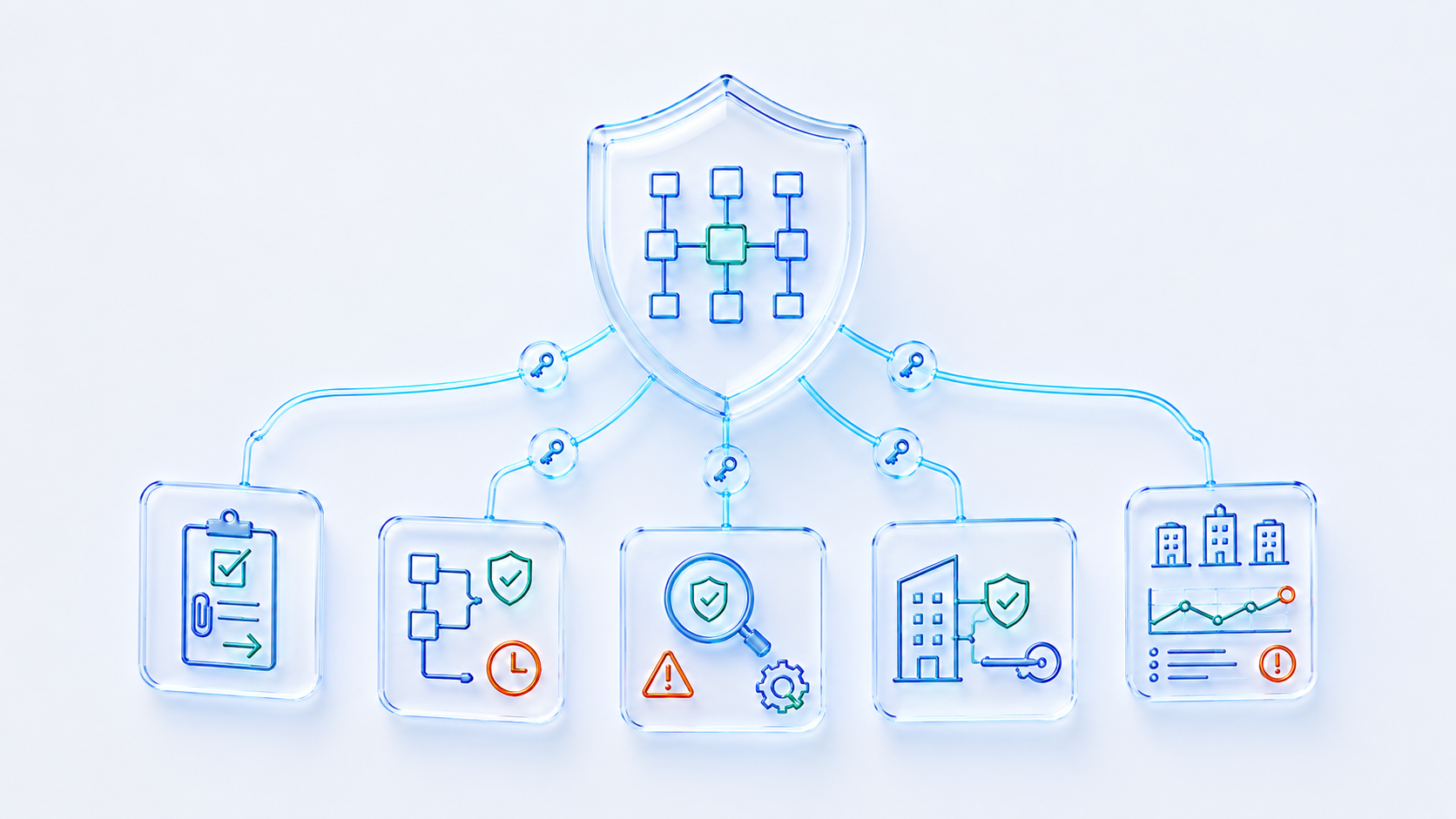
An enterprise platform should not present every user with the same complex quality dashboard. People need a clear view of the work they own, while process owners and leadership need wider oversight.
Permissions, terminology, notifications and workflow routes are configured to the organisation’s structure and intended use.
CONTROLLED CORE, LIVE ASSURANCE
Use the 70/30 Model to Keep the eQMS Operational
A quality system needs both stable governance and active evidence. Zebsoft separates the controlled framework from the changing operational position so teams can see whether the system is being followed.
70% — Controlled foundation
Policies, responsibilities, process definitions, criteria, control questions, approval routes and review rules establish how work should be done.
30% — Live assurance
Assessments, evidence, actions, exceptions, approvals, overdue work and verification show whether the controlled system is operating as intended.
MANAGE BY EXCEPTION
See What Needs Attention Without Building Another Tracker
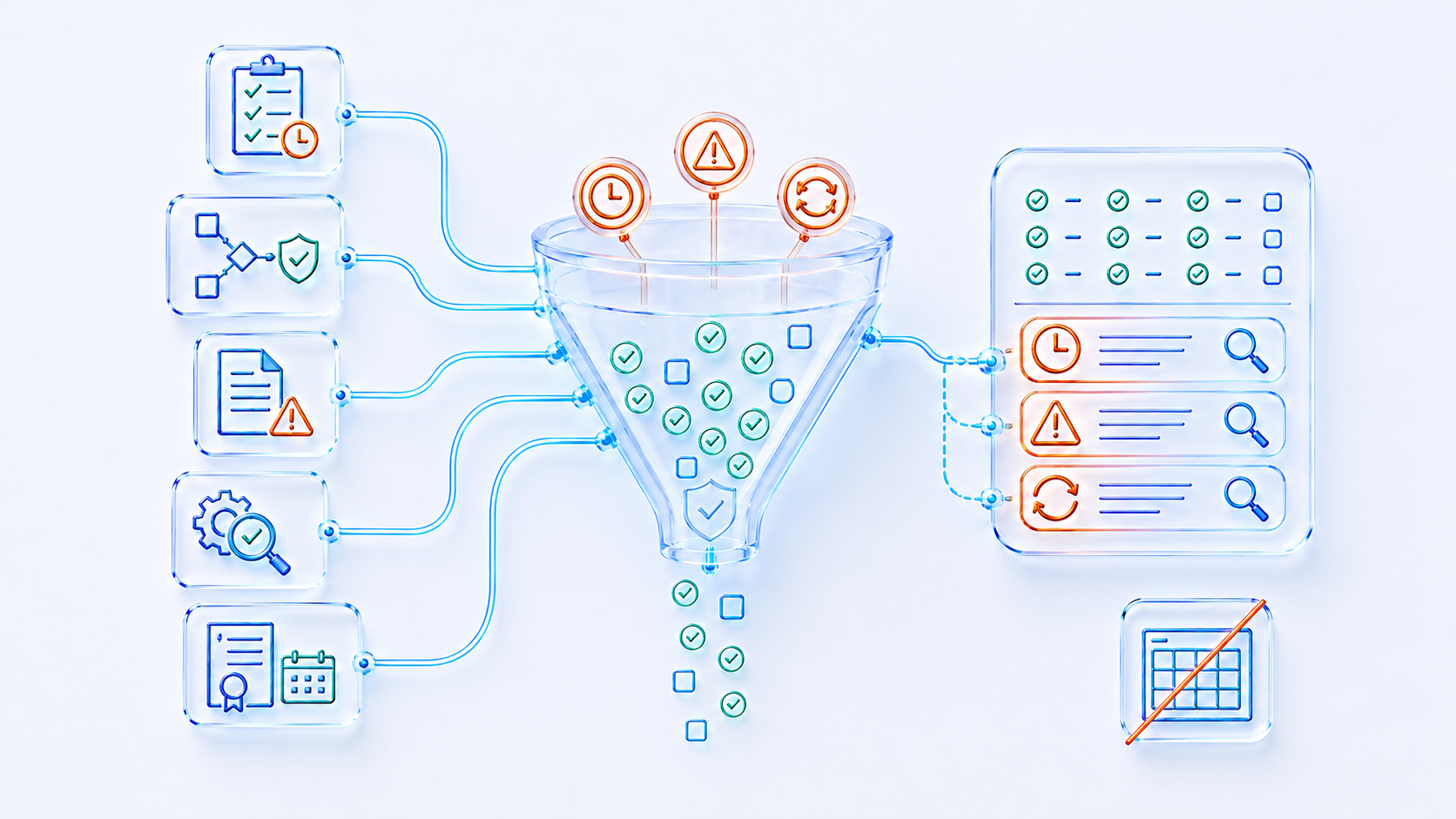
When quality information lives in separate files, reporting becomes a periodic collection exercise. An eQMS can use the status of governed records to show the work requiring intervention.
Dashboards should support decisions, not create false certainty. Users must be able to move from a summary into the underlying record, owner, evidence and history.
REGULATED USE WITH CLEAR RESPONSIBILITY
Support Controlled Quality Operations—Then Validate the Intended Use
ZAP can support organisations working with ISO 9001, ISO 13485, FDA, GxP and other regulated or customer-controlled requirements through configured workflows, role-based access, tracked changes, approvals, evidence retention, audit history and reporting.
Configure for intended use
Map the organisation’s procedures, roles, records, controls and decision points before treating the platform as part of the regulated process.
Apply procedural controls
Define access, training, administration, review, change control, retention and governance around the configured syste m.
Confirm obligations
Regulated organisations remain responsible for confirming intended use, configuration, procedural controls and applicable validation requirements.
Software features do not make an organisation compliant by themselves. Suitability depends on the required use, configuration, implementation, operating procedures and evidence.
A PRACTICAL MIGRATION ROUTE
Move from Spreadsheets and SharePoint in Controlled Phases
The objective is not to copy every column, folder and workaround into a new tool. Migration should preserve required records while redesigning the live quality process around ownership, evidence and decision s.
01
Inventory
List the current registers, libraries, forms, workflows, owners and reporting dependencies.
02
Prioritise
Start with high-friction or high-risk processes where missed actions and weak links matter most.
03
Design
Define the future record, roles, decision gates, evidence, states and exceptio n route.
04
Migrate
Clean owners and statuses, import necessary current records and retain legacy evidence appropriately.
05
Prove and extend
Test the configured route with users, correct gaps and then extend it to further sites or processes.
A sensible first implementation often focuses on one connected route—such as audit finding to CAPA, document change to training, or supplier evaluation to corrective action—before expanding.
EXPLORE THE CONNECTED PLATFORM
Go Deeper into the Quality Capabilities
Document control
Connect controlled information to review, approval and training activity.
Audit management
Plan audits and connect findings to accountable corrective work.
Frequently Asked Questions
Can an eQMS replace every spreadsheet?
No. Spreadsheets remain useful for calculations, analysis and controlled supporting work. The priority is to move records that depend on workflow, ownership, approvals, evidence, status and follow-through into the eQMS.
Does an eQMS replace SharePoint?
Not necessarily. SharePoint can remain a collaboration and content platform. ZAP can become the governed operational layer for quality records and workflows, with the system boundary agreed during implementation.
How should we choose the first eQMS process?
Choose a route with visible hand-offs, repeated follow-up and meaningful risk—such as audit findings, CAPA, document change, training or supplier evaluation. Define the intended outcome before configuring the form.
Can ZAP support several sites?
Yes, the platform can be configured for shared controls, local responsibilities and cross-site oversight. The exact data structure, permissions, terminology and reports should reflect the organisation’s operating mod el.
SEE THE DAILY WORKFLOW
Replace Quality Workarounds with a Connected eQMS
Bring one real process to a live demonstration. We will show how ZAP can connect the questions, evidence, actions, approvals and review points that currently sit across spreadsheets, SharePoint, email and meetings.
See how enterprise eQMS software can support operational control without losing the regulated, multi-site and management-assurance intent of your existing quality system.