

PRACTICAL WORKFLOW GUIDE · CANADA

Rolling Out Document Control Across Canadian Plants

Moving files into a new repository does not establish document control. Canadian manufacturers and technical-service organisations need to agree ownership, approved revisions, reader responsibilities and review evidence across plants. This guide outlines a staged rollout that tests the operating process before extending it to additional locations.
Canada software and assurance overview

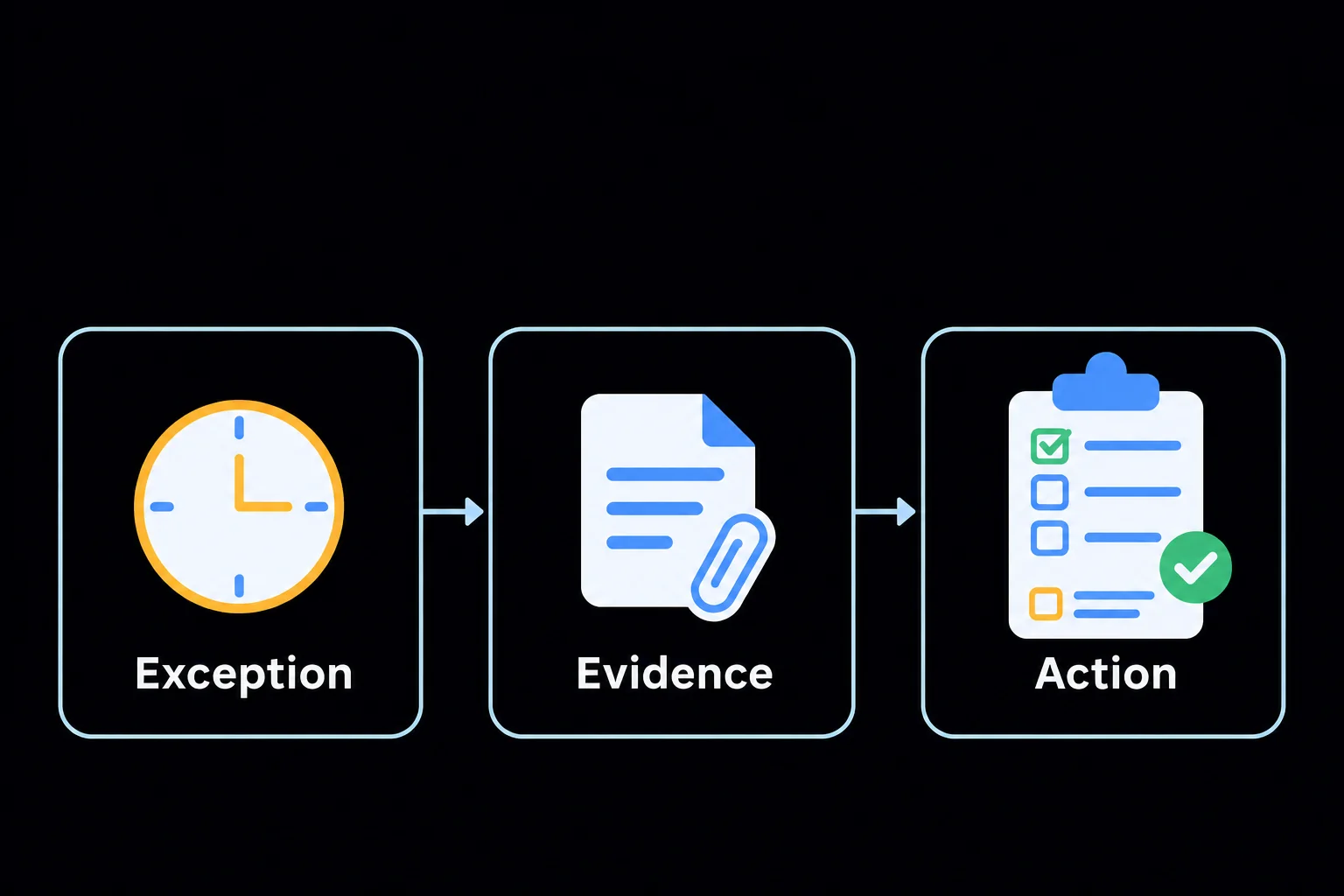
An exception remains connected to its supporting evidence and a responsible follow-up action.

An Illustrative Operating Scenario

Illustrative scenario: a business has procedures in several plant folders, with inconsistent names, uncertain approval history and different local copies. The team plans to introduce a connected document-control process. Its first task is to establish which information can be trusted and who can resolve conflicts. This is an English-language planning example, not a customer migration result or a promise of automated validation.

Verify the Control Process Before Expanding the Rollout

1. Inventory the information and owners

Identify the procedures, instructions and supporting records in the initial scope. Record the responsible owner, source location and known revision or approval status. Capture uncertainties explicitly. A large file count is not evidence that the organisation has identified the current approved information.

2. Resolve competing versions

Ask the document owner and relevant reviewers to establish which version should enter the controlled process. Retain the reason for resolving a conflict and the treatment of earlier copies. Do not silently label the newest file as approved simply because its modification date is later.

3. Agree the control and reader model

Define who proposes changes, reviews, approves and receives each type of document. Establish the role of central and plant-level owners. Discuss interface, document, training and support language needs before configuration; this guide does not assume that French-language capabilities have been confirmed.

4. Migrate and verify a defined sample

Agree the migration scope and verification criteria with Zebsoft for the intended implementation. Check source references, document identity, applicable revision and the resulting review route. Keep a record of exceptions and their owners rather than rely on the number of files transferred as the acceptance criterion.

5. Pilot the workflow with actual users

Choose a plant and a manageable set of documents. Test a proposed change, approval, required reading and an exception using the intended roles. Examine whether users can find current instructions and whether reviewers can trace the history. Record what needs adjustment before adding more locations.

6. Expand with recorded acceptance

Review the pilot evidence and agree the next rollout scope. Assign adoption actions and verification responsibilities for each additional plant. Retain local exceptions and review decisions so a central completion report does not conceal locations that have not yet implemented the agreed control process.

Make Each Decision Explicit

Agree these review points with the responsible people for the intended workflow. Records support their judgement; they do not replace it.

Source information established

The owner has reviewed identity, revision and approval status for the selected information. Uncertain items are recorded for resolution. Migration should not convert uncertainty in the source material into an apparently authoritative record.

Pilot accepted for the agreed scope

The intended roles have exercised the workflow and the responsible reviewer has assessed the evidence. Acceptance concerns a defined process, document set and operating environment, with remaining actions and limitations retained.

Next rollout stage authorised

The organisation has reviewed readiness for the additional locations and assigned implementation responsibilities. Extend the process in a controlled way, using evidence of adoption rather than assuming that availability of access proves successful use.

A Practical Review Checklist

  • Name the owners of the initial document set.
  • Resolve competing revisions and uncertain approvals.
  • Agree central, plant-level and reader responsibilities.
  • Confirm language and deployment requirements before rollout.
  • Verify migration results and exercise a real change workflow.
  • Record plant adoption evidence and stage-acceptance decisions.

Connect the Workflow in Zebsoft

These capabilities provide the connected record and review routes to explore during evaluation. Agree the configuration, permissions and verification needed for your intended use.

Document control and revisions

Migration planning

Training and competence records

Questions to Resolve During Evaluation

Should we import every historical file at once?

Start with an agreed scope based on operational need and the organisation’s information requirements. Review the treatment of historical material, duplicates and uncertain records during planning. This avoids confusing a large transfer with an established control process.

What demonstrates that a plant has adopted the process?

Use agreed evidence from actual roles and activities: finding current instructions, completing the review route, handling a change and responding to exceptions. Reading records can contribute to the picture, but they do not alone demonstrate competence or complete adoption.

Plan a Defined Document-Control Pilot

Bring a small document set, its owners and a real revision conflict. We can review the migration scope, approval route, required readers and evidence needed to assess a pilot before wider rollout.