

PRACTICAL WORKFLOW GUIDE · SINGAPORE

Supplier Review and Evidence Handover for Singapore Teams

A supplier portal can make information easier to exchange, but a shared file does not establish a satisfactory supplier review. Singapore manufacturing, precision-engineering and technical-service teams need to retain the requirement, evidence assessment and internal approval decision through each handover. This guide describes that operating route.
Singapore software and assurance overview

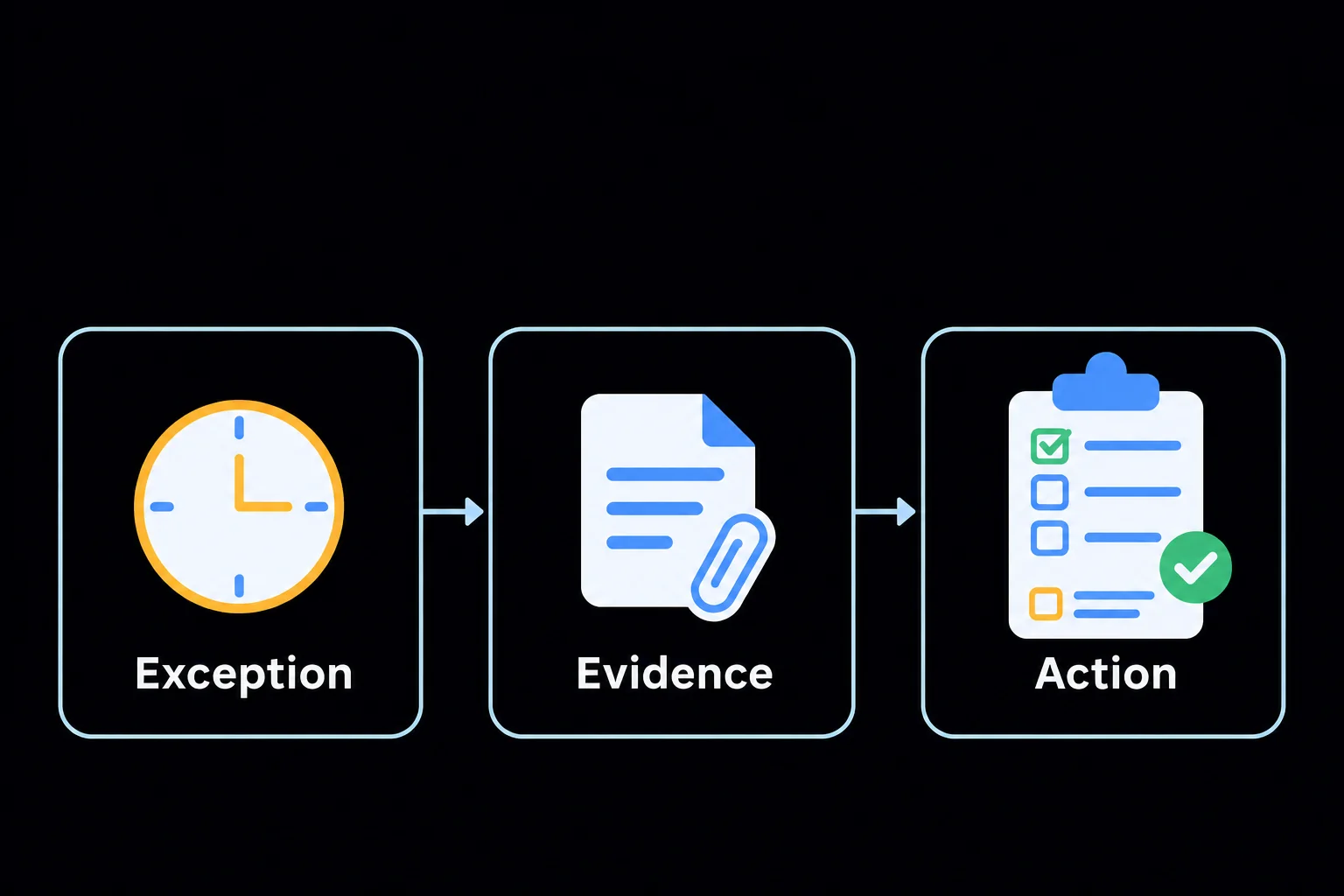
An exception remains connected to its supporting evidence and a responsible follow-up action.

An Illustrative Operating Scenario

Illustrative scenario: a Singapore-based team reviews an overseas supplier for a defined technical service. The supplier submits information, one record needs clarification and a project team wants to know whether work can start. The reviewer must distinguish receipt from assessment and approval. This is a worked process example, not evidence of a customer deployment or a determination about cross-border data requirements.

Separate the Evidence Exchange from the Approval Decision

1. Define the supplier-review scope

Identify the product or service, the responsible internal owner and the requirements the supplier review must address. Agree which evidence is relevant and who can assess it. A general supplier profile should not be treated as an unlimited approval for every technical scope or future contract.

2. Request evidence with clear ownership

Connect each request to the requirement and a responsible reviewer. Communicate what information is needed and how missing or unclear items will be followed up. Retain the source and date of each response so a later reviewer can distinguish the supplier’s submission from the organisation’s assessment.

3. Check relevance and reliability

Review whether the record concerns the intended supplier entity, activity and operating scope. Consider the applicable revision or period and the limitations of the information. A complete set of uploads may still leave the actual requirement unanswered; record that distinction rather than equate completeness with acceptance.

4. Manage clarifications and review findings

Assign questions and actions to owners and retain the link to the original evidence. Where the gap affects risk or the intended work, route it to the responsible decision-maker. Keep internal assessment and approval discussions under the organisation’s control rather than assume that every review record belongs in external collaboration.

5. Record the internal approval position

The authorised approver records the outcome, scope and supporting review evidence. If an approved arrangement includes limitations or follow-up, retain who owns them and when they must be reviewed. The receiving project or operating team needs the decision that applies to its intended activity, not simply access to the supplier’s files.

6. Handover and revisit when conditions change

Communicate the approved position and outstanding actions to the relevant internal team. Review the supplier when the scope, evidence or operating experience changes under the organisation’s arrangements. Retain earlier reviews so later findings can be examined against the information and decisions that applied at the time.

Make Each Decision Explicit

Agree these review points with the responsible people for the intended workflow. Records support their judgement; they do not replace it.

Information received

The supplier has provided a record and its source can be traced. The reviewer still needs to assess relevance and suitability. Avoid presenting a successful upload or completed request as the organisation’s final approval.

Review complete with findings visible

The assigned reviewer has assessed the evidence and recorded gaps, limitations and follow-up. The approver can see what remains unresolved and make a decision within the agreed authority, with the supporting record available.

Approval communicated for a defined scope

The receiving team can identify the applicable approval, limitations and responsible owner. Where work or supplier circumstances change, the earlier decision can be reconsidered against its original scope rather than reused without review.

A Practical Review Checklist

  • Define the supplier entity and technical scope being reviewed.
  • Assign request, review and approval responsibilities separately.
  • Retain the source, date and scope of submitted records.
  • Record why evidence is relevant or insufficient.
  • Keep internal approval distinct from supplier collaboration.
  • Handover the applicable decision, limitations and follow-up.

Connect the Workflow in Zebsoft

These capabilities provide the connected record and review routes to explore during evaluation. Agree the configuration, permissions and verification needed for your intended use.

Supplier collaboration and review

Supplier approval and evaluation

Risk and responsible decisions

Questions to Resolve During Evaluation

Can portal access be treated as supplier approval?

No. Access enables collaboration under the configured arrangements. The organisation must define and record its own review and approval decisions. Separate those responsibilities so the receiving team can identify the actual authorised position.

What should we review for an overseas supplier?

Establish the relevant entity, activity, evidence, access and data-handling arrangements for the intended relationship. Discuss deployment and contractual requirements with responsible specialists. This workflow does not make a jurisdiction-specific legal or regulatory determination.

Trace One Supplier Review Through Its Handover

Bring a supplier request, the evidence received and an unresolved question. We can examine how collaboration, internal assessment, approval and operating handover could stay connected in Zebsoft.