

ZEBSOFT | LOGISTICS & WAREHOUSING
Logistics and Warehousing Compliance Software
Keep safe, consistent operating practices connected across sites and shifts.
Logistics operations depend on coordinated people, equipment and movement through receiving, storage, picking and dispatch. ZEBSOFT connects approved procedures, competence evidence, inspections and incident follow-up. ZAP workflows support repeatable checks and review activity across the agreed depot and operational scope.
- Maintain current operating instructions and competence evidence
- Connect equipment checks and workplace inspections
- Review incidents, defects and recurring operating failures
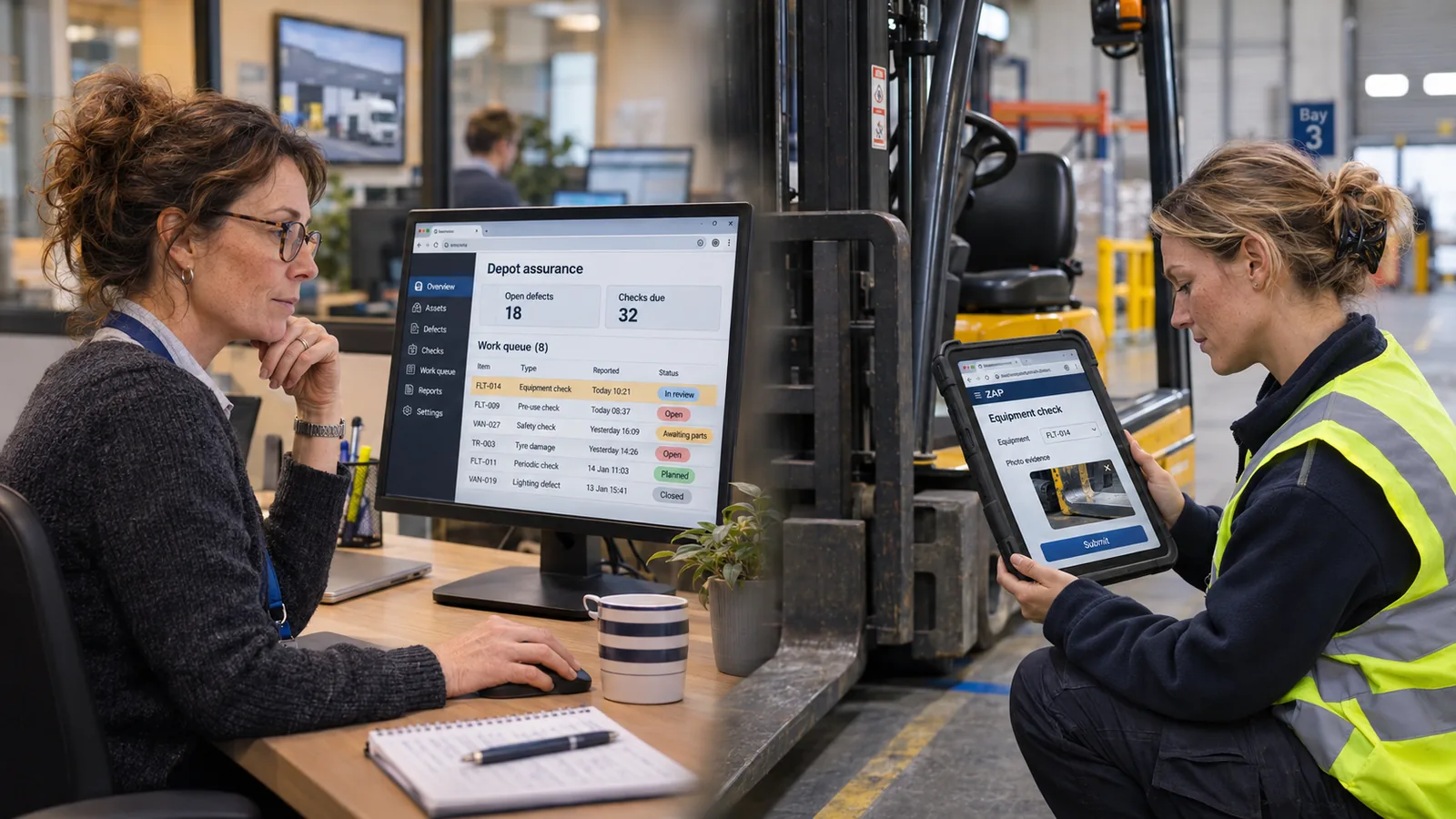
Maintain control through volume, shifts and handovers
A warehouse or distribution centre needs reliable execution while workload, personnel and priorities change. Traffic routes, storage arrangements and handling equipment create shared responsibilities between managers, employees and contractors. Assurance needs to show that controls operate throughout the working pattern, including when a problem passes from one shift to another.
Where control can become difficult
Checks vary between shifts
Records do not provide a consistent view of inspections and outstanding findings.
Equipment defects are separated from decisions
A reported issue lacks a clear assessment, response or accepted return-to-use record.
Repeated incidents remain isolated
Damage, near misses or process failures are handled locally without identifying a wider pattern.
Apply ZEBSOFT around your operation
Operating information
Control relevant procedures, local instructions, revisions and required reading.
People and competence
Connect role requirements, training, assessment evidence and review dates.
Equipment and workplace checks
Organise inspections, maintenance records, defects and assigned follow-up.
Incidents and corrective action
Retain investigations, causes, actions and effectiveness reviews across the operational structure.
A pre-use check identifies an equipment defect
An operator records a defect during a required check. The supervisor must make the appropriate operating decision and retain the route through repair and review.
1. Define the check
Specify the approved questions, equipment reference and evidence expectations.
2. Record the defect
Retain the finding and supporting information against the equipment context.
3. Assign the response
The responsible person determines restrictions, repair or further assessment.
4. Review the evidence
Retain the maintenance result and competent acceptance decision.
5. Learn from recurrence
Review repeated defects or check failures for maintenance, training or process improvements.
The management outcome
A reported defect remains connected to its operating decision and verified response rather than disappearing into a handover note.
Fit around the systems you already use
ZEBSOFT supports assurance around WMS, TMS, inventory and vehicle systems. It does not assume stock-control, route-planning, tachograph or live telematics functions, and it does not physically isolate defective equipment.
Start with a useful working process
Start with one depot process, such as equipment checks or incident follow-up. Confirm shift ownership, evidence standards and exception handling before extending to more sites.
See the relevant functions in action
Explore the connected capabilities
Practical questions
Can different depots use local checks?
Yes. Common capabilities can be configured around local procedures, assets and responsibilities while retaining an agreed reporting approach.
Does it replace a warehouse-management system?
No replacement is assumed. Stock, orders and dispatch may remain in the WMS while ZEBSOFT supports operational assurance.
Can contractors and temporary staff be included?
Relevant requirements and participation can be scoped to the organisation's operating and access arrangements. Confirm the appropriate records, permissions and licensing during evaluation.
Related operating environments
Relevant official guidance
These references provide context. Applicable requirements depend on the organisation, activity and jurisdiction; competent people must establish what applies.
Book a logistics assurance demonstration
Bring an equipment-check, shift-handover or incident-follow-up example. See how the result, decision and response could remain connected.