
INFORMATIVE SYSTEM OVERVIEW
Compliance Software Platform Functions
How Zebsoft Turns Governance Into Operated Assurance
The Zebsoft compliance software platform connects the information an organisation has defined with the workflows, responsibilities, evidence and assurance needed to show whether it is being operated.
This page explains the principal system functions and how they work together. It is not a list of disconnected features or another domain page. The same functions can support quality, safety, environment, information security, suppliers, assets and other governed responsibilities while retaining the appropriate context.
WHAT A SYSTEM FUNCTION IS
A Reusable Action Performed by the Platform
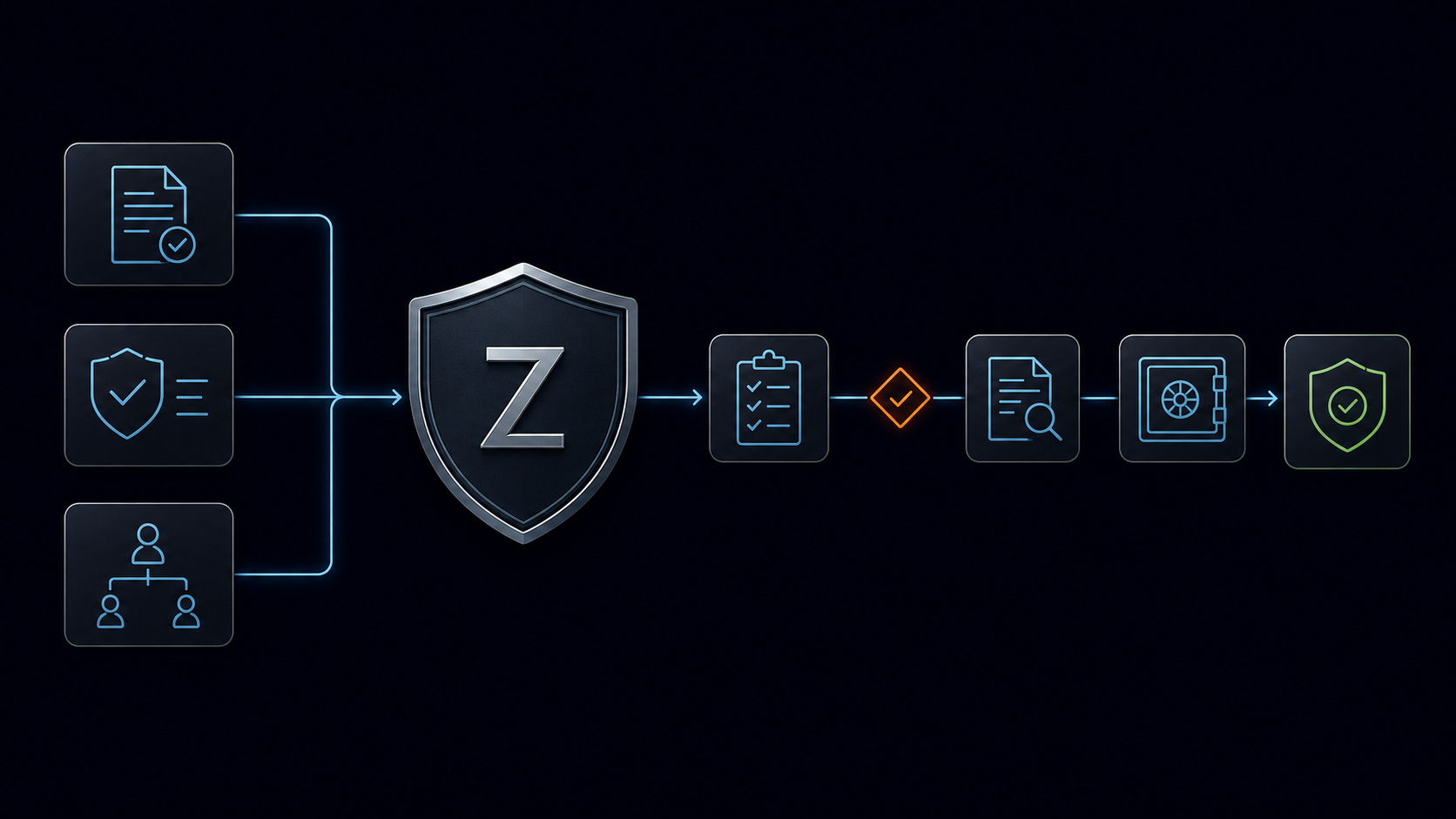
A system function describes something the platform enables—such as controlling information, assigning work, collecting evidence, validating a response or presenting an exception. It is reusable because the same function can operate in several modules and domains.
For example, approval can be used for documents, supplier evidence, change, risk treatment or corrective action. The approval function remains recognisable while its subject, authority, questions and evidence change.
STRUCTURE AND OPERATION
Static Governance Defines—Dynamic Functions Test Reality
A management system needs an approved structure, but assurance depends on what happens after that structure is published. Zebsoft connects both sides so the organisation can see the relationship between intention and performance.
DEFINE—COMMUNICATE—OPERATE—ASSURE
Four Functional Purposes—One Connected Route
Individual features become useful when they support a complete operating route. Zebsoft groups system activity around definition, communication, operation and assurance.
FOUR CORE FUNCTION GROUPS
Make Information Visible, Actionable and Verifiable
The four existing image elements are retained here as placeholders for the principal functional behaviours. Their purpose is explanatory, not decorative.
THE CONNECTION IS THE FUNCTION
Records Do Not Operate in Isolation
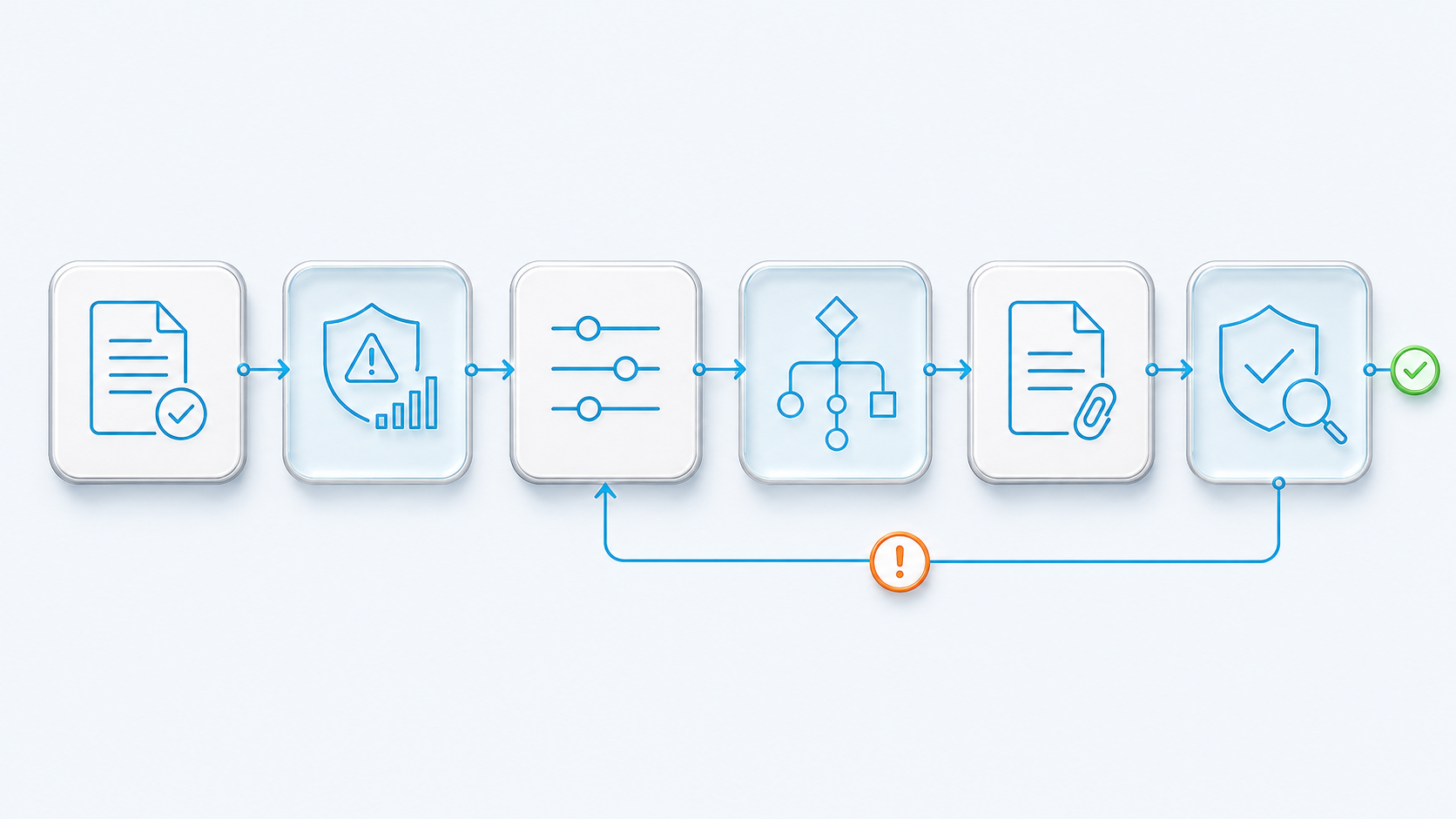
The platform becomes an assurance system when one record can influence and explain another. A requirement can inform a risk. The risk can be addressed by a control. The control can trigger work. The work can produce evidence. The evidence can support a human assurance decision.
Zebsoft preserves those relationships so people can move from an exception back to the requirement, responsibility and decision that created the expected condition.
SYSTEM FUNCTION MAP
The Principal Functions Explained
The enabled depth and configuration vary, but these recurring functions provide the operating foundation across the platform.
THIS IS HOW THE FUNCTIONS WORK TOGETHER
From Requirement to Operational Assurance
The individual functions form a controlled route rather than a collection of unrelated tools.
VISIBILITY AND RESPONSIBILITY
Show People What They Need to Know and Do
Centralised information is useful only when visibility remains appropriate. Zebsoft can present different authorised views of the same governed context so employees, managers, specialists, auditors, suppliers and executives are not forced through one undifferentiated interface.
A task participant may see the instruction and response route. A control owner may see evidence and exceptions. An executive may see status, trends and unresolved exposure. The source relationship remains connected.
SCHEDULED, TRIGGERED AND RESPONSIVE
Functions Start Work in Different Ways
Not every activity begins from a calendar date. Zebsoft can support routine cycles, condition-based work and immediate responses while preserving the same ownership and evidence principles.
EVIDENCE FUNCTIONS
Capture Proof in the Context That Required It
Evidence is more useful when the reviewer can see why it was requested, who supplied it, what version or period it relates to and what decision followed. A file alone does not establish adequacy.
OPERATIONAL VALIDATION
ZAP Interrogates What Is Happening
ZAP applies questions, logic, timing, evidence and follow-up to the operating information available within the authorised workflow. It helps organisations test whether the expected condition is present, identify missing or unacceptable responses and initiate the configured action route.
Operational validation does not mean that software independently certifies a control or organisation. It provides structured visibility and evidence for competent people to verify and decide.
ISSUES AND IMPROVEMENT
Turn Identified Weakness Into Accountable Follow-Up
Problems expose the relationship between definition and operation. An incident, missed task, rejected submission or failed check can be linked back to the relevant requirement, risk, control and owner.
The system can then support correction, investigation, cause analysis, corrective action, change, verification and continuing review without losing the original event or evidence context.
FUNCTIONAL DEPTH AND CONFIGURATION
The Operating Logic Remains—The Enabled Scope Can Expand
Organisations do not necessarily enable every function, module, portal or workflow. The agreed subscription, implementation scope, users, domains and configuration determine what is available and how deeply it operates.
A smaller implementation may establish core governance and internal workflows. Wider configurations can extend validation, cross-domain relationships, sites, suppliers, contractors, portals and external interactions. The principles of ownership, permission, evidence and human assurance remain consistent.
RESPONSIBLE AI
Interrogate Approved Information—Do Not Invent the System
AI can help authorised users interrogate approved information, summarise records and identify patterns or missing fields within the material available to it. It must not create false evidence, invent requirements, approve controls or make legal, risk, conformity or assurance decisions.
The system’s functions support human responsibility. Competent people remain accountable for definition, interpretation, approval, verification, exceptions and accepted outcomes.
PRACTICAL QUESTIONS
Compliance Software Platform Functions FAQs
Functions, modules, domains and standards describe different parts of the system. Keeping those terms separate makes the platform easier to understand and configure.
What is a system function?
A system function is a reusable action the platform performs, such as controlling information, assigning work, issuing notification, collecting evidence, validating a response or presenting status.
How is a function different from a module?
A function is reusable platform behaviour. A module applies several functions to a defined operational purpose such as audit, risk, documents, incidents or people.
Are functions tied to one compliance domain?
No. The same function can support different domains while its subject, workflow, permission, criteria and evidence are configured appropriately.
Does a defined policy prove the control is working?
No. The policy establishes approved intent. Operation, evidence, review and human verification are needed to assess whether the expected condition is being achieved.
What does dynamic assurance mean?
It means using current workflow, response, evidence, exception and status information to assess how the defined system is being operated over time.
Does Zebsoft automatically certify compliance?
No. Zebsoft structures information, workflows, evidence and oversight. Competent people and, where applicable, independent certification bodies make conformity and certification decisions.
Are all functions included in every implementation?
Not necessarily. Available functions, configuration, users, modules, portals and implementation scope depend on the agreed subscription and requirements.
Can Zebsoft connect to specialist operational systems?
Where suitable integrations or controlled data routes are agreed, specialist systems can continue their operational role while Zebsoft provides connected governance, evidence, accountability and assurance around them.
FOLLOW ONE FUNCTION THROUGH THE SYSTEM
See How Definition Becomes Evidence and Assurance
A useful platform demonstration should follow one requirement through its risk and control context, communication, workflow, evidence, exception handling and human assurance. That shows the system connection more clearly than a catalogue of screens.