
Modules
How system capabilities are applied in context
Zebsoft uses Modules to apply system capabilities within a specific Domain, standard, or operational context.
Modules are not standalone tools and they are not new functionality.
They are configured applications of a Capability, aligned to a defined governance purpose.
This page explains what Modules are, how they work, and why they allow Zebsoft to scale without fragmentation.

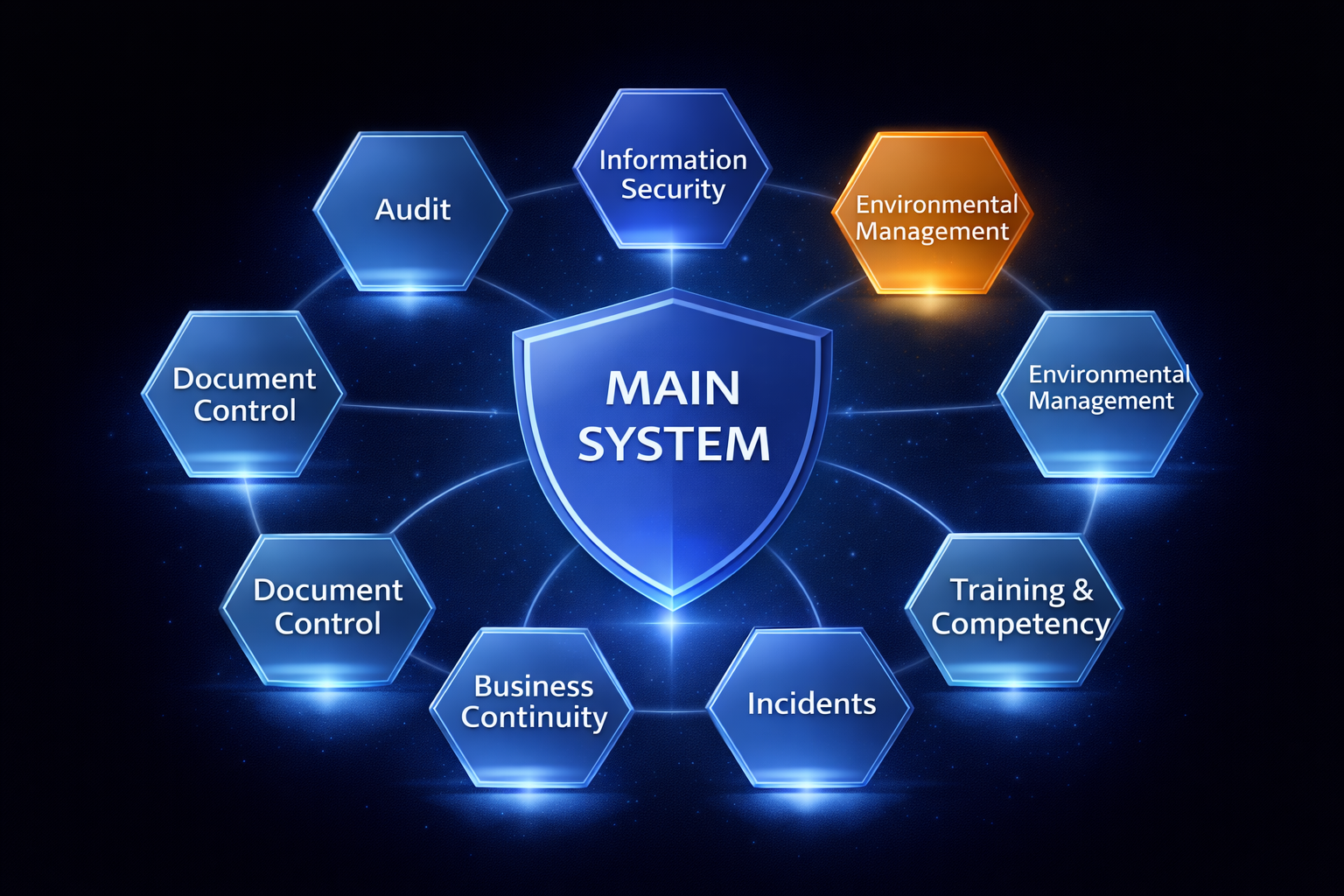
What a Module Is
A Module is a contextual application of a Capability.
It defines:
- Where a Capability is being used
- Why it is being applied
- What rules, structure, and evidence apply
Modules answer the question:
“How does this capability work for this specific responsibility or requirement?”
They allow the same functional engine to behave appropriately in different governance contexts.
Why Modules Exist
Without Modules, systems tend to fragment:
- Separate audits for each standard
- Multiple risk registers for the same organisation
- Duplicated documents and evidence
- Inconsistent processes across departments
Modules prevent this by:
- Reusing shared Capabilities
- Applying context without duplication
- Preserving a single source of truth
- Maintaining consistent governance rules
This is what enables integrated management systems to function properly.
How Modules Work in Practice
Domains define areas of organisational responsibility.
Modules sit between Capabilities and Domains.
- Capabilities define what work can be done
- Domains define where responsibility sits
- Modules define how that work is applied in context
A Module configures:
- Structure (fields, logic, workflow)
- Scope (what applies and what doesn’t)
- Evidence requirements
- Visibility and access rules
The underlying Capability remains the same.
Examples of Modules
Risk Modules
The Risk Capability can be applied through different Modules, such as:
- Information Security Risk
- Health & Safety Risk
- Environmental Risk
Each Module applies different context, while sharing the same risk engine.
Audit Modules
The Audit Capability can be applied through Modules such as:
- Internal Audit
- Supplier Audit
- Compliance or Standard-Specific Audit
Audit evidence can be reused across Domains without duplication.
Document Control Modules
The Document Control Capability can be applied through Modules such as:
- Policy Management
- Procedures and Work Instructions
- External Document Registers
Approval, versioning, and visibility rules remain consistent.
Incident Modules
The Incident Capability can be applied through Modules such as:
- Health & Safety Incidents
- Information Security Incidents
- Non-conformances and Near Misses
Each Module applies different classification and reporting logic.
Modules and Standards
Modules are not standards, but they support them.
A single Module can:
- Support multiple clauses
- Feed evidence into multiple certifications
- Align to different regulatory frameworks
This allows organisations to manage compliance once, then demonstrate it many times.
Modules and Shield Levels
The number and complexity of active Modules depends on the Shield Level in use.
- Foundation typically uses a smaller set of Modules
- Growth introduces additional Modules and advanced logic
- Enterprise applies Modules across internal and external Portals
The Module concept itself remains unchanged at every level.
Modules and Evidence Integrity
Because Modules reuse Capabilities:
- Evidence is consistent
- Audit trails are continuous
- Data is not duplicated
- Accountability is preserved
This ensures that growth never compromises control.