
SYSTEM INFORMATION
GRC Software Use Cases: How Zebsoft Works in Practice
One Connected Assurance System. Many Controlled Applications.
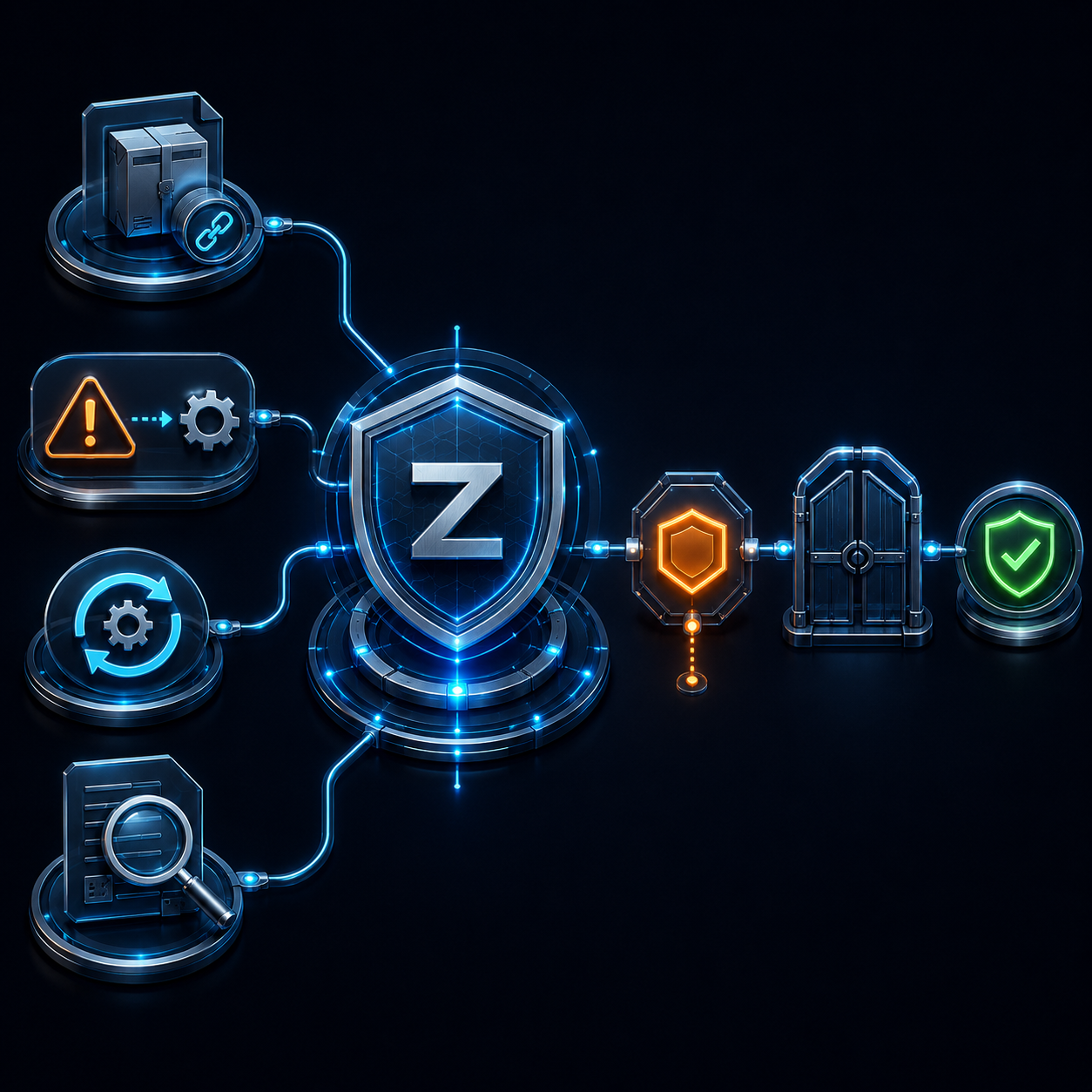
GRC software use cases are not abstract demonstrations or isolated features. They are the practical routes through which requirements, risks, people, workflows, evidence and human decisions become connected and assured.
THE SHORT ANSWER
A Use Case Is a Governed Route Through Shared Information
Organisations rarely struggle because they lack a register. They struggle because the requirement, risk, owner, action, evidence and decision sit in different files, inboxes or applications. A Zebsoft use case connects those elements around the real work and preserves who was responsible at every stage.
This is why use cases should not be treated as separate products. The same risk capability may support supplier governance, asset integrity, information security and change. The same action can respond to an audit finding, incident or management review. Zebsoft preserves each situation’s context while reusing the connected architecture.
ONE PLATFORM, MANY APPLICATIONS
The Situation Changes. The Connected Architecture Remains.
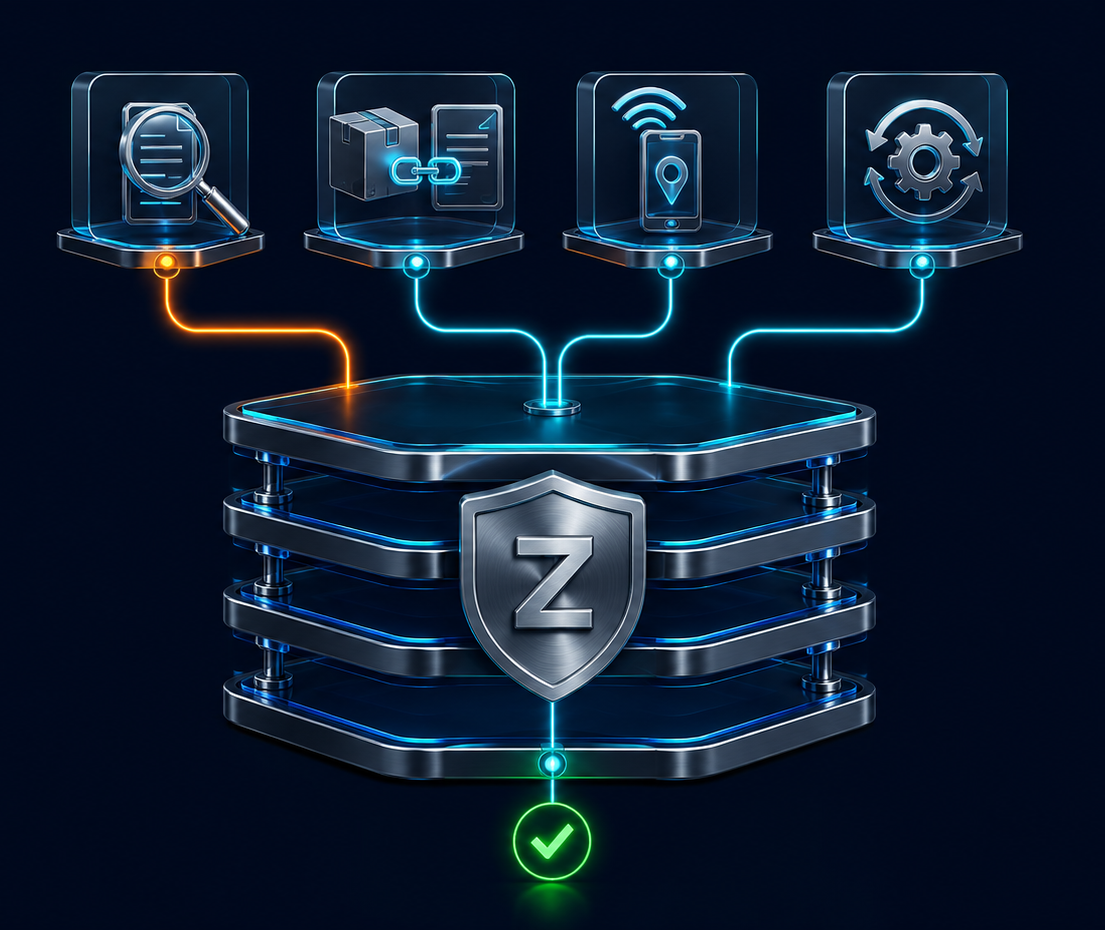
The organisation may be preparing for audit, controlling a supplier, coordinating remote staff or responding to a significant change. The subject and competent judgement differ; the structural principles remain consistent.
The retained image is a standalone feature placeholder and can be replaced without changing the section structure.
ANATOMY OF A USE CASE
From Operational Trigger to Evidence-Backed Assurance
A useful use case explains more than what a screen can record. It identifies the context, control, workflow, evidence and accountable human judgement needed to reach an outcome.
| Use-case element | Question it answers | What Zebsoft connects | Human responsibility |
|---|---|---|---|
| Trigger and context | What happened, changed, became due or requires attention? | The relevant site, process, asset, supplier, requirement, risk or event. | Confirm that the context is accurate and sufficient. |
| Owned control | What should prevent, detect, respond to or govern the situation? | The control, owner, operating frequency, evidence and dependencies. | Define suitability and remain accountable for operation. |
| Workflow | Who must do what, in which order and under which conditions? | Assignments, decisions, approvals, reminders, escalation and change. | Perform the assigned work and exercise authorised judgement. |
| Evidence | What demonstrates that the activity occurred and was appropriate? | Records, documents, responses, observations, results and decisions. | Provide genuine evidence; never manufacture completion. |
| Review and outcome | Was the result suitable, effective and acceptable? | Verification, exception, corrective action, residual risk and assurance conclusion. | Challenge the evidence and retain the accountable conclusion. |
THE OPERATING MODEL
Use Cases Move Through Define, Communicate, Operate and Assure
The four stages connect intention to controlled execution. A use case may begin at any point, but its information should remain traceable through the complete operating cycle.
Trigger and context → owned control → assigned workflow → evidence → human review → exception, action or assurance
TWO COMMON ASSURANCE USE CASES
Make Risk Active and Audit Continuous
Risk and audit become useful when they influence work and decisions. They should not remain isolated exercises performed immediately before review.
Connected does not mean automatically compliant. It means the organisation can follow the thread from risk and requirement to operation, evidence, exception and accountable assurance.
SUPPLIER AND THIRD-PARTY GOVERNANCE
Control the Relationship Beyond Initial Approval
Supplier governance is not a one-time questionnaire. Risk, obligation, evidence, performance, incidents, change and continued acceptance evolve throughout the relationship.
The supplier can participate without unrestricted internal access. The organisation retains its own evaluation, decision and accountability rather than allowing a portal submission to become automatic acceptance.
MULTI-SITE AND DISTRIBUTED OPERATIONS
Central Visibility Without Removing Local Responsibility
A shared system should make performance comparable and material exceptions visible while preserving the ownership, evidence and response required at each location.
Approved variation can be controlled. Unexplained variation becomes visible as an exception rather than disappearing inside local spreadsheets.
GROWING ORGANISATIONS
Replace Informal Control Without Rebuilding Everything at Once
Growth exposes the limits of spreadsheets, shared folders, SharePoint lists and disconnected applications. Transition should preserve useful information and introduce control in a manageable sequence.
The aim is controlled improvement, not a cosmetic transfer of every weakness from the old system. Legacy sources can be retained according to the approved migration and retention decision.
PEOPLE AND REMOTE WORK
Give People Relevant Information and a Visible Route to Respond
Employees, lone workers, remote staff, contractors and supervisors need more than static policy access. They need clear communication, assigned activity, check-in, escalation and evidence appropriate to the work and risk.
Assignment → work and risk context → required controls → communication and check-in → missed response or evidence → human action → verification and assurance
Technology can make the missed response visible. It cannot determine that a person is safe without appropriate evidence and accountable human assessment.
MORE CONNECTED APPLICATIONS
Use the Same Assurance Principles Across Operational Change
Incidents, assets and organisational change frequently cross domain boundaries. Keeping them connected prevents a local event from losing its wider risk and control consequences.
ONE USE CASE, END TO END
A Critical Supplier Announces an Unplanned Service Change
The announcement may affect information security, service continuity, contractual obligations, customers and operational delivery. The value lies in coordinating those perspectives without creating disconnected investigations.
SELECT THE RIGHT STARTING POINT
Start With a Material Workflow, Then Connect Outward
A strong first use case has a recognisable trigger, a named owner, recurring coordination difficulty and evidence that matters to management or assurance.
Expansion should reuse working relationships rather than duplicate them. A supplier incident can later connect to risk, audit, continuity, change and management review without losing its original context or ownership.
RESPONSIBLE AI. HUMAN ASSURANCE.
AI Can Help Interrogate the Use Case—not Decide It
Where enabled, AI can help authorised users find and summarise approved information within their access. Workflow automation can route known activity. Neither holds organisational responsibility or professional competence.
AI must not invent requirements, controls, evidence, approvals, verification or decisions.
PRACTICAL QUESTIONS
GRC Software Use Cases FAQs
Use cases should explain how controlled work reaches an evidence-backed outcome. Configuration must still reflect the organisation’s approved responsibilities, risk and authority.
What are GRC software use cases?
GRC software use cases are practical situations in which governance, risk, compliance and assurance information must move through controlled work. Examples include responding to an incident, managing supplier evidence, operating a control, preparing for audit or governing change across several sites.
Are use cases separate Zebsoft modules?
No. A use case normally combines several shared capabilities and one or more domains. Risk, documents, actions, audits, incidents, people and assets can participate in the same operational route without creating a separate application for every scenario.
Can one workflow support several standards?
Yes, where the underlying control and evidence genuinely apply. The shared operation can be connected to several requirements while each framework retains its own scope, interpretation, testing and assurance conclusion.
Do we need to implement every use case at once?
No. Organisations can begin with a bounded problem, map the information and responsibility needed, configure the workflow, test it with representative users and expand after the operating pattern is stable.
Can use cases differ by site or business unit?
Yes. Shared governance can coexist with local scope, ownership, timing, evidence and escalation. The approved variation should remain visible so local flexibility does not become uncontrolled inconsistency.
Can external suppliers or contractors participate?
Yes, where an appropriate portal and access route are configured. External users can receive requests, provide evidence or complete assigned activity without receiving unrestricted access to the internal assurance system.
Does automation provide the assurance conclusion?
No. Automation can route work, apply configured conditions, request evidence and expose exceptions. A competent and authorised person remains responsible for interpreting the information and reaching the conclusion.
Can AI create evidence or approve a use case?
No. AI may help authorised users interrogate or summarise approved information where enabled. It must not invent controls, evidence, approvals, decisions or verification, and it cannot replace accountable human judgement.
EXPLORE THE CONNECTED SYSTEM
Move From Use Case to Platform, Domain or Role
Use cases show how Zebsoft works in practice. The platform explains the complete proposition, Domains explain the operational subjects and Solutions by Role explains how different people participate.