
CAPABILITIES OVERVIEW
Compliance Software Capabilities
Reusable Workflow Engines for Connected Operational Assurance
Zebsoft compliance software capabilities are the reusable operational engines that turn defined governance into assigned work, controlled responses, evidence, exceptions and human verification.
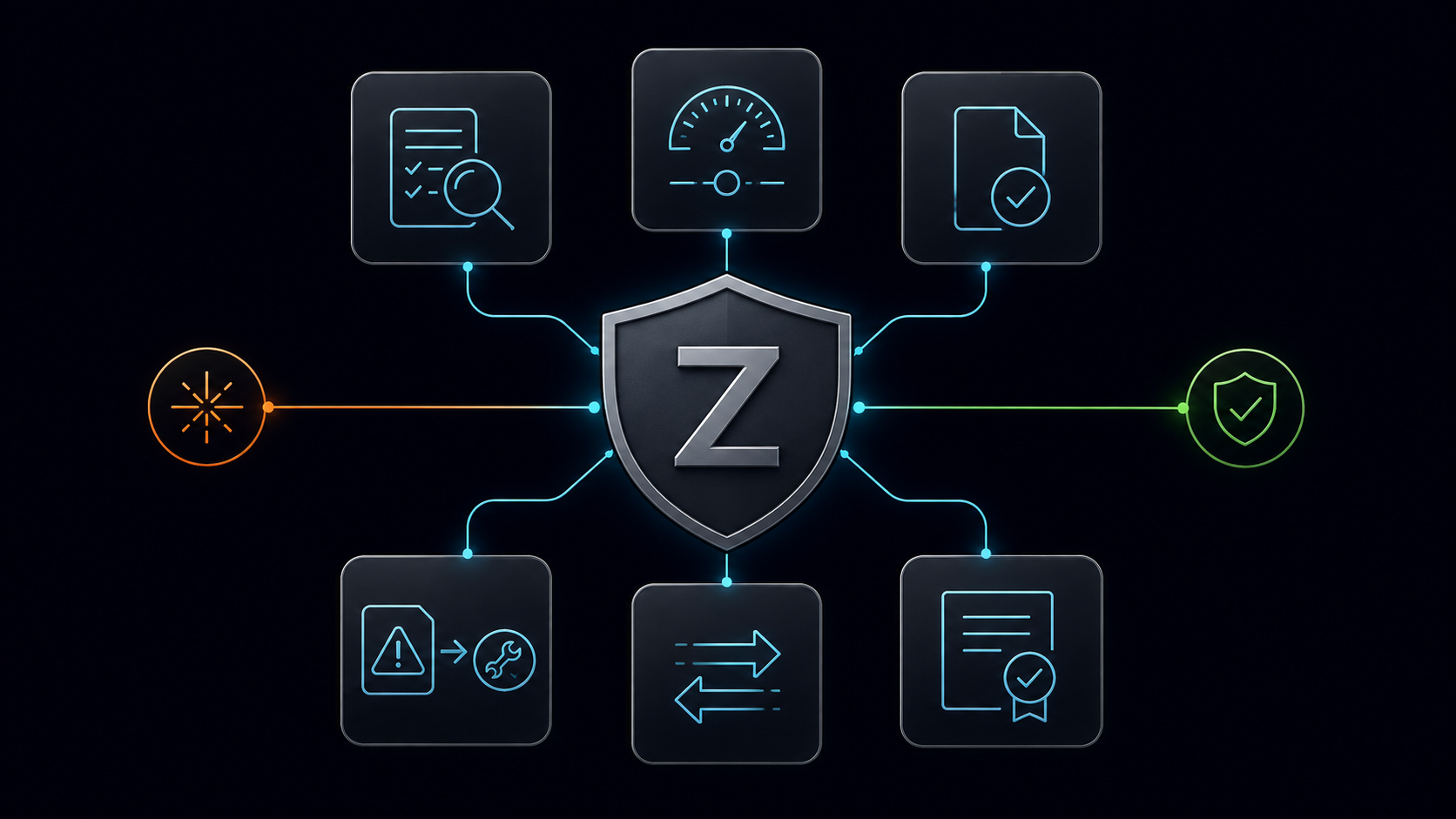
They do not sit as isolated applications. Audit, risk, documented information, incident, change, competency, task and validation capabilities work through one connected Zebsoft Assurance Platform. The governed subject can change while the operating principles, responsibilities and evidence remain coherent.
WHAT A CAPABILITY IS
A Repeatable Way to Perform Governed Work
A capability is a reusable operational behaviour provided by the platform. It enables people to perform a recognisable type of controlled work—such as conducting an audit, approving information, assessing risk, recording an incident, managing change or verifying an action.
The capability does not decide the organisation’s requirements. It operates within the scope, criteria, ownership, authority and evidence expectations that competent people have defined for a particular domain, module, standard or process.
THE PLATFORM LAYERS
Capabilities Have a Precise Place in the System
Domains, standards, modules, capabilities and evidence are related, but they are not interchangeable labels. Each layer contributes something different to the assurance position.
FROM REQUIREMENT TO ASSURANCE
The Capability Route Is Operational and Traceable
A capability becomes valuable when it connects the thing being governed to the work required and the evidence needed to judge the outcome.
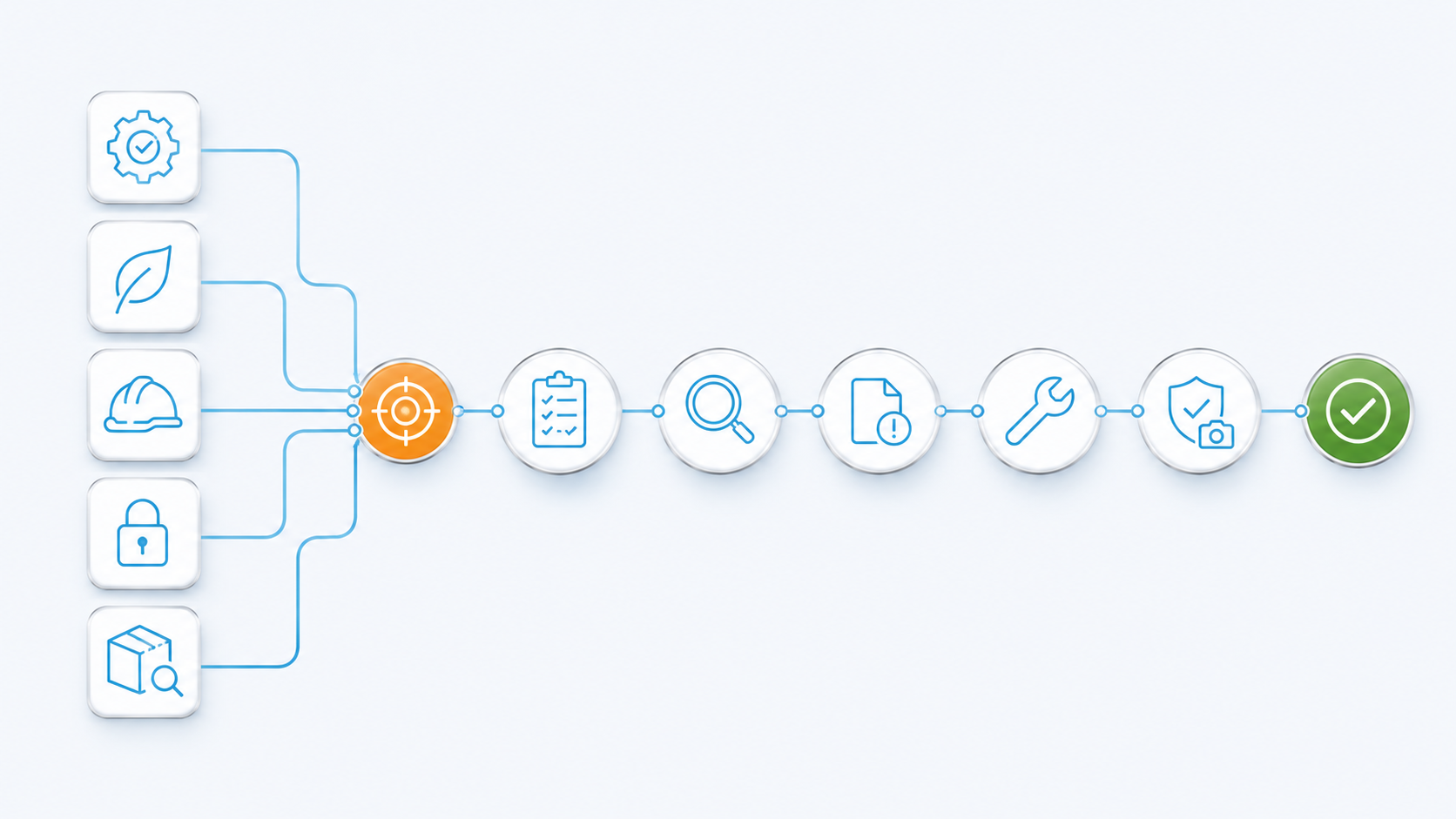
Requirement and operating context → configured capability → assigned or triggered work → evidence → human verification → exception or assurance
DEFINE–COMMUNICATE–OPERATE–ASSURE
Capabilities Make the Operating Model Repeatable
The DCOA model gives different capabilities a consistent logic without forcing every workflow to be identical.
CORE CAPABILITY AREAS
Reusable Engines for the Work That Creates Assurance
Each page below explains a distinct capability. Together they provide the connected operating layer used across Zebsoft domains, modules and standards.
ONE CAPABILITY, MANY CONTEXTS
Reuse the Engine Without Duplicating the Governance
The same capability can support different governance contexts because its configured record, criteria, people, permissions and workflow establish the meaning of each use.
An audit capability can support ISO 9001, ISO 14001, ISO 45001, ISO/IEC 27001, supplier assurance, internal governance review and an operational inspection. The programme, questions, auditor authority, evidence and acceptance criteria can remain specific while the underlying planning, execution, finding, action and verification route stays coherent.
This reduces unnecessary duplication without pretending that different standards or professional disciplines are identical.
CONNECTED BY WORKFLOW
Individual Capabilities Become More Powerful Together
The platform can pass context and responsibility between capabilities so an outcome becomes the controlled starting point for the next required action.
STATIC STRUCTURE AND DYNAMIC OPERATION
Information Defines the Expectation; Capabilities Test Reality
Policies, requirements, risks, controls, procedures, responsibilities and plans describe what the organisation expects. They are essential, but they do not by themselves show that people received the information, work occurred, controls operated or a competent person accepted the outcome.
Capabilities create the dynamic layer. They issue and route work, collect current responses, identify missed or failed activity, retain evidence and bring exceptions to the people authorised to act. This creates visibility of operation rather than a static impression based only on stored documents and registers.
DESIGNED AROUND PEOPLE
Visibility, Authority and Accountability Stay Connected
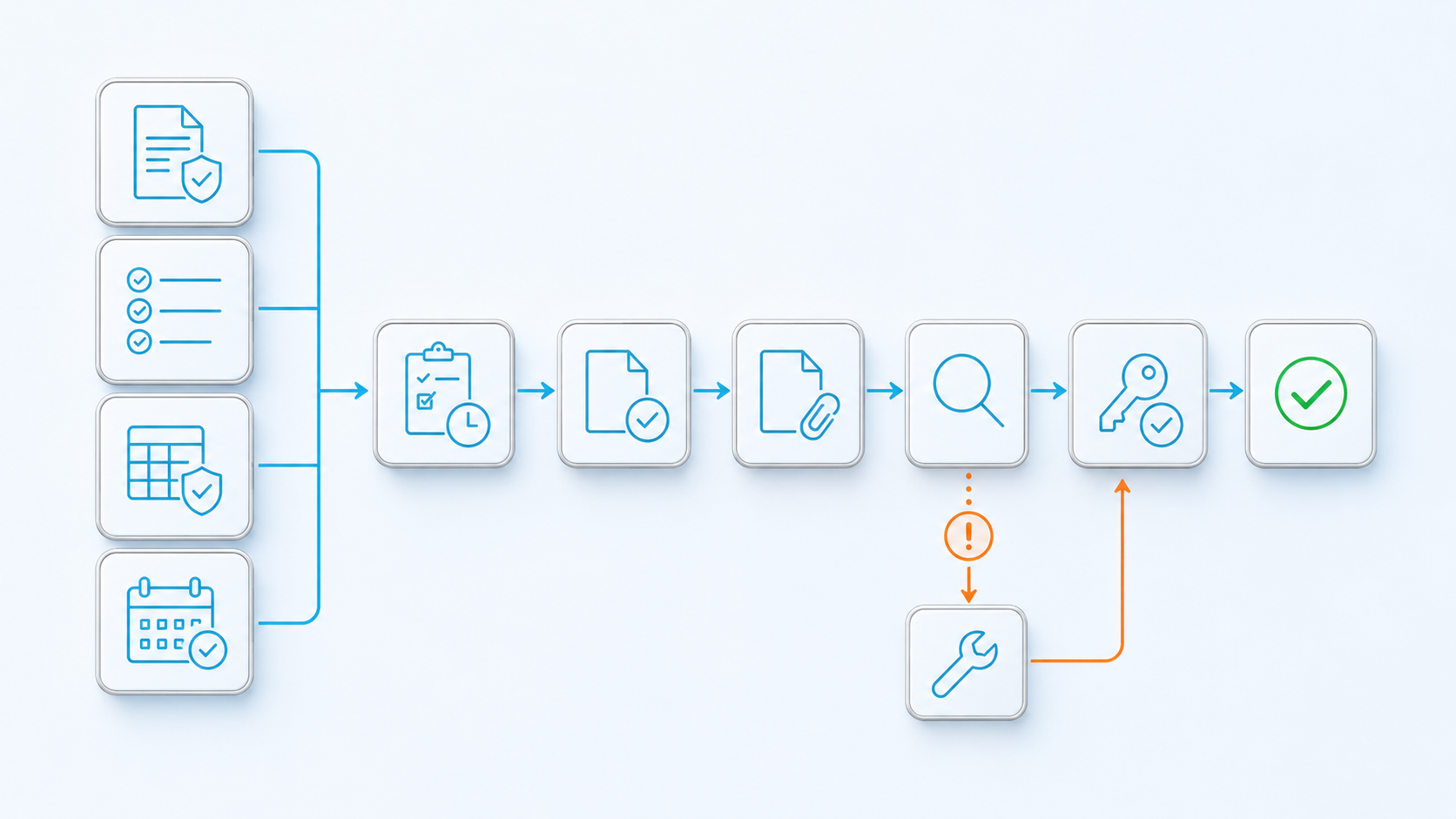
A capable workflow does more than move a record from one status to another. It identifies who needs to know, who may act, what decision is permitted and who remains accountable for the result.
EXCEPTIONS CREATE THE NEXT WORKFLOW
A Failed Response Should Not End as a Red Status
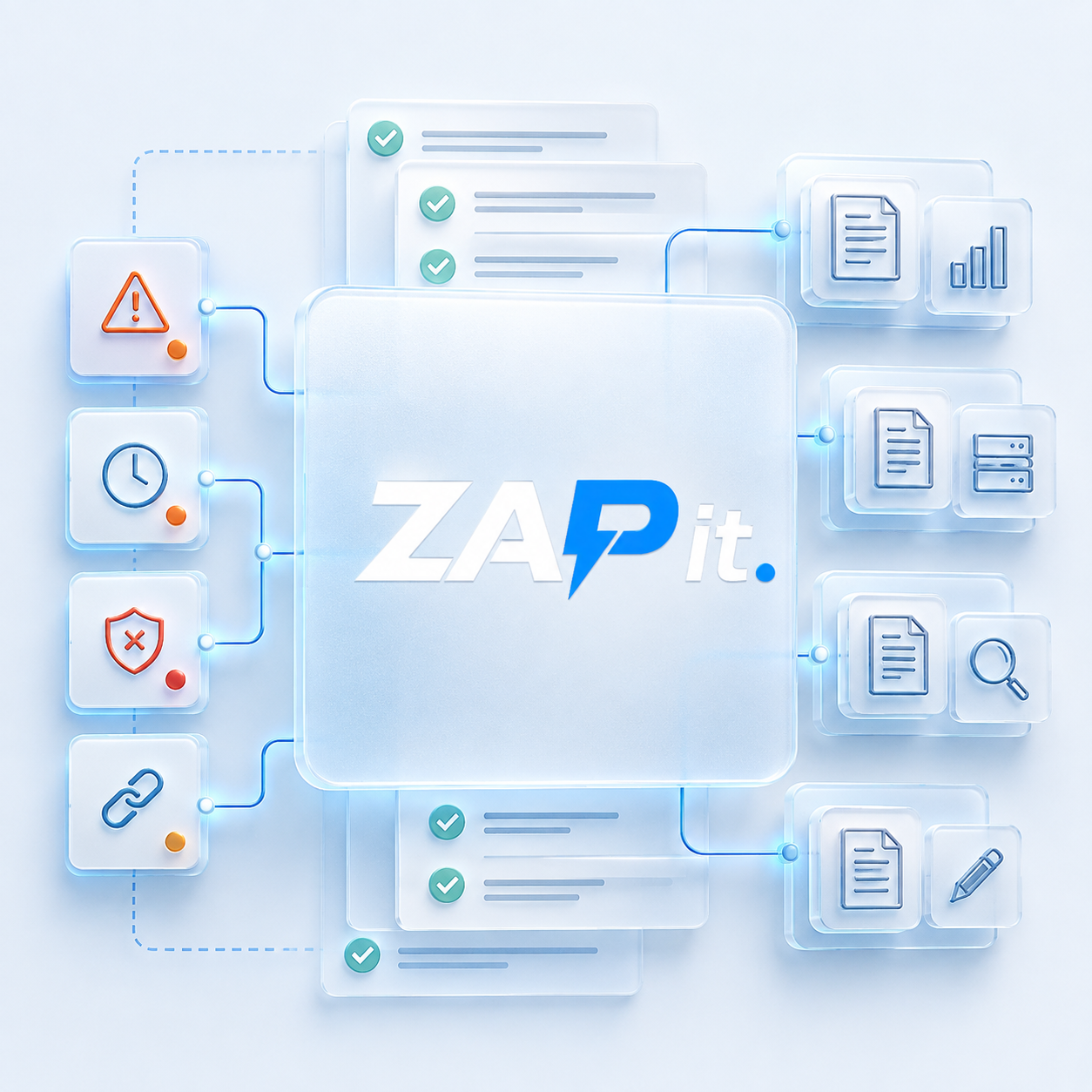
A missed date, rejected submission, failed control, audit finding or incident should remain connected to the context that made it important. Zebsoft can use that exception to initiate the next governed route rather than leaving people to coordinate the response through email and spreadsheets.
The required response may include immediate containment, competent review, risk reassessment, document change, retraining, corrective action, approval or follow-up validation. The organisation configures the route and retains responsibility for the decisions. The capability makes the required work and returned evidence visible.
THIS IS HOW THE CAPABILITY LAYER SOLVES THE PROBLEM
From Fragmented Activity to Connected Assurance
The difference is not simply that work becomes digital. The relationships between context, workflow, evidence and human verification remain intact.
RESPONSIBLE USE OF AI
Interrogate Approved Information; Do Not Invent the Assurance Position
AI can assist people in finding and analysing authorised information within the capability layer. It does not replace the governance, evidence or human authority on which assurance depends.
EXPLORE THE CONNECTED STRUCTURE
Capabilities Work With Every Other Platform Layer
Use these pages to understand how the capability layer fits into the full Zebsoft operating model.
PRACTICAL QUESTIONS
Compliance Software Capabilities FAQs
The answers below explain the role and limits of the capability layer within the Zebsoft Assurance Platform.
What are compliance software capabilities?
They are reusable operational functions that perform controlled work, including assessment, review, approval, investigation, action, escalation and verification. Zebsoft applies them to the relevant governed context rather than delivering each one as an isolated system.
How is a capability different from a module?
A capability is a reusable behaviour, such as approval or auditing. A module brings configured records, relationships, views and several capabilities together for a defined operational purpose. One capability can therefore appear in several modules.
Can one capability support several ISO standards?
Yes. A capability such as audit, risk, document control or action management can support several standards. Each use must retain the appropriate scope, criteria, responsibility, evidence and professional judgement.
Does reuse mean every workflow must be the same?
No. Reuse provides a coherent operating engine. The configured stages, questions, permissions, evidence, authority, timing and escalation can differ according to the risk and context.
Do capabilities automatically prove compliance?
No. Capabilities help an organisation operate defined arrangements and retain evidence. Compliance depends on applicable requirements, real operation, competent judgement and the organisation’s decisions; software cannot guarantee it.
What happens when a capability identifies an exception?
The exception can retain its original context and initiate further review, risk reassessment, incident response, document change, training, corrective action or validation. The configured route determines who must act and decide.
Can access differ between capability users?
Yes. Roles, permissions and configured visibility can give contributors, owners, reviewers, managers, auditors and external participants appropriate access to shared records without exposing everything to everyone.
Can AI make capability decisions?
AI may help authorised people find and analyse approved information. Zebsoft does not rely on AI to invent requirements, facts, evidence, approvals, verification results or management decisions; those remain human responsibilities.
SEE THE CAPABILITY LAYER IN OPERATION
Follow One Workflow From Context to Verified Outcome
Choose a live example—an audit finding, failed control, incident, document change, competency need or overdue action—and see how Zebsoft connects the governed context, responsible people, workflow, evidence, exception and assurance position.