
DOMAINS
Governing Operational Responsibility Across the Organisation
Zebsoft uses Domains to structure governance around real operational and organisational responsibility.
A Domain represents a long-lived area of organisational control — not a software module, department silo, or disconnected compliance system.
Domains bring together governance, operational validation, evidence, accountability, and oversight into one connected assurance structure.
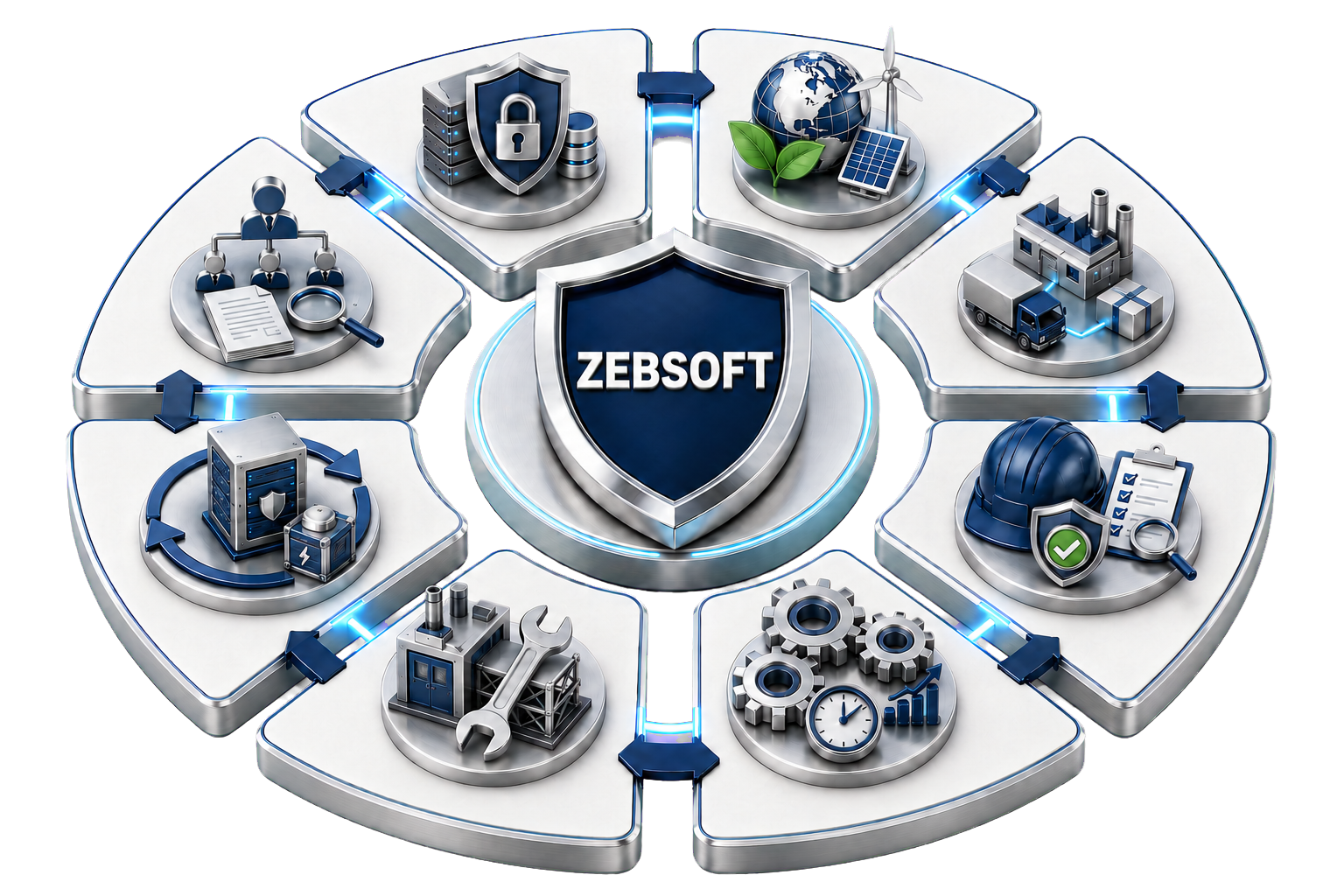
Instead of separating audits, risks, suppliers, incidents, documents, and operational controls across disconnected systems, Zebsoft Domains coordinate them within one shared platform structure.
DOMAINS
Domains Turn Governance Into Organised Operational Control
Policies alone do not create assurance.
Domains organise governance responsibility into structured operational oversight across the organisation.
They define what must be controlled, who is accountable, what evidence matters, and how operational activity is validated continuously.

DEFINE >
Governance responsibilities, obligations, risks, and controls

ASSIGN >

COORDINATE >

VALIDATE >

PROVE >
Every Domain contributes toward continuous operational assurance across the wider platform.
One Capability. Multiple Governance Contexts.
Capabilities are reusable operational engines that work across the entire Zebsoft platform.
One Audit Capability can simultaneously support:
- ISO 9001 – ISO 14001 – ISO 45001 – ISO 27001
- Supplier assurance
- Internal governance reviews
- Operational inspections
- Continuous improvement activity
without creating disconnected systems or duplicated evidence.
This allows organisations to govern once, operate consistently, and evidence continuously.


DOMAINS
Define responsibility areas across the organisation

CAPABILITIES
Reusable operational engines that perform work

MODULES
Configured applications built from capabilities

EVIDENCE
Operational output, records, assurance, and validation

This is how Zebsoft connects governance, operational activity, validation, and evidence into one assurance structure.
STATIC VS DYNAMIC
Static Governance. Dynamic Operational Assurance.
Most systems stop at storing governance information.
Zebsoft combines structured governance with continuous operational validation.
STATIC STRUCTURE DEFINES:
- Policies
- Controls
- Risks
- Procedures
- Responsibilities
- Requirements
- Governance expectations
- Compliance obligations

DYNAMIC ASSURANCE VALIDATES:
- Operational activity
- Overdue actions
- Missing evidence
- Failed controls
- Compliance performance
- Accountability
- Escalation triggers
- Continuous oversight
This is what transforms governance into operational assurance.
CORE DOMAINS
The Governance Domains Within Zebsoft
Each Domain represents a distinct area of organisational responsibility with its own governance requirements, operational controls, risks, obligations, and assurance activity.






DOMAINS & SHIELD LEVELS
Governance Scales With Operational Complexity



The Domain structure remains consistent at every level — the difference is the scale, operational depth, and coordination complexity being governed.